Why Can't You Remember Being a Baby?
Palak Khanna | Jun 09, 2026, 11:22 IST
Have you ever looked at your baby photos and wondered why you cannot remember any of those moments? Most people have almost no memories from the first three or four years of life, even though those years shape who they become. Scientists call this fascinating mystery "infantile amnesia." The reason is not that babies do not learn or feel emotions. In fact, their brains are absorbing information faster than at any other stage of life. The answer lies in how memory develops, how the brain matures, and how language helps us store experiences.

Every family has stories about our first steps, our first words, or the day we laughed for the first time. Yet none of us actually remember living those moments. It feels strange. Babies see the world, recognize faces, cry when separated from parents, and even learn patterns and routines. So why does the mind erase those early years? The truth is that those memories are not completely lost. They were simply stored in a way that the adult brain cannot easily access. Researchers believe this phenomenon, known as infantile amnesia, is one of the most remarkable features of human development. 111The mystery of our forgotten beginnings reveals just how incredible the human brain really is.
![Inside the Growing Brain]()
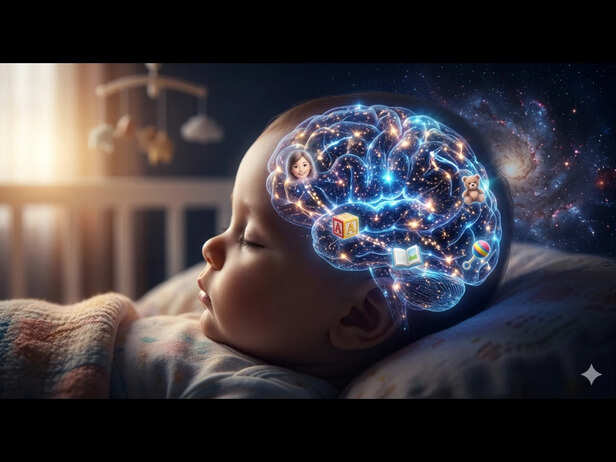
When you were born, your brain was only about a quarter of its adult size. During the first few years, billions of new neural connections formed at an astonishing speed. The part of the brain mainly responsible for creating long lasting memories is called the hippocampus. In babies, this area is still developing. It can capture experiences, but it struggles to organize and preserve them in the same way an adult brain can. Think of it like writing thousands of files onto a computer before the operating system is fully installed. The information exists, but it cannot be retrieved properly later. This rapid brain growth is one reason early memories fade away.
![The Forgotten First Years]()
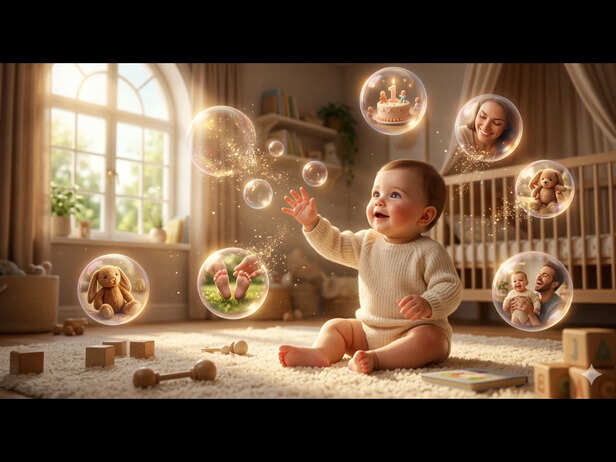
For a long time, scientists assumed babies simply could not form memories. Today, research suggests the opposite. Babies can recognize their mother's voice shortly after birth. They learn routines, remember familiar faces, and can even anticipate events based on past experiences. A baby may smile when seeing a favorite toy because they remember the joy it brought before. They may cry at the doctor's office because they associate it with discomfort. The difference is that these are not the detailed autobiographical memories adults create. They are emotional and sensory memories, built from feelings, sounds, smells, and repeated experiences. In many ways, babies are constantly remembering. They just remember differently.
One of the biggest reasons adults cannot recall infancy is that babies do not yet have language. Words act like labels for our experiences. When a five year old says, "I went to the zoo and saw an elephant," the brain connects images, emotions, and events into a story. Babies cannot do this. Without language, experiences remain scattered pieces rather than organized narratives. As children learn to speak, they also become better at storing memories in ways that can later be recalled. This is why many people's earliest memories begin around the age of three or four, when language skills rapidly improve. Parents unknowingly help this process by talking about family events, birthdays, and holidays. Conversations turn experiences into stories, and stories become memories.
During early childhood, the brain goes through an intense process called synaptic pruning. At first, babies create far more neural connections than they actually need. As they grow, the brain removes weaker pathways and strengthens important ones. This makes thinking more efficient but can also disrupt older memory networks. Imagine building a city with thousands of roads, then later removing half of them to improve traffic flow. Some destinations become impossible to reach. Scientists believe this constant remodeling may push early memories out of reach, even if fragments still exist deep within the brain. That may explain why certain smells, songs, or places can suddenly trigger an odd sense of familiarity without a clear memory attached.
![The Memories That Never Truly Leave]()
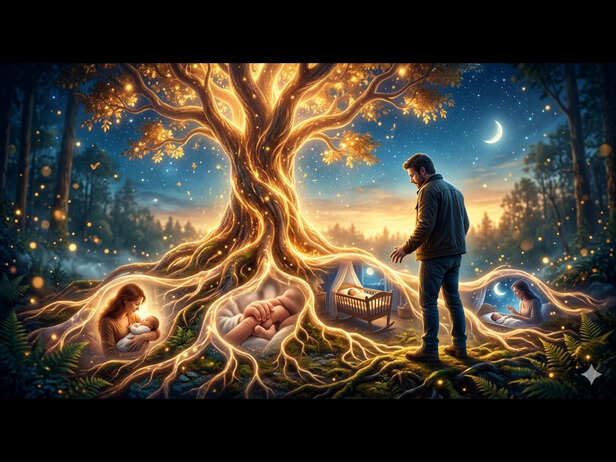
The idea that baby memories disappear forever may not be entirely true. Many psychologists believe early experiences continue shaping our personalities, fears, and emotional responses even when we cannot consciously remember them. A child who grows up feeling safe and loved may develop stronger emotional security later in life. Likewise, stressful experiences during infancy can sometimes influence future behavior without the person knowing why. In other words, your earliest years may still be living inside you, quietly influencing the way you see the world. You may not remember your first hug, your first laugh, or the first time someone held your hand, but those moments helped build the person you are today.
Not remembering your baby years is not a flaw in the human mind. It is actually a sign of how extraordinary brain development is. As babies, our minds are busy learning language, building neural pathways, and understanding the world around us. The brain prioritizes growth over preserving detailed life stories. While the images of infancy may fade, their effects remain. Every cuddle, every lullaby, and every smile from a loved one helped shape your emotions, relationships, and personality. Perhaps the most beautiful part of infantile amnesia is this: even though we cannot remember our earliest moments, those moments never stopped becoming a part of us.
Unlock insightful tips and inspiration on personal growth, productivity, and well-being. Stay motivated and updated with the latest atMy Life XP.
Your Baby Brain Was Still Under Construction
Inside the Growing Brain
When you were born, your brain was only about a quarter of its adult size. During the first few years, billions of new neural connections formed at an astonishing speed. The part of the brain mainly responsible for creating long lasting memories is called the hippocampus. In babies, this area is still developing. It can capture experiences, but it struggles to organize and preserve them in the same way an adult brain can. Think of it like writing thousands of files onto a computer before the operating system is fully installed. The information exists, but it cannot be retrieved properly later. This rapid brain growth is one reason early memories fade away.
Babies Remember More Than We Think
The Forgotten First Years
For a long time, scientists assumed babies simply could not form memories. Today, research suggests the opposite. Babies can recognize their mother's voice shortly after birth. They learn routines, remember familiar faces, and can even anticipate events based on past experiences. A baby may smile when seeing a favorite toy because they remember the joy it brought before. They may cry at the doctor's office because they associate it with discomfort. The difference is that these are not the detailed autobiographical memories adults create. They are emotional and sensory memories, built from feelings, sounds, smells, and repeated experiences. In many ways, babies are constantly remembering. They just remember differently.
Language Helps Build Lasting Memories
Your Brain Constantly Rewrites Itself
Maybe Those Memories Are Not Truly Gone
The Memories That Never Truly Leave
The idea that baby memories disappear forever may not be entirely true. Many psychologists believe early experiences continue shaping our personalities, fears, and emotional responses even when we cannot consciously remember them. A child who grows up feeling safe and loved may develop stronger emotional security later in life. Likewise, stressful experiences during infancy can sometimes influence future behavior without the person knowing why. In other words, your earliest years may still be living inside you, quietly influencing the way you see the world. You may not remember your first hug, your first laugh, or the first time someone held your hand, but those moments helped build the person you are today.
The Hidden Story Your Mind Still Carries
Unlock insightful tips and inspiration on personal growth, productivity, and well-being. Stay motivated and updated with the latest atMy Life XP.