Why Does It Feel Like You're Falling Just as You Drift Off to Sleep?
Palak Khanna | Jun 08, 2026, 23:12 IST
Almost everyone has experienced it. You are drifting into sleep when suddenly your whole body twitches, your leg kicks, or your arms jolt as if you were falling off a cliff. The sensation can be so real that it wakes you up with a racing heart. This strange event, known as a hypnic jerk, has puzzled people for centuries. But why does it happen? Is it a warning sign from your body, or simply a harmless quirk of the human brain?

You climb into bed after a long day, close your eyes, and slowly sink into relaxation. Then, without warning, your body suddenly jerks. For a split second, it feels as though you slipped, tripped, or fell from a great height. If this has happened to you, you are far from alone. Scientists estimate that nearly 70 percent of people experience these mysterious sleep twitches at some point in their lives. They are called hypnic jerks or sleep starts, and despite how dramatic they feel, they are usually completely harmless. The fascinating part is that experts still debate exactly why they happen. Some believe they are connected to the way the brain transitions into sleep, while others think they may be leftovers from ancient survival instincts that helped our ancestors avoid falling from trees. Here is what science knows about one of the strangest things the human body does.
What Exactly Is a
![The Mysterious Sleep Jolt]()
A hypnic jerk is an involuntary muscle contraction that happens during the first stage of sleep. This is the period when your body begins slowing down. Your heartbeat decreases, your breathing becomes steadier, and your muscles start to relax. Sometimes, however, the brain sends a sudden burst of electrical activity to the muscles, causing a quick twitch or jump.
People often report feeling:
One of the most common features of a hypnic jerk is the sensation of falling. Scientists think this happens because the brain is partially entering the dream state while still monitoring the outside world. As your muscles relax, the brain may mistakenly interpret the loss of muscle tension as a sign that you are physically losing balance. To protect you, it quickly triggers the muscles to contract. Another interesting theory connects this reaction to human evolution. Millions of years ago, our distant ancestors often slept in trees. A sudden muscle jerk could have acted as a safety mechanism, preventing someone from falling while asleep. Although there is no definitive proof, many researchers find this explanation intriguing because it matches the sensation people describe.
![Stress, Coffee, and Sleepless Nights]()
While hypnic jerks are normal, certain habits can make them happen more often. Stress is one of the biggest triggers. When your brain remains highly alert, even as you try to sleep, the transition into rest becomes less smooth.
Other common causes include:
![What Your Brain Feels in that Moment]()
For most people, the answer is no. Hypnic jerks are considered a normal part of human sleep and usually require no treatment. They do not damage the brain or muscles, and they are not typically linked to serious neurological disorders. However, if the movements happen repeatedly throughout the night, interfere with sleep, or are accompanied by unusual symptoms like confusion, severe shaking, or loss of awareness, it may be worth discussing them with a healthcare professional. Conditions such as restless leg syndrome, sleep apnea, or certain seizure disorders can sometimes resemble sleep jerks, although they are very different medical issues. The occasional twitch before sleep is generally nothing to worry about.
You may not be able to eliminate hypnic jerks completely, but simple lifestyle changes can reduce their frequency. Creating a calming bedtime routine helps the brain transition naturally into sleep.
Helpful habits include:
That sudden jolt just as you are falling asleep may feel strange, but it is actually a fascinating glimpse into the complex machinery of the human brain. As consciousness fades and sleep takes over, your nervous system performs one of the most delicate transitions in the body. Occasionally, the process is not perfectly smooth, and a brief burst of activity creates the famous sleep jerk. Whether it is a simple neurological hiccup or an ancient survival reflex carried over from our ancestors, one thing is certain. That little jump is a reminder that even while we rest, our brains never truly stop working. So the next time you feel like you are falling just before sleep, you can relax knowing that millions of people experience the exact same mysterious moment.
Unlock insightful tips and inspiration on personal growth, productivity, and well-being. Stay motivated and updated with the latest atMy Life XP.
What Exactly Is a Hypnic Jerk ?
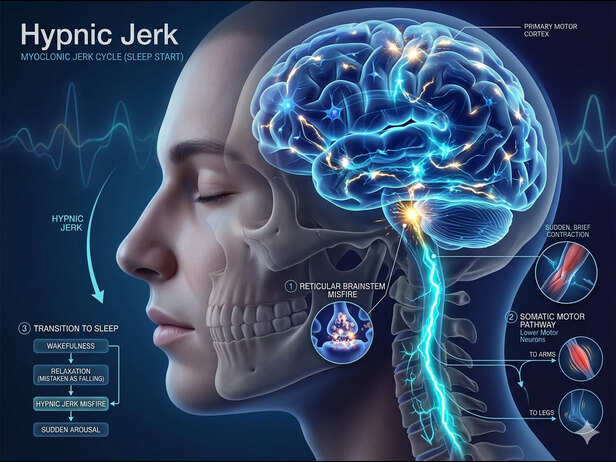
The Mysterious Sleep Jolt
A hypnic jerk is an involuntary muscle contraction that happens during the first stage of sleep. This is the period when your body begins slowing down. Your heartbeat decreases, your breathing becomes steadier, and your muscles start to relax. Sometimes, however, the brain sends a sudden burst of electrical activity to the muscles, causing a quick twitch or jump.
People often report feeling:
- Like they are falling
- A sudden kick in one leg
- A jolt through the entire body
- A flash of light or a brief dream image
- A rapid heartbeat after waking
Why Does It Feel Like You Are Falling?
Stress and Caffeine Can Make It Worse
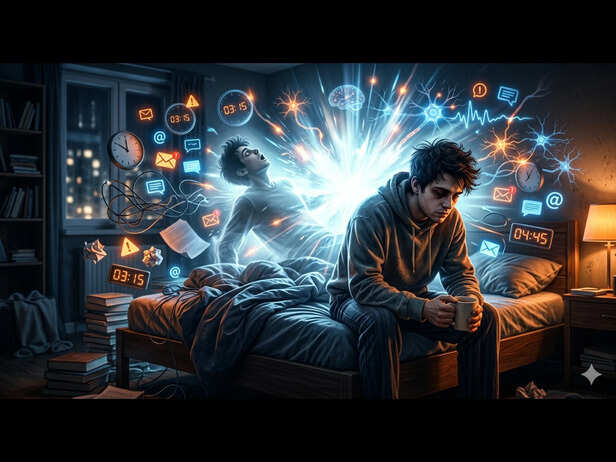
Stress, Coffee, and Sleepless Nights
While hypnic jerks are normal, certain habits can make them happen more often. Stress is one of the biggest triggers. When your brain remains highly alert, even as you try to sleep, the transition into rest becomes less smooth.
Other common causes include:
- Drinking too much coffee or energy drinks
- Exercising intensely right before bed
- Sleeping too little
- Anxiety and emotional tension
- Irregular sleep schedules
Are Sleep Jerks Dangerous?
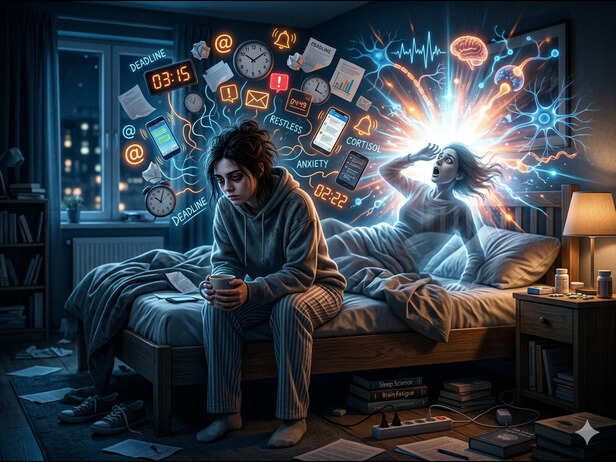
What Your Brain Feels in that Moment
For most people, the answer is no. Hypnic jerks are considered a normal part of human sleep and usually require no treatment. They do not damage the brain or muscles, and they are not typically linked to serious neurological disorders. However, if the movements happen repeatedly throughout the night, interfere with sleep, or are accompanied by unusual symptoms like confusion, severe shaking, or loss of awareness, it may be worth discussing them with a healthcare professional. Conditions such as restless leg syndrome, sleep apnea, or certain seizure disorders can sometimes resemble sleep jerks, although they are very different medical issues. The occasional twitch before sleep is generally nothing to worry about.
Can You Stop Them?
Helpful habits include:
- Going to bed at the same time every night
- Limiting caffeine during the evening
- Avoiding intense workouts before bedtime
- Practicing deep breathing or meditation
- Reducing screen time before sleep
The Tiny Twitch That Reveals a Big Secret About Your Brain
Unlock insightful tips and inspiration on personal growth, productivity, and well-being. Stay motivated and updated with the latest atMy Life XP.