Why Bhishma Publicly Humiliated Karna in the Kuru Court
Noopur Kumari | Jun 09, 2026, 12:00 IST
The Pandavas sought only what they believed was rightfully theirs. Their representative presented a logical case based on inheritance, justice, and peace. However, Karna rejected the demand and stood firmly beside Duryodhana. Just when it seemed the discussion was over, Bhishma intervened with words that shook the entire court. His response was not merely a disagreement it was a reminder of a truth that many in the assembly wanted to ignore. The exchange became one of the most dramatic moments before the Mahabharata war.

Long before the arrows of Kurukshetra filled the sky, another battle was already raging inside the royal court of Hastinapur. It was not fought with weapons but with arguments, truth, and wounded pride. A respected envoy stood before the Kauravas demanding justice for the Pandavas. The discussion began as a negotiation but quickly turned into one of the most intense confrontations in the Mahabharata. Then came a moment nobody expected a public clash between Karna and Bhishma. What was said in that royal assembly exposed deep divisions within the Kaurava camp and revealed why war was becoming unavoidable.
![Pandava Envoy Addressing the Kuru Court]()
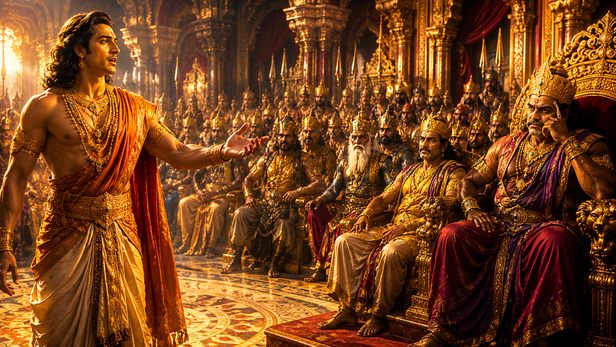
The Pandavas did not initially seek war. Their representative arrived with a straightforward argument. Dhritarashtra and Pandu were brothers, so the kingdom could not belong exclusively to Duryodhana. He also reminded the court of past injustices, including the Lakshagriha conspiracy, Draupadi's humiliation, and the hardships of exile. These were not emotional accusations but facts placed before the assembly. The envoy's purpose was clear: secure justice through dialogue. Yet beneath the calm words was an unmistakable warning. If peace failed, the battlefield would decide what the court refused to settle.
![Pandava Envoy Addressing the Kuru Court]()
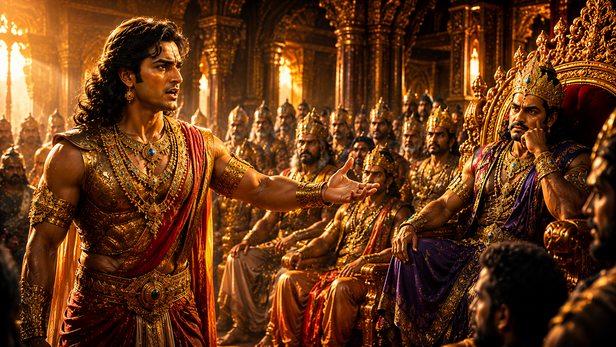
Karna immediately opposed the Pandava claim. He argued that fear would never force the Kauravas to surrender even a needlepoint of land. His confidence came from his loyalty to Duryodhana and his belief that the Pandavas no longer possessed a valid claim. Karna's words energized the Kaurava side but also hardened the atmosphere. What could have remained a negotiation became a confrontation. The court watched closely as one of Duryodhana's strongest supporters challenged the very foundation of the Pandavas' demands.
As Karna spoke, many expected silence from the elders. Instead, Bhishma stood and delivered a response that changed the mood of the entire assembly. He challenged Karna's confidence and reminded everyone of the battle at Virata, where Arjuna had single-handedly defeated many of the greatest Kuru warriors. Bhishma's words carried enormous weight because they came from a man respected by both sides. His message was simple: underestimating the Pandavas was not courage it was a dangerous mistake.
Bhishma's criticism was not personal. It was strategic. He believed the Kauravas were ignoring reality. Arjuna's strength had already been proven, and the Pandavas had repeatedly demonstrated their resilience. Bhishma warned that dismissing them would only lead to disaster. For Karna, these words were difficult to accept because they directly challenged his confidence and loyalty. Yet the greater lesson extended beyond the court. Leaders often fail not because they lack strength but because they refuse to recognize uncomfortable truths.
One of the most revealing aspects of this episode was the division within the Kaurava camp itself. While Duryodhana, Karna, and others pushed for resistance, respected elders like Bhishma saw the dangers ahead. The disagreement exposed a kingdom struggling to find a unified direction. Even before Kurukshetra began, the seeds of defeat were already visible. Internal conflict weakens judgment, clouds decision-making, and creates vulnerabilities that opponents can exploit. The court became a reflection of a larger problem that would soon engulf the entire dynasty.
Despite repeated efforts to avoid conflict, pride and stubbornness continued to dominate the discussion. Each opportunity for compromise was pushed aside. The Pandavas sought recognition of their rights, while Duryodhana refused to yield. Bhishma's warnings were clear, yet they went largely unheeded. History often changes not because solutions are unavailable but because people refuse to accept them. The Hastinapur court became a powerful example of how ego can overpower wisdom, turning manageable disputes into catastrophic conflicts.
The confrontation between Karna and Bhishma remains memorable because it teaches a timeless lesson. Strength without self-awareness can become dangerous. Loyalty without objectivity can become blindness. Bhishma understood that acknowledging reality is not weakness but wisdom. His warning was not merely about military power; it was about the consequences of ignoring truth. Whether in leadership, relationships, or personal decisions, success often depends on the ability to listen to uncomfortable advice before circumstances force a much harsher lesson.
Unlock insightful tips and inspiration on personal growth, productivity, and well-being. Stay motivated and updated with the latest at My Life XP.
1. Why did the Pandavas demand their share of the kingdom?
The Pandavas believed they had a rightful claim to the Kuru kingdom because their father, Pandu, and Dhritarashtra were brothers. They argued that the inheritance should be shared rather than controlled solely by Duryodhana.
2. Who represented the Pandavas in the Kaurava court?
Before the war, the Pandavas sent respected envoys and later sought peace through diplomatic efforts. Different versions of the narrative describe various representatives, with the most famous peace mission eventually being led by Lord Krishna.
3. What arguments were presented in favor of the Pandavas?
The Pandava side emphasized three main points: their rightful inheritance, the injustices they had suffered, and the devastating consequences that war would bring if peace negotiations failed.
4. Why did Karna oppose the Pandavas' demand
Karna remained fiercely loyal to Duryodhana. He believed that yielding territory under pressure would be wrong and supported Duryodhana's refusal to return the kingdom.
5. What did Bhishma say that shocked the assembly?
Bhishma reminded the court of the battle at Virata, where Arjuna had defeated powerful Kuru warriors. Bhishma warned against underestimating the Pandavas and predicted serious consequences if peace was rejected.
The Demand for Justice
Pandava Envoy Addressing the Kuru Court
The Pandavas did not initially seek war. Their representative arrived with a straightforward argument. Dhritarashtra and Pandu were brothers, so the kingdom could not belong exclusively to Duryodhana. He also reminded the court of past injustices, including the Lakshagriha conspiracy, Draupadi's humiliation, and the hardships of exile. These were not emotional accusations but facts placed before the assembly. The envoy's purpose was clear: secure justice through dialogue. Yet beneath the calm words was an unmistakable warning. If peace failed, the battlefield would decide what the court refused to settle.
Karna Draws a Line
Pandava Envoy Addressing the Kuru Court
Karna immediately opposed the Pandava claim. He argued that fear would never force the Kauravas to surrender even a needlepoint of land. His confidence came from his loyalty to Duryodhana and his belief that the Pandavas no longer possessed a valid claim. Karna's words energized the Kaurava side but also hardened the atmosphere. What could have remained a negotiation became a confrontation. The court watched closely as one of Duryodhana's strongest supporters challenged the very foundation of the Pandavas' demands.
The Moment Bhishma Intervened
The Reality Karna Did Not Want to Hear
A Kingdom Divided From Within
Why Peace Became Impossible
The Lesson Hidden in the Debate
Unlock insightful tips and inspiration on personal growth, productivity, and well-being. Stay motivated and updated with the latest at My Life XP.
Frequently Asked Questions (FAQs)
The Pandavas believed they had a rightful claim to the Kuru kingdom because their father, Pandu, and Dhritarashtra were brothers. They argued that the inheritance should be shared rather than controlled solely by Duryodhana.
2. Who represented the Pandavas in the Kaurava court?
Before the war, the Pandavas sent respected envoys and later sought peace through diplomatic efforts. Different versions of the narrative describe various representatives, with the most famous peace mission eventually being led by Lord Krishna.
3. What arguments were presented in favor of the Pandavas?
The Pandava side emphasized three main points: their rightful inheritance, the injustices they had suffered, and the devastating consequences that war would bring if peace negotiations failed.
4. Why did Karna oppose the Pandavas' demand
Karna remained fiercely loyal to Duryodhana. He believed that yielding territory under pressure would be wrong and supported Duryodhana's refusal to return the kingdom.
5. What did Bhishma say that shocked the assembly?
Bhishma reminded the court of the battle at Virata, where Arjuna had defeated powerful Kuru warriors. Bhishma warned against underestimating the Pandavas and predicted serious consequences if peace was rejected.