
7 Vastu Errors That Block Peace and Prosperity
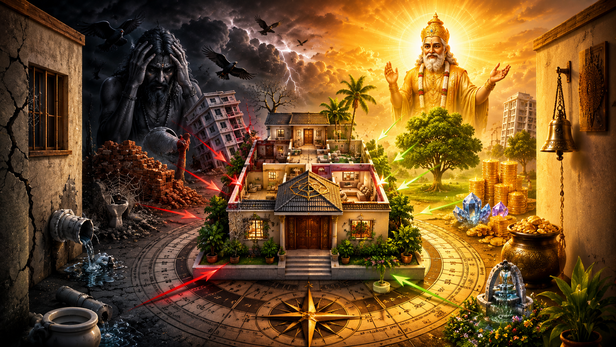
Building a dream home is one of the biggest emotional milestones in life. People spend years saving money, planning interiors, and imagining peaceful moments with family. But many homeowners unknowingly make small construction mistakes that later affect the energy and comfort of the house. According to Vastu Shastra, the design and direction of a home influence mental peace, relationships, health, and prosperity. Surprisingly, some of the most common modern house designs directly clash with traditional Vastu principles. And the most shocking part is that many people realize these mistakes only after moving in.
The Entrance That Changes Everything
The main door is considered the gateway through which energy enters the house. According to Vastu, entrances facing north, east, or north-east are believed to attract positivity and growth. However, many modern homes place entrances based only on design convenience. Experts also warn against clutter, broken steps, or large obstacles near the entrance because they may block the smooth flow of energy. In many homes, families notice constant tension or lack of harmony without understanding the reason. Vastu believes that the problem may sometimes begin from the very first step into the house.
Kitchen Placement and the Fire Element
The kitchen is not just a cooking space in Vastu Shastra. It represents fire, energy, nourishment, and family health. Traditionally, the south-east direction is considered ideal because it aligns with the fire element. But in compact modern homes, kitchens are often built wherever space is available. Experts believe incorrect placement can disturb emotional balance inside the house. Small issues like frequent arguments, stress, or lack of peace are often connected spiritually with imbalance in the kitchen area. This is why Vastu places so much importance on where and how the kitchen is designed.
The Toilet Mistake Many Families Ignore
One of the most common Vastu mistakes is constructing toilets in the north-east or central part of the house. These zones are considered spiritually sensitive and are meant to remain light and open. Bathrooms placed in these directions are believed to disturb positivity and emotional peace. Many homeowners ignore this during construction because of plumbing convenience or modern layouts. However, Vastu experts often recommend west or north-west directions for bathrooms. The belief behind this principle is simple — energy should flow smoothly through the house without creating stagnant or heavy zones.
Why the Center of the House Matters
In Vastu Shastra, the center of the house is called Brahmasthan the energy heart of the home. This area should ideally remain open, clean, and free from heavy construction. Yet many modern houses place staircases directly in the center to save space. Experts believe this creates pressure on the natural energy flow inside the house. Over time, people may feel mentally exhausted or emotionally unsettled without understanding why. Staircases are usually recommended in south, west, or south-west directions because these areas are believed to handle heavy structures more naturally.
The Missing Sunlight Problem in Modern Homes
Modern compact homes often prioritize privacy and space efficiency over sunlight and ventilation. But Vastu strongly emphasizes the importance of natural light, especially morning sunlight from the east. Dark corners and closed spaces are believed to create stagnant energy and heaviness inside the home atmosphere. Many families living in poorly ventilated homes experience low energy, stress, or discomfort without realizing the environment may be contributing to it. Open windows, proper airflow, and sunlight are not only scientifically healthy but also spiritually important according to traditional Vastu principles.
Natural Light Entering a Peaceful Home
A home is more than walls, furniture, and decoration. It becomes the emotional center of a family’s life. That is why many people still turn toward Vastu while building their dream house not out of fear, but in search of balance and peace. The real purpose of Vastu is not superstition. It is creating harmony between space, nature, and human emotions. Sometimes, small design choices quietly shape the atmosphere of a home for years. And when a house feels peaceful from the inside, it slowly begins to feel like a true home in every sense.
Unlock insightful tips and inspiration on personal growth, productivity, and well-being. Stay motivated and updated with the latest at My Life XP.
Frequently Asked Questions (FAQs)
1. Why is Vastu important while constructing a new house?
Vastu Shastra is believed to create balance between natural elements and living spaces. Many people follow it to attract peace, positivity, prosperity, and emotional harmony inside the home.
2. Which plot direction is considered best according to Vastu?
Square or rectangular plots facing north or east are generally considered auspicious in Vastu Shastra because they are believed to allow better energy flow and stability.
3. Why is the main entrance important in Vastu?
The main entrance is considered the primary gateway for energy entering the house. According to Vastu, a properly placed entrance can support positivity, growth, and peaceful living.
4. Which direction is ideal for the kitchen?
The south-east direction is usually recommended for kitchens because it is associated with the fire element in Vastu Shastra.
5. Why should toilets not be in the north-east direction?
The north-east zone is considered spiritually sensitive and linked with positivity and clarity. Toilets in this area are believed to disturb the energy balance of the home.