
Which Way Should Your Staircase Turn? What Vastu Shastra Says
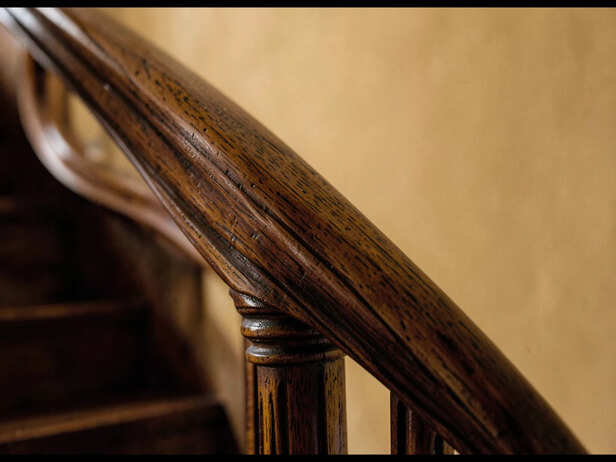
A staircase is one of the heavier, more permanent decisions in a home. Once built, it rarely moves. Vastu shastra treats that permanence seriously, giving the staircase more detailed guidance than most other structural elements, not just where it should sit, but which direction it should climb, how it should turn, and what the space beneath it should or should not hold.
The Direction Vastu Prefers for a Staircase
Vastu shastra generally places the staircase in the south, southwest, or west of a home. These directions are associated with weight and stability in the tradition, the southwest in particular is considered the heaviest corner of a structure, the anchor point. Placing something as substantial as a staircase there is seen as reinforcing that stability rather than disrupting it.
The north and northeast are treated very differently. Vastu holds these directions as associated with light, water, and incoming energy. A staircase in the northeast is considered one of the more significant placements to avoid, because the tradition sees a heavy, ascending structure there as blocking what it describes as beneficial flow into the home. The east is similarly considered less suitable for the same reason.
Which Way the Turn Should Go
This is where vastu shastra is most specific. The tradition holds that a staircase should always turn clockwise as it ascends, meaning, when you stand at the base and look up, the steps should curve or turn to the right as they rise.
The reasoning the tradition offers connects to the direction of movement in ritual and devotional practice. Clockwise movement, called pradakshina in Sanskrit, is the direction of circumambulation around a sacred space, moving with the right side facing inward. Vastu extends this principle to the home itself, treating a clockwise ascent as movement aligned with auspicious direction. An anticlockwise staircase, by this logic, runs counter to that orientation.
In practical terms, vastu practitioners also note that a clockwise turn means the right hand naturally meets the wall or railing as you climb, which aligns with the tradition's broader preference for the right side in auspicious contexts.
The Number of Steps and Why It Matters
Vastu shastra holds that the total number of steps in a staircase should be an odd number. The reasoning given is rooted in the idea that each step is counted in a cycle of three qualities, one set of associations for the first, a second for the second, a third for the third, and that a staircase ending on the first quality in that cycle is considered most favourable. An odd number of steps, by this counting, ends on that first position.
The specific numbers considered most favourable in the tradition are those that, when divided by three, leave a remainder of one: so steps numbering 11, 15, 17, 21, and similar. This is a detail that vastu practitioners apply carefully, and one that is often cited as the aspect of staircase design most within the homeowner's control even when the staircase's location is already fixed.
What Vastu Says About the Space Beneath
The area under a staircase draws consistent attention in vastu shastra. The tradition generally holds that this space should not be used for a puja room, a kitchen, or a bedroom, the reasoning being that the weight and movement above creates an energetically unsettled zone, and placing activities associated with sanctity, nourishment, or rest beneath it is considered inauspicious.
Storage is considered the most neutral use of the under-stair space. A bathroom or toilet beneath a staircase is also considered acceptable in most regional interpretations of vastu, though some practitioners advise against it. What the tradition is most consistent about is the puja room: placing a place of worship beneath a staircase, where feet pass overhead, is considered disrespectful to the sacred space in the same way that placing one on an upper floor directly above a toilet would be.
When the Staircase Is Already Built
Vastu shastra acknowledges that most people encounter its principles after a home is already standing. For a staircase that turns the wrong way or sits in a direction the tradition considers unfavourable, practitioners typically suggest remedies drawn from the tradition's symbolic vocabulary: a copper strip or a specific metal embedded at the base of the staircase, particular colours on the walls adjacent to it, or the placement of certain plants nearby. These are offered as ways of working within the tradition's framework when structural change is not possible.
The tradition is also not uniform. Regional schools of vastu, particularly those practised in South India versus North India, differ on some of the finer points, including which specific step counts are most favourable and how strictly the clockwise rule applies to a straight staircase with a landing rather than a curved one. Where a practitioner's advice differs from what is described here, it likely reflects one of those regional variations rather than an error in either account.
The staircase, in vastu shastra's view, is not just a structural element but a path, one that the tradition wants oriented with care, because the direction something moves through a home is considered as meaningful as where it sits. Whether or not that reasoning resonates, the tradition's internal logic is consistent: weight belongs in the heavy corners, movement should follow the auspicious direction, and the spaces where people rest or worship should not sit beneath the path of constant passage.
Facing repeated career and financial challenges? Your name energy may be influencing it. Check here.
Unlock insightful tips and inspiration on personal growth, productivity, and well-being. Stay motivated and updated with the latest at My Life XP.