
Why Lemon Juice on Skin Is the Kitchen Remedy Worth Dropping
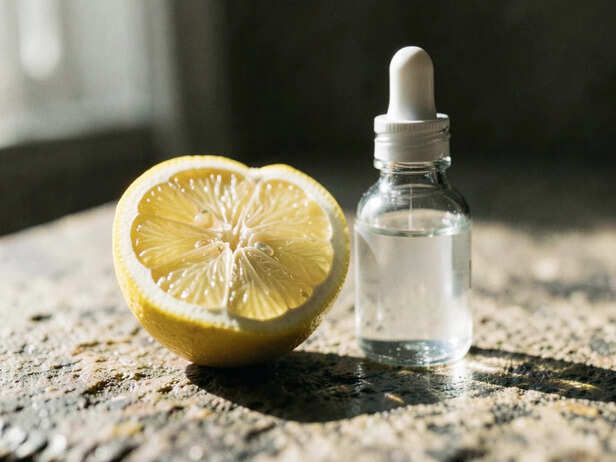
The lemon-on-skin habit has been passed down through kitchens and beauty routines for generations. The reasoning feels watertight: citric acid exfoliates, vitamin C brightens, it is natural and costs nothing. What gets left out of that reasoning is what citric acid at undiluted concentration actually does to the skin barrier, and why the brightening effect, when it appears at all, tends to reverse itself.
What the Skin Barrier Is Actually Doing
The outermost layer of skin is not passive. It holds water in, keeps irritants out, and maintains a slightly acidic environment, a pH of roughly 4.5 to 5.5, that keeps its own microbial balance stable. This acid mantle is not a metaphor. It is a measurable chemical condition that the skin actively maintains, and most of what goes wrong with skin, dryness, sensitivity, breakouts, redness, begins when that pH shifts.Fresh lemon juice sits at a pH of around 2. That is not slightly more acidic than skin. It is roughly 1,000 times more acidic, because pH is a logarithmic scale. Applying it undiluted does not gently nudge the barrier. It disrupts the acid mantle sharply, strips the lipids that hold the barrier together, and leaves the surface temporarily unable to regulate itself.
The Brightening Effect and Why It Goes the Other Way
The vitamin C in lemon juice is real. Vitamin C does inhibit melanin production, and in stable, formulated concentrations it is one of the better-studied brightening actives in dermatology. The problem is that the vitamin C in lemon juice is neither stable nor at a useful concentration for skin.Citric acid at lemon's pH level is an irritant at this concentration, not an active. The skin responds to irritation with inflammation, and inflammation is one of the primary triggers for post-inflammatory hyperpigmentation, the dark marks that follow any insult to the skin, from a pimple to a burn. The people who apply lemon juice to dark spots and find them darker afterward are not imagining it. The inflammation the juice causes can deepen the very pigmentation they were trying to lift.For anyone with a deeper skin tone, this risk is higher. Melanin-rich skin produces more pigment in response to inflammation, which means the margin for error is smaller and the consequences of that error last longer.
Phototoxicity: The Reaction Most People Do Not Know About
Lemon juice contains compounds called furanocoumarins, which are photosensitising. When skin coated in lemon juice is exposed to UV light, including ordinary daylight, those compounds absorb UV energy and release it as a chemical reaction in the skin. The result is phytophotodermatitis: a burn-like reaction that produces redness, blistering in more severe cases, and dark patches that can take months to fade.This is not a rare or extreme outcome. It happens in ordinary conditions, applying lemon juice in the morning, stepping outside an hour later. The patches it leaves behind are often darker and more persistent than whatever the person was originally trying to treat. Dermatologists see it regularly, and it is the reason that even the most cautious advice about lemon on skin adds a UV warning that most kitchen-remedy guides omit entirely.
What Formulated Vitamin C Actually Does Differently
The reason vitamin C works in skincare products and does not work from a lemon is formulation. Stable vitamin C derivatives, ascorbic acid, sodium ascorbyl phosphate, ascorbyl glucoside, are prepared at concentrations and pH levels calibrated to penetrate the skin without disrupting it. The vitamin C in lemon juice degrades rapidly on exposure to air and light, so by the time it sits on skin it has already oxidised into compounds that do nothing useful and may cause their own irritation.A formulated serum delivers the active in a form the skin can use. Lemon juice delivers it in a form the skin cannot, alongside a pH shock and a phototoxic risk. The natural origin of the ingredient does not make its delivery mechanism safe.
What to Do Instead
For uneven skin tone and dark spots, the evidence-backed options are not complicated. A broad-spectrum SPF used consistently is the single most effective tool for preventing pigmentation from deepening, more effective than any brightening active, because it removes the UV trigger. For active brightening, a formulated vitamin C serum, niacinamide, or alpha arbutin at appropriate concentrations does what lemon juice is trying and failing to do.For anyone who has already been using lemon juice and notices sensitivity, redness, or new dark patches, stopping the habit is the first step. Skin that has been repeatedly disrupted needs time to rebuild its barrier before introducing any new active. A plain moisturiser with ceramides or glycerin, SPF in the morning, and patience is a more useful protocol than switching from one aggressive approach to another.A dermatologist's appointment is worth it if the patches are spreading, if the skin is persistently reactive, or if the dark marks are not fading after several months of sun protection. Some pigmentation responds well to professional treatment; some does not, and knowing which is the case early saves time.The lemon habit persists because it is cheap, available, and has the surface logic of natural acids and vitamin C working in its favour. What it does not have is a delivery system that makes those things useful, or a safety profile that makes the trade-off sensible. The kitchen is the right place for lemon. The skin barrier is doing something specific and worth protecting