
Why You Lose Hair Every Day and What That Actually Means
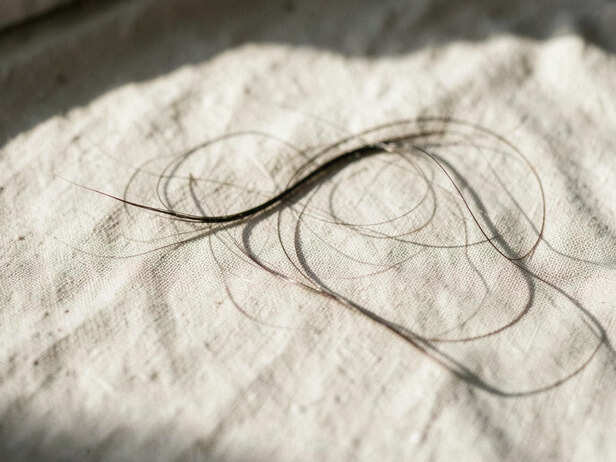
Most people notice the hair on their pillow before they notice the hair still on their head. A few strands in the drain, a small cluster on the brush, and the mind goes straight to loss. What it is actually seeing is a cycle that has been running since before birth, one that the body manages strand by strand, follicle by follicle, without any instruction from the person attached to it.
Every Hair Follicle Runs Its Own Clock
Each of the roughly 100,000 follicles on a human scalp operates on an independent schedule. They are not synchronised. If they were, every person would go bald for a few months every few years and then regrow everything at once. Instead, each follicle moves through its own cycle at its own pace, so at any moment the scalp is running thousands of cycles simultaneously, each at a different stage.
The cycle has three named phases. The first is anagen, the active growing phase, when the hair shaft is being built and pushed outward from the follicle. This phase lasts anywhere from two to six years, which is why some people can grow hair past their waist and others hit a ceiling at their shoulders, the ceiling is the length of their anagen phase. Around 85 to 90 percent of scalp hair is in anagen at any given time.
The second phase is catagen, a short transitional period of roughly two weeks. The follicle shrinks, the blood supply to the hair root cuts back, and the shaft detaches from the base of the follicle without yet falling out. It sits, held loosely in place, waiting.
The third phase is telogen, the resting phase, lasting roughly three months. The follicle is dormant. The old hair is still in the canal but no longer anchored. When the follicle eventually re-enters anagen and a new shaft starts growing beneath it, the old hair is pushed out. That is the strand that lands on the pillow.
What 50 to 100 Hairs a Day Actually Looks Like
Dermatologists generally describe a daily shed of 50 to 100 hairs as within the normal range for an adult scalp. That figure sounds large until you do the arithmetic: 100,000 follicles, with roughly 10 to 15 percent in telogen at any moment, means 10,000 to 15,000 hairs sitting in the resting phase on any given day. Over the three months of telogen, those hairs exit in a steady trickle rather than all at once. Fifty to a hundred a day is what a trickle from 10,000 resting follicles looks like.
The number also varies by the day in ways that have nothing to do with the health of the follicle. Hair that has been tied up for several days sheds in a cluster when it is finally loosened, because the strands that were ready to fall stayed mechanically held in place. A wash day collects several days' worth at once. This is why the shower drain looks dramatic after a few days of dry shampoo, it is not more shedding, it is delayed shedding made visible.
Why Humidity, Seasons, and Stress Shift the Numbers
The telogen phase is not perfectly stable across the year. Some research points to a mild seasonal pattern, with more follicles entering telogen in summer and those hairs shedding roughly three months later in autumn. The mechanism is not fully understood, and the effect is subtle enough that most people never notice it. Where the shift becomes visible is when something else stacks on top of it.
Significant physical or emotional stress can push a larger-than-usual proportion of follicles into telogen simultaneously. The medical term is telogen effluvium. The shedding does not happen immediately, it follows the three-month telogen lag, which is why hair loss after an illness, a difficult period, or a nutritional gap often appears well after the cause has passed. By the time the shedding is visible, the original trigger can feel unrelated.
Humid months can make shed hair more noticeable for a different reason. Hair swells slightly when it absorbs moisture, which means shed strands cling to wet skin and surfaces more readily. The actual count may be unchanged; the visibility is higher.
The Difference Between Shedding and Thinning
Shedding produces a full-length hair with a small white bulb at the root end, the club hair, as it is called, the telogen-phase shaft that has detached cleanly from the follicle. The follicle itself is intact and will cycle again. Thinning works differently. In androgenetic hair loss, the anagen phase shortens with each successive cycle, so the new hair that grows back is finer and shorter than the one before it. Over time the follicle miniaturises. The shed hair is still there, but the hair that replaces it is not.
This distinction matters because it changes what you are actually looking at in the brush. A shed of full-length strands with visible bulbs is a functioning cycle. A progressive change in the texture and density of the hair still on the scalp, particularly at the crown or along the parting, is a different signal. One is the cycle working. The other is the cycle shortening. A dermatologist can distinguish them; a drain cannot.
When the Count Is Worth Paying Attention To
There is no reliable way to count daily shed at home. The variables, wash frequency, styling habits, hair length, how carefully you collect, make any home tally unreliable. What is more useful is noticing change over time: a sustained increase in shedding that lasts longer than three months, visible thinning at the parting or temples, or a change in the texture of new growth. Any of those is worth showing a doctor, not because shedding is dangerous but because the cause matters and causes vary.
A single dramatic shed after an illness or a stressful period, followed by gradual return to normal, usually resolves on its own once the trigger passes. Shedding that continues without a clear cause, or that comes with scalp changes, warrants a look from a dermatologist rather than a home remedy.
The cycle does not stop because you worry about it. It does not accelerate because you watch it. What changes when you understand it is the quality of the attention, the difference between noticing a functioning system and mistaking it for a failing one.
Unlock insightful tips and inspiration on personal growth, productivity, and well-being. Stay motivated and updated with the latest at My Life XP.