
What Rose Water and Ice Actually Do to Redness on Your Face
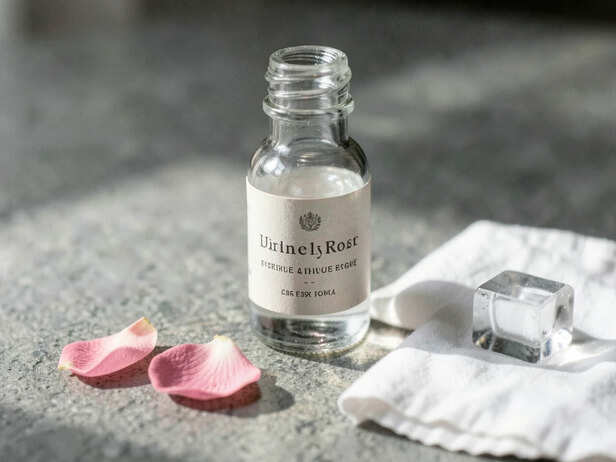
Facial redness has a straightforward cause most of the time: blood vessels near the surface of the skin widen, letting more blood through, and that increased flow shows as colour. The trigger could be heat, friction, a harsh product, a brief flush of emotion, or skin that is simply more reactive than average. Whatever started it, the visible result is the same, a warmth and a pinkness that feels like something you should do something about. Rose water and ice are usually the first things people reach for. Both produce a noticeable change quickly, which is why the habit sticks. What they are doing, though, is different from each other, and different from what most people believe.
What Ice Actually Does to the Skin
Cold narrows blood vessels. When something very cold touches the surface of your skin, the capillaries underneath constrict as a reflex, the body's way of conserving heat and reducing blood flow to the periphery. The redness fades because less blood is sitting in those vessels, not because anything inflammatory has been resolved. The effect is real and it is immediate, which is why ice feels so satisfying on a flushed face. It is also temporary. Once the skin warms back up, the vessels dilate again. If the original trigger is still present, an irritating product still on the skin, a condition that causes chronic vessel dilation, the redness returns. Ice is a pause, not a treatment. There is also a limit to how useful the cold is. Holding ice directly against skin for more than a minute or two can cause surface irritation of its own, particularly on skin that is already compromised. Wrapping the ice in a thin cloth and pressing it for thirty seconds at a time is the safer version of the same effect.
What Rose Water Actually Does
Rose water is distilled from rose petals, and its main active components are a small collection of phenolic compounds, primarily tannins and flavonoids, that have mild astringent and antioxidant properties. The astringency is what most people are feeling when rose water seems to tighten and calm the skin: tannins cause a slight surface contraction, which can reduce the appearance of redness and give the skin a briefly smoother look. The cooling sensation it produces is mostly physical, water evaporating from the surface of the skin takes heat with it, and that mild evaporative cooling has a secondary vasoconstricting effect similar to, though much gentler than, ice. Rose water also has a pH that sits reasonably close to the skin's own, which means it is unlikely to disrupt the barrier in the way that some toners and astringents do. That relative gentleness is its real advantage over stronger options. It does not resolve inflammation in any clinically meaningful sense, but it also does not add to it, which makes it a reasonable choice for reactive skin looking for something that will not cause a further reaction.
When Each One Is the Right Reach
Ice is most useful when the redness has a clear, recent, physical cause: you have just finished exercising, you have been out in the heat, you have over-exfoliated. The vessel dilation is a direct response to something that has already ended, and the cold gives it a push back toward baseline. It is also useful on a minor localised irritation, a spot that has been touched too much, a patch of skin that reacted to a product, where bringing down the surface temperature quickly makes sense. Rose water is more useful as a daily maintenance step for skin that runs reactive. Its gentleness makes it a reasonable first layer after cleansing, before anything else goes on, particularly for skin that finds most toners too stripping. It is also a reasonable mid-day reset on skin that has been sitting in air conditioning or has become dry and flushed from that dryness. Neither of them is the right reach when the redness is persistent, appears in a consistent pattern across the nose and cheeks, comes with texture changes, or has been present for months. That pattern is worth a dermatologist's look rather than a home remedy, because the underlying cause is likely something that vasoconstriction and mild astringency cannot reach.
What Neither of Them Does
Neither rose water nor ice reduces genuine inflammation at the level where inflammation is happening. Inflammatory redness involves a cascade of signalling molecules, prostaglandins, cytokines, and a recruitment of immune cells to the area. Cold slows some of that activity slightly at the surface, but it does not interrupt the cascade. Rose water's antioxidant compounds are present in concentrations too small to have a meaningful anti-inflammatory effect on skin that is actively inflamed. This matters because both are frequently described as anti-inflammatory, and that description sets an expectation they cannot meet. If your skin is inflamed, genuinely inflamed, not just flushed, reaching for rose water or ice instead of addressing the cause is a way of feeling like you are doing something while the actual problem continues. The honest version of what they offer is more modest and more useful: temporary vasoconstriction, mild surface soothing, a gentler alternative to harsher products. That is enough to make them worth keeping. It is not enough to make them treatments.
Redness tells you something is happening in the vessels just under the surface of your skin. Ice and rose water both interact with those vessels in ways that produce a visible change, one through cold, one through mild astringency and evaporative cooling, but neither changes what caused the vessels to behave that way. Used with that understanding, both are genuinely useful. Used as a substitute for figuring out the cause, they become a habit that keeps the question from being asked.
Unlock insightful tips and inspiration on personal growth, productivity, and well-being. Stay motivated and updated with the latest at My Life XP.