
Why Does Your Face Look Different in the Mirror and Photos?
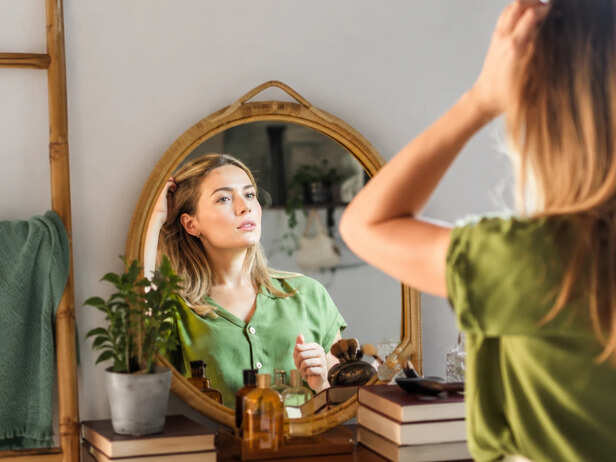
You look in the mirror before heading out and everything seems normal. Later, someone takes a photo, and you barely recognise yourself. You may even wonder, why does my face look different in the mirror and photos? The good news is that a photograph is not necessarily showing a hidden or more accurate version of your face. Mirrors and cameras present your features in different ways, and several small factors can change the final image.
The Mirror Shows One Version of You
A mirror reflects your face from a particular position and reverses the image from left to right.
You also see this version of yourself regularly. Over time, your brain becomes very familiar with your reflection. That familiarity matters.
When you see an ordinary photograph, your features are presented in a different orientation. Even small differences can feel surprisingly noticeable simply because the image does not match the version you see most often.
So, if your face looks different in mirror and photographs, it does not automatically mean that something about your appearance has changed.
Your Phone Camera Sees You Differently
A camera does not simply copy what your eyes see.
It captures your face from one particular position, through a particular lens and at one specific moment. The resulting image depends on the camera's distance from you, its angle, the lighting and how the phone processes the picture.
This is one reason the mirror vs camera face comparison can feel confusing.
The camera is recording a two-dimensional image of a three-dimensional face. That change alone can make familiar features appear different.
Distance Can Change Your Features
The distance between your face and the camera can have a noticeable effect on a photograph.
When a phone is held very close to your face, perspective can make some features appear more prominent than they might in a photo taken from farther away.
This is particularly relevant to selfies. Your arm's length may place the camera much closer to your face than a friend standing several feet away with a camera.
That is one reason why do selfies make my face look different is such a common question.
Moving the camera farther away can create a different perspective and may produce a more natural-looking photograph.
Lighting Can Change Your Entire Face
Lighting can completely change the way a photograph looks.
Bright light from directly above can create shadows. Strong flash can make the image look harsher. Soft light coming from a window can produce a more even appearance.
Even the same face can look noticeably different under indoor lighting, outdoor sunlight and low light.
Lighting can affect how shadows fall across the face, how skin texture appears and how facial features are defined.
So before deciding that your face looks different in photos, consider the light in the picture.
Your Face Is Not Perfectly Symmetrical
Human faces naturally have some degree of asymmetry. One side may not look exactly like the other, and that is normal.
Because you are used to your reflection, seeing your face from a different orientation can make these small differences seem more obvious.
This does not mean asymmetry is a flaw. It is simply part of normal facial variation.
A photograph may also capture your face from a slightly different angle than you usually see it, making familiar features appear unfamiliar.
Why Selfies Can Look Especially Strange
Selfies have a few extra variables.
The camera is usually close to your face. You may hold the phone slightly above, below or to one side. You may also tilt your head without noticing it.
On top of that, smartphones can automatically process photographs. Depending on the device and settings, this can include adjustments to exposure, sharpness, colour, noise and other aspects of the image.
Some phones may also apply different processing to front-camera images.
This does not mean every phone dramatically changes facial features. It simply means that the image you see on screen has gone through more than just the act of pressing a button.
Your Expression Matters More Than You Think
A mirror usually shows you while you are actively looking at yourself.
A photograph can capture you while you are talking, blinking, laughing, turning your head or making a brief expression.
That tiny moment can completely change the feeling of an image.
You may look at one photograph and think, “Why do I look so different?” But another photo taken a second later could look completely different.
This is an important part of understanding how you look in photos. A single frame cannot capture every expression you make throughout the day.
Why You May Prefer Your Mirror Image
There is another simple reason your mirror may feel more flattering: familiarity.
You see your reflection repeatedly, often while you are consciously adjusting your hair, posture or expression. You may also naturally choose the angle and lighting that you like.
A photograph does not always give you that control.
So if you are wondering why do I look good in the mirror but bad in photos, familiarity may be part of the answer. The unfamiliar version can simply look strange to you.
So Which One Looks More Like You?
If you are wondering, is the mirror or camera more accurate?, there is no single answer.
A mirror shows a reflection from a particular angle and reverses the image. A photograph captures a moment from a particular camera position, with a specific lens, distance, lighting setup and processing.
Neither should be treated as the one definitive version of your face.
People around you also see you differently from either a mirror or a photograph because they see you in motion, from different angles and under changing lighting.
Your face is not a still image.
How to Take More Natural-Looking Photos
If you want photographs that feel closer to how you normally see yourself, try a few simple changes:
- Move the camera farther away. Avoid placing the phone extremely close to your face.
- Try natural light. Soft light near a window can be easier to work with than harsh overhead lighting.
- Keep the camera around eye level. Small changes in angle can affect the image.
- Take several photos. One frame is not a complete representation of your appearance.
- Try different distances. You may notice that your face looks different when the camera is farther away.
- Relax your expression. A forced smile or tense face can make a photo feel unfamiliar.
- Be careful with filters. Heavily processed images can create unrealistic expectations about what photographs should look like.
These tips are not about making your face look “better.” They are simply ways to understand how different photography conditions affect an image.
Don't Judge Your Face From One Photo
A photograph freezes one tiny moment.
It does not show how your face looks while you are talking, laughing, walking, smiling naturally or simply going about your day.
That is why a single photograph should not become a final judgment about your facial appearance.
If you have ever thought, “Why does my face look weird in pictures?”, remember that the picture has been shaped by the camera, distance, lighting, angle, expression and timing.
The image is real, but it is still just one representation of you.
Unlock insightful tips and inspiration on personal growth, productivity, and well-being. Stay motivated and updated with the latest atMy Life XP