
What This Parliament Protest Reveals About the State of Democracy
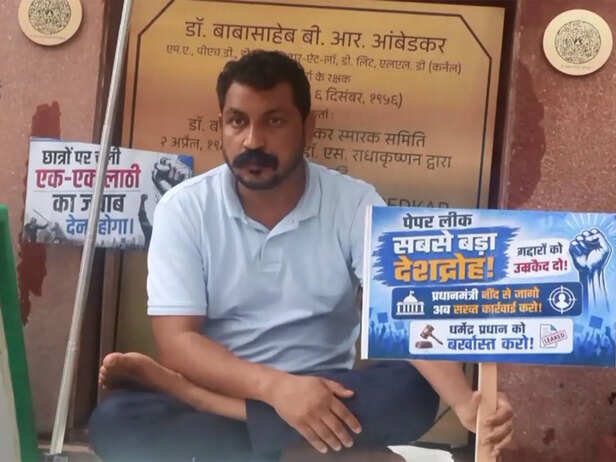
Peaceful protests have always been a part of democracy. They allow people to express their concerns, demand accountability, and seek justice without violence. But when demonstrations lead to clashes, questions naturally arise about where the line between maintaining law and protecting democratic rights should be drawn. Recent events involving MP Chandra Shekhar Azad have brought this debate back into public discussion. His decision to stage a sit-in inside the Parliament complex has turned one day's protest into a wider conversation about students, constitutional rights, and the responsibility of those in power.
From Student Anger to a National Debate
Student demonstrations began with concerns over alleged examination paper leaks and demands for greater transparency in the education system. What started as an issue affecting students soon became a national conversation about accountability and fairness. As more people joined the movement, the protest expanded beyond education, reflecting broader concerns about public trust, governance, and the importance of listening to young citizens. The growing support highlighted how student movements often become symbols of larger democratic conversations.
Why Azad Chose a Sit-In
Chandra Shekhar Azad chose to sit peacefully near Dr. B.R. Ambedkar's statue inside the Parliament complex as a symbolic act rather than a confrontational one. He described the protest as a commitment to constitutional values and peaceful resistance. By selecting this location, he drew attention to the principles of justice, equality, and democracy associated with Ambedkar. His message was that public representatives should continue to raise citizens' concerns through peaceful and constitutional means.
The Remark That Drew National Attention
Azad's statement comparing the day's events to the memories of Jallianwala Bagh became the most discussed part of his protest. Such historical references naturally attract public attention because they connect present-day events with significant moments from the past. While many people supported his emotional expression, others believed the comparison was too strong. Regardless of differing opinions, the statement shifted the conversation from a single protest to a broader debate about democratic rights and the language used in political discussions.
When Peaceful Protest Meets Police Action
Peaceful protests and public safety often need careful balance. Authorities are responsible for maintaining order, while citizens have the constitutional right to express their views peacefully. When these responsibilities collide, disagreements and tensions can quickly emerge. The recent clashes reminded many people that managing demonstrations requires restraint, communication, and mutual respect. Every such incident also becomes an opportunity to reflect on how democratic societies handle disagreement without allowing conflicts to escalate.
Students at the Heart of the Movement
Young people have often influenced important social and political discussions throughout history. Their participation reflects concerns not only about their own future but also about the systems that affect millions of citizens. In this case, demands linked to examination transparency gradually became part of a larger conversation about fairness, accountability, and public confidence. Student voices continue to remind society that education and opportunity remain deeply connected to the country's future.
Why Democratic Rights Matter
The right to express opinions peacefully is one of the foundations of democracy. Citizens, activists, and elected representatives all rely on constitutional protections to raise concerns and seek change. At the same time, democratic systems also depend on peaceful conduct and respect for public order. Finding the right balance between these responsibilities is not always easy, but it remains essential for maintaining public trust. Every public debate reinforces the importance of protecting both freedom and responsibility.
A Protest That Leaves Bigger Questions
Some protests end when people return home, while others continue through the conversations they create. Chandra Shekhar Azad's sit-in has become more than a political event because it raises questions about democratic values, student participation, constitutional rights, and the relationship between citizens and institutions. Whatever opinions people hold, the incident reminds us that democracy grows stronger when difficult questions are discussed openly, respectfully, and within the framework of the Constitution.
Unlock insightful tips and inspiration on personal growth, productivity, and well-being. Stay motivated and updated with the latest at My Life XP.