7 Surprising Signs Your Cholesterol May Be Too High
Noopur Kumari | Aug 13, 2026, 14:00 IST
The surprising truth is that cholesterol itself usually does not cause obvious symptoms.Instead, problems can develop when excess LDL cholesterol contributes to atherosclerosis, a process in which plaque builds up inside arteries. Over time, this can restrict blood flow and increase the risk of heart attack and stroke.Certain physical signs can also occur in people with very high cholesterol, particularly inherited forms such as familial hypercholesterolemia.Here are seven changes worth knowing about, along with what they may actually mean.

High Cholesterol May Be Affecting Your Body
Image credit : Freepik
High cholesterol is often called a silent problem because most people do not feel anything unusual when their cholesterol levels rise. That is exactly what makes it easy to overlook.
But in some people, prolonged or severe cholesterol problems can contribute to changes elsewhere in the body. Some signs may appear around the eyes or skin, while others can point to reduced blood flow caused by plaque buildup in the arteries.
These symptoms do not automatically mean you have high cholesterol. Many have other possible causes. The only reliable way to know your cholesterol level is through a blood test. Still, recognising unusual changes and discussing them with a doctor can help uncover problems before they become more serious.
![Cholesterol Deposits Around the Eyes]()
Small yellowish patches or raised areas around the eyelids may be xanthelasma, deposits containing cholesterol beneath the skin. They are usually harmless themselves, but they can sometimes be associated with abnormal cholesterol levels. Not everyone with xanthelasma has high cholesterol, and the appearance can have several causes. However, if you notice new yellowish deposits around your eyes, it is worth mentioning them to a healthcare professional. A simple lipid blood test can determine whether your cholesterol levels are elevated and whether further evaluation is needed.
A white, grey or bluish ring around the outer edge of the cornea is known as corneal arcus. It becomes more common with age and does not automatically indicate high cholesterol. However, when it appears in younger adults, doctors may consider checking cholesterol levels, particularly if there is a family history of high cholesterol or early heart disease. The ring itself usually does not affect vision. The important point is not to diagnose yourself from appearance alone. A medical evaluation and blood test are far more useful for understanding what is happening.
![Tendon Xanthomas and High Cholesterol]()
Unusual firm lumps or thickening around tendons, particularly the Achilles tendon or tendons in the hands, can sometimes be tendon xanthomas. These cholesterol-rich deposits are especially associated with familial hypercholesterolemia, an inherited condition that can cause very high LDL cholesterol from an early age. They should not be ignored, particularly if close relatives have had heart attacks or cardiovascular disease at a young age. A doctor can examine the area and order appropriate cholesterol testing. Early identification of inherited high cholesterol can be important because treatment can significantly reduce cardiovascular risk.
Leg pain is not a direct symptom of high cholesterol. However, cholesterol-related plaque can contribute to peripheral artery disease, which reduces blood flow to the limbs. One classic symptom is aching or cramping in the legs that develops during walking or exercise and improves after resting. Persistent or recurring pain should be evaluated rather than automatically blamed on cholesterol. A doctor can assess circulation and cardiovascular risk factors. If poor blood flow is involved, identifying it early can help address the underlying risk and reduce the chances of more serious vascular complications.
Feet that frequently feel cold, numb or unusually weak may have many explanations, including nerve problems, thyroid disorders and circulation issues. When cholesterol-related plaque narrows arteries, blood flow to the legs and feet can become restricted. Other possible signs of peripheral artery disease include changes in skin colour, slow-healing wounds and weaker pulses. These symptoms should not be used to diagnose high cholesterol on their own. If they are persistent, especially when combined with walking-related leg pain, a medical evaluation can help determine whether poor circulation or another condition is responsible.
A small cut that repeatedly takes a long time to heal may seem like a minor problem. But poor circulation can make it harder for oxygen and nutrients to reach damaged tissue. Peripheral artery disease is one possible cause, although diabetes, infection and other conditions can also delay healing. If you repeatedly notice wounds on your feet or legs that are slow to heal, speak with a healthcare professional. This is particularly important if you also experience numbness, colour changes or leg pain while walking. These symptoms deserve proper assessment rather than home treatment alone.
Unlike some of the physical signs above, chest pressure or pain can be an urgent warning of a heart problem. High LDL cholesterol can contribute to plaque buildup in the coronary arteries over time, increasing cardiovascular risk. If chest discomfort occurs with shortness of breath, sweating, nausea, dizziness or pain spreading to the arm, shoulder, back or jaw, seek emergency medical help immediately. Do not wait for the discomfort to disappear or assume it is simply high cholesterol. Cholesterol itself may be silent, but the cardiovascular disease associated with it can become dangerous.
The biggest mistake is trying to diagnose high cholesterol from symptoms. Most people with high cholesterol have no symptoms at all. A lipid panel can measure LDL cholesterol, HDL cholesterol, triglycerides and total cholesterol. Your doctor can interpret these results alongside your age, blood pressure, diabetes status, smoking history, family history and other cardiovascular risk factors. If you have a strong family history of early heart disease or extremely high cholesterol, ask whether you should be evaluated for an inherited cholesterol disorder. Early detection gives you more opportunities to reduce long-term risk.
Are relationship issues affecting your peace of mind? Your name energy may be playing a role. Check your name energy here!
Unlock insightful tips and inspiration on personal growth, productivity, and well-being. Stay motivated and updated with the latest at My Life XP
But in some people, prolonged or severe cholesterol problems can contribute to changes elsewhere in the body. Some signs may appear around the eyes or skin, while others can point to reduced blood flow caused by plaque buildup in the arteries.
These symptoms do not automatically mean you have high cholesterol. Many have other possible causes. The only reliable way to know your cholesterol level is through a blood test. Still, recognising unusual changes and discussing them with a doctor can help uncover problems before they become more serious.
Yellowish Patches Around the Eyes

Cholesterol Deposits Around the Eyes
Image credit : Freepik
Small yellowish patches or raised areas around the eyelids may be xanthelasma, deposits containing cholesterol beneath the skin. They are usually harmless themselves, but they can sometimes be associated with abnormal cholesterol levels. Not everyone with xanthelasma has high cholesterol, and the appearance can have several causes. However, if you notice new yellowish deposits around your eyes, it is worth mentioning them to a healthcare professional. A simple lipid blood test can determine whether your cholesterol levels are elevated and whether further evaluation is needed.
A Pale Ring Around the Cornea
Firm Lumps Around Tendons
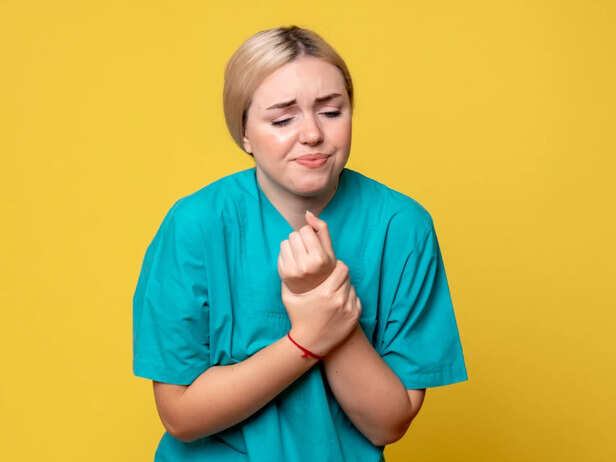
Tendon Xanthomas and High Cholesterol
Image credit : Freepik
Unusual firm lumps or thickening around tendons, particularly the Achilles tendon or tendons in the hands, can sometimes be tendon xanthomas. These cholesterol-rich deposits are especially associated with familial hypercholesterolemia, an inherited condition that can cause very high LDL cholesterol from an early age. They should not be ignored, particularly if close relatives have had heart attacks or cardiovascular disease at a young age. A doctor can examine the area and order appropriate cholesterol testing. Early identification of inherited high cholesterol can be important because treatment can significantly reduce cardiovascular risk.
Leg Pain During Walking
Cold or Numb Feet
Slow-Healing Sores on the Feet
Chest Pressure Is a Bigger Warning
The Important Test Most People Skip
Are relationship issues affecting your peace of mind? Your name energy may be playing a role. Check your name energy here!
Unlock insightful tips and inspiration on personal growth, productivity, and well-being. Stay motivated and updated with the latest at My Life XP