
How to Lift a Heavy Suitcase Without Hurting Your Back
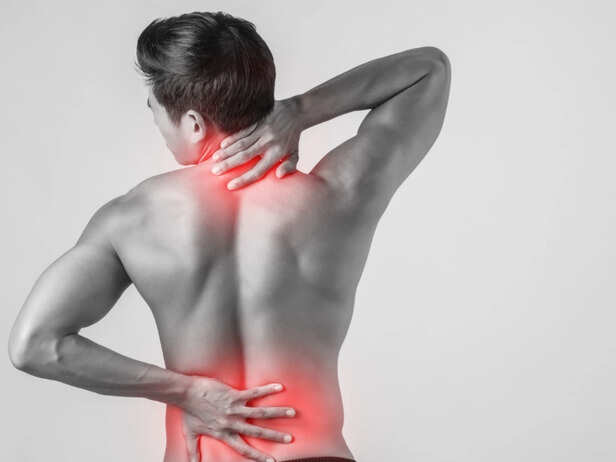
The lower back takes the blame for most luggage injuries, but the back is rarely the one doing the wrong thing. It is doing exactly what you asked it to do, substituting for legs that were never brought into the movement. A heavy suitcase lifted from the floor is a physics problem before it is a fitness problem, and the solution is a routing decision: get the load through the largest muscles in the body, not through a stack of small vertebral joints that were never designed to bear it alone.
Why the Back Gives Out When the Legs Could Have Done the Work
When you reach forward and pull a bag upright without bending your knees, your spine acts as a lever. The fulcrum sits at the lowest lumbar joints, the load hangs at the end of your arms, and the counterweight is every muscle along your back trying to hold you from folding. A lever this long, loaded this way, multiplies the effective force on those joints several times over the actual weight of the bag. A twenty-kilogram suitcase felt through a long-lever lift can place the equivalent of sixty to eighty kilograms of compressive force on the lumbar discs. The discs absorb it, or they don't.
The leg alternative works differently. Bend the knees, lower the hips, and the load path shortens dramatically. The hips and thighs, the gluteus maximus and the quadriceps, are the largest and strongest muscle groups in the body. They are built for exactly this kind of vertical drive. The spine's job, when the lift is done correctly, is to stay stable and transmit force, not to generate it.
The Setup Matters More Than the Lift Itself
Stand close enough to the bag that it is directly beneath your centre of gravity, not a foot in front of you. This single step removes most of the lever problem before you bend at all. People habitually reach for a bag from too far away because they are trying to avoid the awkwardness of squatting down in a busy airport. That awkwardness is the correct movement. The alternative is worse.
Feet should be roughly hip-width apart, one foot slightly ahead of the other if the bag is long. This gives you a stable base as you rise. Before you bend, brace your core, not a held breath, but a gentle tensioning of the abdominal wall, as if you are about to take a light punch. This creates intra-abdominal pressure that supports the spine from the inside while the legs do the lifting from the outside.
Grip the handle fully, not with fingertips. A full-hand grip means the arm muscles are engaged rather than the tendons at the wrist and elbow absorbing a sudden jolt.
The Lift: What Should Move and What Should Not
Push through the floor with your legs. The hips rise first, then the torso follows. The back angle relative to the floor stays roughly the same throughout the movement, it does not straighten independently while the hips are still low. A common error is to let the hips come up first while the torso stays bent, which recreates the lever problem mid-lift. Think of it as one coordinated rise, not two separate events.
Keep the bag close to your body as it leaves the floor. The further the bag swings away from your centre, the longer the lever becomes again. Tuck it in.
Once upright, do not twist at the waist to place the bag somewhere else. Pivot with your feet. Twisting under load is where disc injuries happen to people who lifted correctly and then forgot about the last step.
Overhead Bins and Car Boots: Two Special Cases
An overhead bin adds a problem the floor lift does not have: the load travels upward past your centre of gravity, and for a moment the bag is above your head with your arms extended. At that point your shoulder and neck muscles are working hard, and if the bag tilts or catches on the bin edge, a jerk travels straight to the cervical spine.
For a bin lift, get as close to the bin as the aisle allows. Lift the bag to waist height first, pause, then drive it up in a second movement. If the bag is too heavy to do this in a controlled two-stage lift, it is too heavy to go overhead without help. Asking is faster than a physiotherapy appointment.
A car boot is the opposite geometry: the bag goes down and away from you. Back up to the boot, bend at the knees, lower the bag rather than swinging it in. The temptation to stand upright and swing a bag into a boot by its handle is exactly the long-lever, rotational combination that injures the lumbar spine most reliably.
When the Technique Holds and When It Does Not
Correct technique reduces injury risk substantially but does not eliminate it. A bag that is genuinely too heavy, one you cannot rise from a squat with smoothly, is a bag that should be split, checked differently, or carried by two people. There is no technique that makes an overloaded lift safe.
If you have an existing lower back condition, a disc injury, or recent hip or knee surgery, the general principles here do not replace a conversation with a physiotherapist about what your spine and joints can currently tolerate. The routing logic is sound; the load limit is personal.
A sharp pain during any lift, or pain that radiates down a leg afterward, is a reason to stop and get assessed. It is not a reason to try the lift again with better form.
The back does not give out because it is weak. It gives out because it was asked to do a job the legs were standing right there to do. Every time you get the setup right, close to the bag, feet wide, core braced, hips dropping before the pull, the load goes where the body intended it to go, and the spine gets to be a spine rather than a crane.