
Free HPV Vaccine for Girls What Parents Need to Know
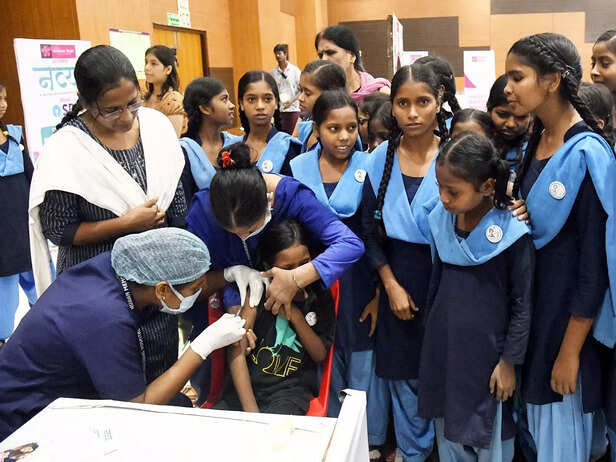
Human Papillomavirus or HPV is a group of more than 100 related viruses, some of which are classified as high risk types because they can cause cancer. Persistent infection with high risk HPV strains, particularly HPV 16 and HPV 18, is responsible for the majority of cervical cancer cases globally.
Cervical cancer develops in the cells lining the cervix and often progresses silently in its early stages. In India, it remains one of the most common cancers among women, particularly in lower income and rural populations where screening coverage is limited. According to global health data, India accounts for a substantial share of worldwide cervical cancer cases and deaths each year.
Vaccination before exposure to the virus offers highly effective protection. Public health experts have consistently emphasised that immunising adolescent girls before the onset of sexual activity significantly reduces the risk of HPV infection and subsequent cervical cancer.
Why This Nationwide Rollout Is Significant for India
The proposed free HPV vaccination drive represents a structural shift in India’s preventive healthcare strategy. Historically, HPV vaccines have been available in the private sector, but cost barriers and limited awareness restricted uptake.
A government funded programme ensures that socioeconomic status does not determine access. This is particularly critical in a country where healthcare disparities remain pronounced across regions and communities.
The nationwide approach also aligns with India’s broader immunisation infrastructure, including school based vaccination campaigns and primary health centre networks. By embedding HPV vaccination into routine immunisation schedules, authorities aim to normalise it as a standard adolescent health intervention rather than a specialised or optional vaccine.
Alignment With Global Cervical Cancer Elimination Goals
The World Health Organization has set an ambitious target to eliminate cervical cancer as a public health problem. The global strategy includes three primary pillars: vaccination of 90 percent of girls by age 15, screening of 70 percent of women, and treatment of 90 percent of those diagnosed with cervical disease.
India’s planned rollout directly supports the vaccination pillar of this strategy. Given the country’s large population, successful implementation could substantially influence global progress toward elimination targets.
Public health analysts note that India’s participation is pivotal not only for domestic health outcomes but also for worldwide cancer reduction metrics.
Target Age Group and Implementation Strategy
The programme is expected to focus primarily on adolescent girls aged 9 to 14 years. This age group is recommended internationally because immune response to the vaccine is strongest during early adolescence, and vaccination before HPV exposure ensures maximum efficacy.
Implementation is likely to involve multiple channels, including:
School based vaccination drives in both government and private institutions
Outreach through community health workers such as ASHAs and ANMs
Integration into routine immunisation sessions at primary health centres
The government may adopt a phased rollout, beginning with high burden states and gradually expanding nationwide. Digital tracking through national health portals could be used to monitor coverage and ensure completion of recommended doses.
The Role of Indigenous Vaccine Development
India has made significant progress in vaccine manufacturing capabilities. The development of a domestically produced HPV vaccine reduces reliance on imports and enhances affordability.
The involvement of Indian pharmaceutical manufacturers ensures stable supply chains and cost control. Domestic production also strengthens India’s position as a global vaccine hub, a role it reinforced during recent large scale immunisation efforts.
Affordable vaccines are central to sustaining long term public health initiatives, especially when targeting nationwide adolescent populations.
Addressing Myths and Vaccine Hesitancy
Despite strong scientific evidence supporting HPV vaccination, misinformation and cultural stigma can hinder acceptance. Some communities mistakenly associate the vaccine with promoting early sexual activity, while others fear potential side effects.
Extensive clinical research has demonstrated that HPV vaccines are safe and effective. Side effects are generally mild and may include temporary pain at the injection site, low grade fever, or fatigue.
Public health campaigns accompanying the rollout are expected to focus heavily on awareness, emphasising cancer prevention rather than sexual transmission. Community leaders, school authorities, and healthcare professionals will play a crucial role in building trust.
Transparent communication strategies and evidence based messaging will be essential to achieving high coverage rates.
Economic and Social Impact of HPV Vaccination
The economic implications of cervical cancer are profound. Treatment costs, loss of productivity, and long term care place a heavy financial burden on families and healthcare systems.
Preventive vaccination is significantly more cost effective than treating advanced stage cancer. By reducing future incidence rates, India can redirect healthcare resources toward other pressing medical priorities.
Beyond economics, the social benefits are equally important. Cervical cancer often affects women in their productive years, impacting family stability and child welfare. Preventing these cases enhances quality of life and promotes gender equity in healthcare access.
Integration With Screening and Early Detection
Vaccination alone does not eliminate the need for cervical cancer screening. Women who are already sexually active may have been exposed to HPV, and regular screening remains critical for early detection.
India is gradually expanding screening programmes through primary health centres and community outreach. Combining vaccination with screening forms a comprehensive prevention model.
In the long term, high vaccination coverage among adolescents will reduce the pool of HPV infections, making screening programmes more effective and manageable.
Challenges in Nationwide Implementation
While the initiative is ambitious, several operational challenges must be addressed:
Logistical coordination across diverse geographic regions
Cold chain maintenance for vaccine storage
Training healthcare personnel
Ensuring accurate data recording and follow up
India’s experience with large scale immunisation drives provides a strong foundation. However, sustained political commitment, budget allocation, and interdepartmental coordination will determine success.
Special attention must be paid to reaching marginalised populations, including those in remote rural areas, urban slums, and tribal communities.
Public Health Infrastructure and Policy Support
The HPV vaccination rollout is expected to operate under the framework of India’s Universal Immunisation Programme. Strong policy backing from central and state governments will be essential for uniform implementation.
Coordination between the Ministry of Health, state health departments, and educational institutions will facilitate school based coverage. Additionally, partnerships with civil society organisations can support awareness campaigns and last mile delivery.
Robust surveillance systems will be needed to track adverse events and maintain public confidence.
Long Term Vision for Cervical Cancer Reduction
If effectively implemented, the nationwide HPV vaccination drive could significantly reduce cervical cancer incidence over the next two to three decades. Since cancer development often occurs years after HPV infection, measurable declines may take time. However, epidemiological modelling consistently shows that high vaccination coverage leads to substantial long term benefits.
Countries that introduced HPV vaccination earlier have already reported reductions in HPV infections and precancerous lesions among young women. India’s large scale adoption could replicate these outcomes at a population level.
The initiative may also catalyse broader conversations about adolescent health, reproductive education, and preventive oncology.
Strengthening India’s Global Health Leadership
India’s commitment to free HPV vaccination reinforces its emerging leadership in global health policy. By prioritising preventive care and investing in large scale immunisation, the country demonstrates alignment with international health standards while addressing domestic needs.
As one of the most populous nations, India’s health interventions have ripple effects beyond its borders. Success in HPV vaccination could serve as a model for other low and middle income countries seeking scalable cancer prevention strategies.
The launch of a free nationwide HPV vaccination programme for adolescent girls represents a transformative step in India’s public health landscape. By targeting the root cause of cervical cancer, the initiative prioritises prevention over treatment and equity over access barriers.
Aligned with global objectives set by the World Health Organization, the programme has the potential to save thousands of lives annually in the decades ahead. Its success will depend on effective implementation, strong public awareness campaigns, and sustained political commitment.
If executed with precision and inclusivity, this initiative could mark the beginning of the end for cervical cancer as a major public health threat in India, securing a healthier future for millions of young girls across the nation.
Unlock insightful tips and inspiration on personal growth, productivity, and well-being. Stay motivated and updated with the latest at My Life XP.