
The Most Shocking Brain Injuries That Changed People Forever
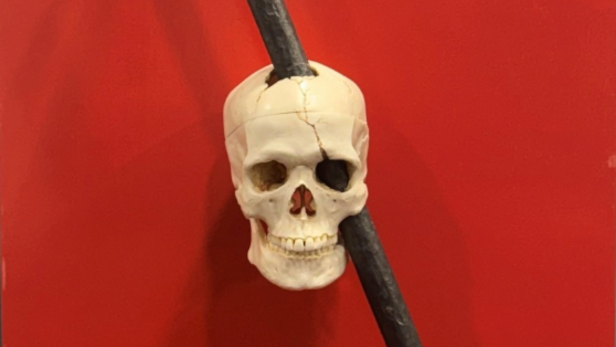
The human brain is often described as the most complex structure in the known universe. It stores memory, controls emotion, shapes personality, influences morality, and creates the very sense of identity people carry throughout life. Yet some of the greatest discoveries about the brain did not come from laboratories or planned scientific experiments. They emerged from horrifying accidents that no human should have survived. What shocked doctors most was not merely survival. In several famous real-life cases, survivors appeared to become completely different people afterward. Some developed new personalities. Others lost emotional control. A few suddenly displayed artistic or mathematical abilities they had never shown before. Families often described the transformation in deeply emotional terms, saying the person who survived no longer felt like the same human being.
These cases permanently changed neuroscience because they revealed something deeply unsettling and fascinating at the same time: personality, behavior, emotion, and identity are profoundly connected to the physical brain.
The Phineas Gage Case That Changed Neuroscience Forever
Perhaps no brain injury case in history is more famous than that of Phineas Gage. In September 1848, Gage was working as a railroad construction foreman in Vermont when an accidental explosion launched a massive iron tamping rod through his skull. The rod entered below his cheekbone, passed through much of his frontal lobe, and exited through the top of his head. Astonishingly, Gage survived. Witnesses reported that he remained conscious and was even able to speak shortly after the accident.
The survival alone seemed medically impossible. But what truly transformed medical science was what happened afterward. According to early reports by Dr. John Harlow, Gage’s personality changed dramatically after the injury. Friends and colleagues reportedly claimed he was “no longer Gage,” a phrase that became one of the most haunting quotations in neuroscience history. Before the accident, Gage was described as disciplined, responsible, and socially reliable. Afterward, reports portrayed him as impulsive, emotionally unstable, impatient, and socially inappropriate. Modern researchers now caution that some parts of the story were likely exaggerated over time. Several contemporary neuroscientists emphasize that Gage may have partially recovered socially later in life, and the historical record is incomplete.
Even so, the case fundamentally changed neuroscience forever because it provided some of the earliest evidence that the frontal lobes play a major role in personality, judgment, emotional control, and decision-making. For the first time, scientists seriously began linking specific brain regions to human behavior itself.
Why Frontal Lobe Injuries Can Change Personality
The reason cases like Phineas Gage continue to fascinate scientists is because frontal lobe injuries can affect the very qualities people associate with identity. The frontal lobes help regulate:
- impulse control
- emotional restraint
- social behavior
- planning
- moral judgment
- personality expression
When these areas are damaged, people may still retain memories, intelligence, speech, and physical movement while emotionally behaving like entirely different individuals. This creates one of the deepest and most unsettling questions in neuroscience: if personality changes after brain damage, what truly defines the self? For many families of traumatic brain injury survivors, this question becomes painfully real.
The Woman Who Could No Longer Feel Fear Normally
One of the most disturbing neurological cases ever documented involved a woman known publicly in neuroscience research as “SM.” Due to a rare condition called Urbach-Wiethe disease, SM suffered severe damage to her amygdala, a brain structure strongly involved in fear processing. Scientists discovered that she displayed an extraordinary inability to experience fear in situations that would terrify most people. Researchers exposed her to haunted houses, snakes, horror films, and frightening scenarios that normally trigger panic responses. Yet her reactions remained remarkably calm compared to typical emotional responses.
Her case became enormously important because it helped scientists better understand how the amygdala contributes to fear, survival instincts, emotional learning, and threat detection. More importantly, it revealed that emotions people often consider abstract or spiritual may be deeply tied to physical neural systems. The implications were psychologically shocking.
The Real Cases of Acquired Savant Syndrome
Some of the most astonishing brain injury stories involve acquired savant syndrome, a rare phenomenon in which people develop extraordinary abilities after neurological trauma. In several documented cases, individuals who suffered traumatic brain injuries later displayed advanced talents in music, mathematics, art, or memory despite having shown no exceptional abilities before the injury. Scientists still do not fully understand why this happens.
One theory suggests that damage to certain brain regions may reduce normal cognitive inhibition, allowing hidden abilities or unusual neural pathways to emerge more prominently. Another theory proposes that the injured brain reorganizes itself in unexpected ways through neuroplasticity. Whatever the explanation, these cases deeply fascinated both doctors and the public because they challenged long-standing assumptions about human potential. The idea that trauma could unlock previously hidden abilities felt almost unbelievable. Yet acquired savant syndrome remains medically documented, even though it is considered extremely rare.
Brain Injuries That Altered Morality and Behavior
Modern neuroscience has also documented cases in which brain injuries altered empathy, morality, emotional sensitivity, and aggression. Research involving frontal and temporal lobe damage has shown that some individuals experience major behavioral changes after injury, including impulsive aggression, emotional instability, inappropriate humor, risk-taking behavior, or reduced empathy.
Doctors emphasize that traumatic brain injuries vary enormously, and not every patient experiences personality transformation. Recovery depends on injury severity, rehabilitation, genetics, emotional support, and countless neurological variables. Still, these cases changed science because they forced researchers to confront difficult philosophical questions about free will, morality, and consciousness itself. If damage to physical brain tissue can alter emotional behavior so dramatically, then personality may be far more biologically fragile than humanity once believed.
The Emotional Trauma Experienced by Families
While the scientific details attract public fascination, the emotional reality for survivors and families is often heartbreaking. Many relatives of brain injury survivors describe grieving for someone who is technically still alive. The face, voice, and memories remain, but emotional behavior may feel profoundly different.
Online discussions among traumatic brain injury survivors frequently reveal struggles involving depression, emotional confusion, identity loss, and frustration with personality changes after injury. One Reddit user discussing neurological personality change explained that survivors sometimes feel disconnected from who they once were. Another described the process as rebuilding an entirely different version of oneself after trauma. These stories highlight why brain injury research remains emotionally powerful. It is not merely about neuroscience. It is about identity, relationships, memory, and what it means to remain human after catastrophic change.
Why These Cases Continue to Fascinate Humanity
The reason shocking brain injury stories dominate public attention is because they challenge one of humanity’s deepest assumptions: the belief that personality is fixed and permanent. People can imagine surviving physical injuries while remaining fundamentally themselves. Brain injuries feel different because they threaten the core of identity itself. These stories force humanity to confront deeply uncomfortable questions. Can damage to the brain change morality? Can trauma alter personality permanently? Is consciousness purely biological? How much of human identity depends on fragile neural circuits?
Cases like Phineas Gage and acquired savant syndrome remain unforgettable precisely because they blur the line between medicine, psychology, philosophy, and existential fear.
Conclusion
The most shocking brain injury cases in history did far more than test the limits of human survival. They transformed humanity’s understanding of the mind itself. From Phineas Gage’s devastating frontal lobe injury to rare cases of acquired savant syndrome and emotional transformation after neurological trauma, these real-life stories revealed how deeply personality, emotion, morality, and identity depend on the physical brain.
Modern neuroscience continues to study these extraordinary cases not simply because they are medically fascinating, but because they expose something profoundly human and deeply unsettling. The brain is not merely an organ controlling the body. In many ways, it is the foundation of memory, personality, and the self people believe themselves to be. That may be the real reason these stories continue to captivate humanity nearly two centuries later.
Unlock insightful tips and inspiration on personal growth, productivity, and well-being. Stay motivated and updated with the latest at My Life XP.