
Why a Slow Exhale Calms You Faster Than a Deep Breath In
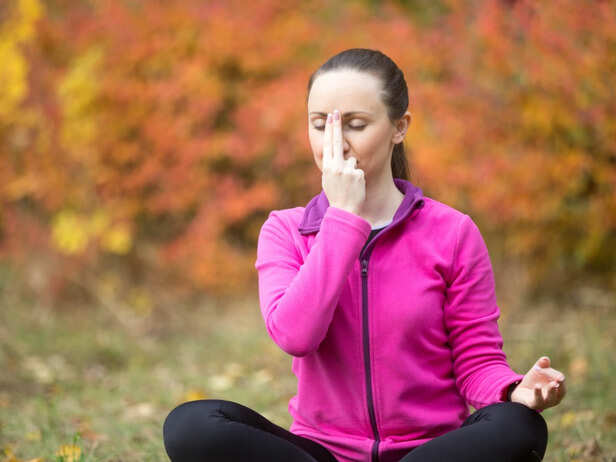
Somewhere between a tense meeting and a near-miss in traffic, most people have been told to take a deep breath. The instruction is so common it has become reflex. But the deep breath, taken the way most people take it, a fast, full inhale held for a beat, does not reliably settle anything. What does is the exhale that follows it, drawn out as long as you can make it. The difference is not small, and it is not a matter of preference. It is how the nervous system is wired.
Your Heart Rate Changes With Every Breath You Take
When you breathe in, your heart speeds up slightly. When you breathe out, it slows down. This is not a metaphor. It is a measurable, beat-by-beat phenomenon called respiratory sinus arrhythmia, and it happens in every healthy heart, every breath, all day. The vagus nerve, the long nerve that connects the brainstem to the heart, lungs, and digestive organs, is the mechanism. During an inhale, the diaphragm descends and the thoracic cavity expands. Pressure changes in the chest briefly reduce how strongly the vagus nerve signals to the heart, and the heart rate rises. During an exhale, the diaphragm rises, pressure normalises, vagal tone increases, and the heart rate drops.
This means the exhale is the half of the breath cycle where the parasympathetic nervous system, the branch responsible for rest, digestion, and recovery, is most active. A long exhale is, in a direct physiological sense, a longer window of parasympathetic dominance. A short exhale cuts that window off early.
Why the Big Inhale Feels Right but Often Isn't
When the body reads a threat, real or perceived, the sympathetic nervous system takes over. Heart rate rises, breathing quickens and shallows, the chest tightens. The instinct to inhale deeply comes from this state: the body wants more oxygen, and the inhale is where oxygen enters. The instinct is not wrong, exactly. But a fast, large inhale followed by a normal-length exhale keeps the breath ratio roughly even, which keeps the nervous system roughly where it was. It adds oxygen without meaningfully shifting the balance toward the parasympathetic branch.
A slow, extended exhale does something different. It directly engages vagal tone. It tilts the autonomic balance. And because the heart rate drops measurably during a long exhale, the brain receives different feedback, a slower heart rate is read as a signal that the threat has passed, which reduces the perceived urgency of the situation. The body is not just responding to the mind; the mind is also reading the body. Changing the body's signals changes what the mind concludes.
The Ratio That Actually Matters
The ratio of inhale to exhale length is where this becomes practical. A 1:2 ratio, inhale for a count of four, exhale for a count of eight, consistently produces a stronger parasympathetic response than equal-length breathing. The specific numbers matter less than the principle: the exhale should be noticeably longer than the inhale. A count of four in and six out works. So does three in and six out. What does not work is rushing the exhale to match the inhale, or holding the breath at the top of the inhale for a long count and then exhaling quickly.
Cyclic sighing, a technique where a normal inhale is followed by a second short inhale through the nose to fully inflate the lungs, and then a long, slow exhale through the mouth, has been studied for its effect on self-reported stress and physiological arousal. The double inhale re-inflates the small air sacs in the lungs that deflate during shallow breathing, and the extended exhale that follows produces a pronounced drop in heart rate. Many people find one or two cycles enough to notice a shift. The exhale is doing the work in both cases.
What Happens in the Body During a Long Exhale
Beyond the heart rate drop, a slow exhale activates the baroreceptors, pressure sensors in the aorta and carotid arteries, which signal the brainstem to reduce sympathetic output. It also slows the breathing rate overall, which reduces the amount of carbon dioxide being expelled. This matters because carbon dioxide, often thought of only as a waste gas, plays a direct role in regulating blood pH and the dilation of blood vessels. Breathing too fast lowers carbon dioxide levels and can produce lightheadedness, tingling in the hands, and a feeling of unreality, symptoms that are themselves read as alarming, creating a feedback loop that keeps the nervous system activated. A slower exhale breaks that loop at the source.
None of this requires a particular posture, a quiet room, or a long session. The mechanism works in a chair, in a car, standing in a queue. It works in thirty seconds. The only requirement is that the exhale be slower and longer than what the body is currently doing.
When Breathing Techniques Are Worth a Doctor's Conversation
For most people, slow exhale breathing is a low-effort tool with no meaningful downside. There are situations where it warrants a conversation with a clinician first: people with certain respiratory conditions, including severe COPD or asthma, may find extended breath holds or forced breath patterns uncomfortable or counterproductive. Anyone who experiences regular panic attacks, hyperventilation episodes, or breathlessness at rest should have those assessed rather than managed only through breathing exercises. A breathing technique is a useful tool. It is not a substitute for understanding what is driving the symptom.
The body's response to a long exhale is not a trick or a trend. It is a feature of how the autonomic nervous system is built, and it has been there the whole time, in every sigh, every yawn, every moment of relief where the breath comes out long and slow before anything else. The inhale brings air in. The exhale is where the body decides it is safe to let go.
Unlock insightful tips and inspiration on personal growth, productivity, and well-being. Stay motivated and updated with the latest at My Life XP.