
Why Humid Air Makes Skin Feel Oily and Dry Air Makes It Feel Tight
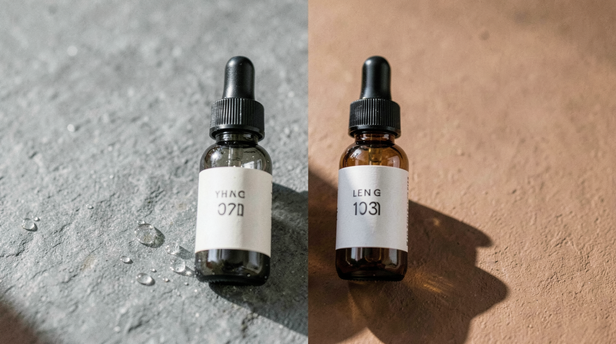
Skin doesn't have a fixed personality. The same face that feels slick and congested through July can feel like paper by January, and the change has less to do with what you're applying and more to do with the air your skin is sitting in. Humidity and dryness don't just feel different, they alter two separate processes inside the skin, which is why the same moisturiser that worked in one season can feel wrong in another.
What the Skin's Barrier Is Actually Doing
The outermost layer of skin, the stratum corneum, works like a brick wall with a lipid mortar. Its job is to hold water inside the skin while keeping irritants out. This barrier is not passive, it is constantly adjusting to the environment it is in. The water content of the stratum corneum changes with the humidity of the surrounding air, and the rate at which water escapes through it, called transepidermal water loss, rises and falls depending on how dry or moist that air is.
The barrier does not distinguish between good and bad environmental changes. It responds to what is there. In humid air, the gradient between the moisture inside the skin and the moisture outside narrows, so water escapes more slowly. In dry air, the gradient widens and water leaves faster. The skin's surface condition, oily, tight, balanced, flaky, is largely a readout of how that gradient is behaving at any given moment.
Why Humid Air Makes Skin Feel Oily
Sebum is produced by sebaceous glands and travels up the hair follicle to the skin's surface. In dry conditions, some of this sebum evaporates or spreads thinly before it becomes noticeable. In humid air, evaporation slows across the entire surface, including the sebum sitting on top of it. The oil stays where it lands, and because sweat evaporation also slows in humid air, the skin surface ends up with a layer of mixed sebum and perspiration that doesn't go anywhere.
This is why skin that feels manageable in cooler, drier months can feel visibly greasy within an hour of stepping outside in the monsoon. The glands haven't suddenly started producing more sebum, the sebum that was always there is simply staying on the surface longer. People with naturally higher sebum production notice this most, but even relatively dry skin types can feel congested in high humidity because the same slowing of evaporation applies to everyone.
The practical consequence is that pores can appear larger in humid conditions. They haven't actually changed size, pores don't open and close, but the combination of sebum, sweat, and slowed evaporation makes them look more visible, and they are more prone to becoming blocked.
Why Dry Air Makes Skin Feel Tight
Dry air has a low moisture content relative to the skin's surface. Water moves from areas of higher concentration to lower concentration, which means the skin's water content migrates toward the dry air rather than staying in the tissue. The stratum corneum, which needs a certain level of hydration to stay flexible, begins to lose that flexibility when water leaves faster than the barrier can retain it.
Tightness is the physical sensation of a stratum corneum that has lost elasticity. Flaking comes next, as the cells at the surface dry out and separate. Fine lines appear more pronounced because the skin has less internal pressure from water holding the tissue plump. None of this means the skin is permanently damaged, it means the barrier is under more demand than it can currently meet.
Air conditioning compounds this. An air-conditioned room pulls moisture from the air continuously, which means indoor skin in a cooled space can experience the same water loss as skin in a cold, dry outdoor climate. Many people notice that their skin feels fine when they wake up and progressively tighter through a day spent in an air-conditioned office, which is the barrier slowly losing ground to the conditioned air around it.
Why the Same Routine Doesn't Work in Both Conditions
A heavy, occlusive moisturiser, one that sits on the surface and slows water loss, is useful in dry air because it compensates for the increased transepidermal water loss. In humid air, that same product can feel suffocating, because the skin is already losing water slowly and the additional layer traps sebum and sweat underneath it.
A lightweight gel moisturiser works well in humidity because it adds a small amount of hydration without creating an occlusive layer over sebum that is already sitting on the surface. In dry air, the same product may not provide enough of a barrier to slow water loss, and the skin continues to feel tight despite having applied something.
Humectants, ingredients that draw water toward the skin, behave differently depending on the environment too. In humid air, they draw moisture from the air around the skin. In dry air, with little ambient moisture available, they can draw water upward from the deeper layers of the skin instead, which can worsen surface dryness if there is no occlusive layer over them to slow that movement.
What to Actually Adjust When the Air Changes
The adjustment is not a complete routine overhaul. It is a shift in the weight and texture of what goes on the skin, matched to what the air is doing.
In humid conditions, a cleanser that removes excess sebum without stripping the barrier matters more than it does in dry conditions. A lighter moisturiser or a gel with a humectant is usually sufficient. Sunscreen texture becomes relevant here too, heavy formulations feel worse on skin that is already dealing with slow evaporation.
In dry conditions, the barrier needs support. A moisturiser with both a humectant and an occlusive ingredient, something like a cream rather than a gel, gives the skin two things at once: water drawn in and a layer to slow its exit. Applying it while the skin is slightly damp after washing helps the humectant draw from the water still on the surface rather than from deeper tissue.
Skin that feels persistently tight despite a heavier routine, or that becomes visibly inflamed in humid conditions regardless of a lighter routine, is worth showing a dermatologist. A compromised barrier sometimes needs more than a seasonal product swap.
The air and the skin are in constant negotiation. What changes between seasons is not the skin's fundamental type but the terms of that negotiation, and adjusting to them is mostly a matter of understanding which direction the water is moving.
Unlock insightful tips and inspiration on personal growth, productivity, and well-being. Stay motivated and updated with the latest at My Life XP.