
Why Older Children Still Reach for Picture Books, And What Happens When You Read Them Aloud
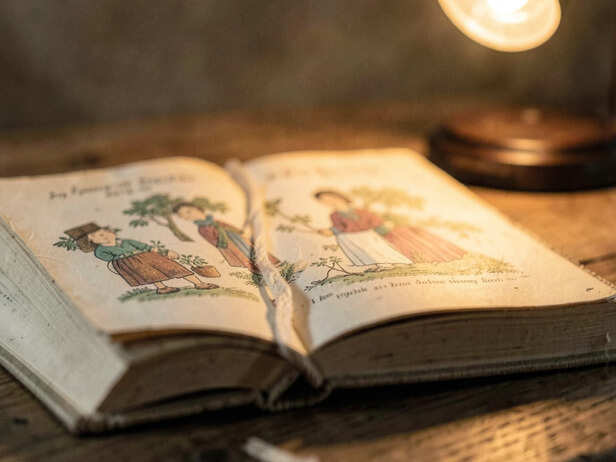
The book comes out from somewhere at the back of the shelf. Your child is old enough to read it alone in under four minutes, but they hand it to you instead. Most parents take this as sentiment, a small regression, sweet but not significant. It is neither small nor a regression.
What a Picture Book Actually Asks of an Older Brain
A picture book written well is not a simple book. It is a compressed one. Every word on the page had to earn its place because there are so few of them. The gap between the illustration and the sentence, the thing the picture shows that the words leave out, or the thing the words say that the picture quietly contradicts, is where a reader's inference engine runs. A younger child fills that gap instinctively. An older child, reading the same book, fills it with more: irony, subtext, the understanding that the narrator might not be reliable. The book did not get simpler. The reader got more capable, and the book grew with them.
What Happens in the Body When Someone Reads to You
Listening to a story being read aloud is a different cognitive event from reading the same story silently. When a child reads silently, the pace is set by their own fluency. When someone reads aloud, the pace is set by the reader, and it is almost always slower, more deliberate, with pauses that the child would have skipped. Those pauses are not gaps. They are where comprehension settles. The prosody of a reading voice, its rise and fall, the slight slow-down before something important, signals structure in a way that punctuation on a page does not. Children who are read to regularly develop a richer sense of how sentences are shaped, not because they were taught grammar but because they heard it performed. This holds for children well into middle school, not only for early readers.
The Emotional Logic of the Shared Book
A picture book read aloud between a parent and an older child is not really about the book. It is about the particular quality of attention that the book creates between two people. The child is not being taught. The parent is not managing. Both of them are looking at the same thing together, which is one of the rarer conditions in a household. In that shared looking, a child will sometimes say something they would not have said in a direct conversation, about a character, about a situation in the story, about something the story reminded them of. The book is the third thing in the room, and the third thing makes the conversation easier. This is not a technique. It is what stories have always done between people who trust each other.
Why the Books They Loved Young Work Best
A book a child loved at four carries a specific kind of emotional weight when they return to it at nine. They remember how it felt before they could explain why. Reading it again, they can now see the craft, the repeated phrase that works as a refrain, the image on the last page that echoes the first, the thing the author left unsaid. Returning to a beloved book is one of the earliest experiences of re-reading as an act of discovery rather than repetition. It teaches something that no comprehension worksheet can: that the same text means something different depending on who you are when you open it. That is not a reading skill. It is a life skill that reading teaches.
What to Do With This Information
Nothing elaborate. Keep a few picture books on the shelf past the age when the conventional wisdom says to pack them away. When your child hands one to you, read it aloud rather than suggesting they read it themselves. Read slowly. Do not explain the illustrations. Let the pauses sit. If they want to talk about it afterward, talk. If they don't, that is also fine, the reading was the thing, not the discussion that follows it. The books that made them feel something at four are still capable of making them feel something at ten. The feeling is just more complicated now, and more interesting.
The child who hands you the picture book is not going backward. They are returning to a known place with new equipment, and they want company for the trip. That is not regression. That is exactly how a reader grows.
Unlock insightful tips and inspiration on personal growth, productivity, and well-being. Stay motivated and updated with the latest at My Life XP.