
Why Can’t You Be Like Them?” What Comparison Does to Children
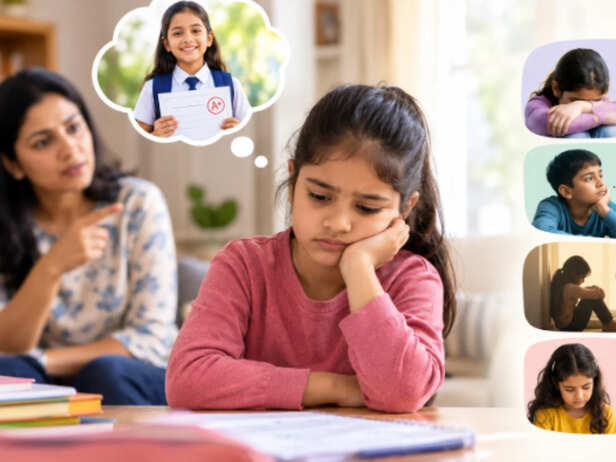
Many parents say things like this without meaning to hurt their child. Sometimes, comparison feels like a simple way to motivate a child to study harder, behave better, or work toward a goal.
But children may hear something very different.
Instead of thinking, “I should try harder,” they may think, “I am not good enough.”
A little comparison may seem harmless, but repeated comparisons can affect how children see themselves, their abilities, and even their relationship with their parents.
Comparison Can Turn Into Self-Doubt
Children naturally compare themselves with others. They notice who gets better marks, who runs faster, who has more friends, or who seems more confident.
When parents repeatedly make those comparisons, the message can become stronger.
A child may start believing that their value depends on how they perform compared with someone else.
For example, a child who regularly hears, “Your sister is better at studies,” may stop seeing a poor test result as something they can improve. Instead, they may start thinking, “I am bad at studies.”
That difference matters.
A mistake is something a child can learn from. But believing that they are simply “not good enough” can affect their confidence.
“Why Can't You Be Like Them?” Can Hurt Motivation
Comparison is often used to motivate children.
Parents may believe that showing them someone else's success will make them work harder. Sometimes it may work for a short time.
But fear of comparison is not the same as healthy motivation.
A child who studies only because they are afraid of being compared may become more worried about failure. They may focus on avoiding disappointment rather than learning.
Over time, this can make schoolwork, sports, hobbies, or other activities feel like tests of their worth.
Instead of saying:
“Look how well your friend did.”
Try:
“What part of this do you think you can improve next time?”
The second approach keeps the focus on the child's own progress.
Every Child Has a Different Starting Point
Two children can be the same age and still be completely different.
One may be naturally confident while another needs more time to speak in a group. One may enjoy mathematics while another is better at drawing, writing, music, sports, or solving practical problems.
Even siblings raised in the same home can have very different personalities and abilities.
Comparing them as if they are following the same path can create unnecessary pressure.
A better question is not:
“Why isn't my child like that child?”
It is:
“What does my child need to grow?”
That shift can help parents understand the child they actually have instead of constantly measuring them against someone else.
It Can Create Sibling Resentment
Sibling comparison can be especially difficult.
When one child is repeatedly described as the smarter, more responsible, or more successful sibling, the other may begin to feel like they are always losing.
The child being praised may also feel pressure to maintain that image.
This can create competition where there should be cooperation.
A younger child may think, “My parents love my brother more.”
Another child may begin to resent a sibling simply because they are always used as a comparison.
Instead of comparing siblings, recognise their individual strengths.
You might say:
“You are very patient when you work on difficult things.”
Or:
“I noticed how much effort you put into practising this.”
Specific praise teaches children what they are doing well without putting another child down.
Comparison Can Make Children Hide Their Mistakes
Children need to feel safe enough to tell their parents when something goes wrong.
But if every mistake is followed by comparison, they may become afraid to share problems.
A child who gets poor marks might hide the report card.
A teenager who makes a mistake may avoid talking about it.
A child who is struggling with friends may simply say, “Everything is fine.”
Why?
Because they may expect criticism instead of support.
When children believe that mistakes will automatically lead to, “Your friend would never do this,” they may choose silence.
That can make it harder for parents to understand what is actually happening in their child's life.
It Can Affect Confidence Outside the Home
Constant comparison does not always stay inside the family.
A child who grows up feeling that someone else is always better may start comparing themselves with classmates, friends, cousins, or people they see online.
They may constantly ask:
“Am I smart enough?”
“Do I look good enough?”
“Am I successful enough?”
“Why is everyone better than me?”
Social media can make this even more complicated for older children and teenagers because they are exposed to carefully selected versions of other people's lives.
Helping children understand that everyone develops differently can give them a healthier way to look at themselves and others.
What Should Parents Do Instead?
Avoiding comparison does not mean avoiding expectations.
Parents can still expect children to study, behave respectfully, complete responsibilities, and make an effort.
The difference is in how those expectations are communicated.
Instead of comparing your child with someone else, compare their current progress with their own past progress.
Instead of:
“Your friend scored 90. Why did you get 75?”
Try:
“You scored 65 last time and 75 this time. What helped you improve?”
Instead of:
“Your brother keeps his room clean.”
Try:
“Let's work out a simple routine to help you keep your room organised.”
Instead of:
“Everyone else can do it. Why can't you?”
Try:
“Which part are you finding difficult?”
These small changes can make conversations more supportive without removing discipline or responsibility.
Praise Effort, Not Just Results
Children need to know that success matters, but so does effort.
Instead of only praising high marks, notice preparation, persistence, improvement, and problem-solving.
For example:
“You kept practising even though it was difficult.”
“You improved because you kept working on it.”
“You made a mistake, but you tried a different way.”
This helps children understand that abilities can develop through practice.
It also makes failure feel less frightening.
When Comparison Happens Without Realising It
Parents do not always compare children intentionally.
Sometimes comparison comes out during stressful moments.
A parent may be tired after a long day and say, “Your sister never creates this much trouble.”
Another parent may become worried about school performance and say, “All your classmates are doing better.”
These moments do not automatically make someone a bad parent.
What matters is noticing the pattern.
If you realise that you have been comparing your child frequently, you can change the conversation.
You can even tell your child:
“I shouldn't have compared you with someone else. I was worried, but that wasn't the right way to say it.”
An apology does not weaken a parent's authority. It can show children that adults can recognise mistakes and repair relationships.
Your Child Doesn't Have to Be Like Someone Else
Every child develops at a different pace.
Some children need more encouragement. Some need more structure. Some need time before they become confident. Others may need help handling disappointment or learning a particular skill.
The goal of parenting is not to turn every child into the same version of success.
It is to help children understand their strengths, work on their weaknesses, handle mistakes, and become increasingly confident in who they are.
So the next time you are tempted to say, “Why can't you be like them?”, pause for a moment.
Ask yourself what you really want your child to learn.
If the answer is confidence, responsibility, effort, or resilience, comparison may not be the best teacher.
Your child does not need to become someone else's version of success.
They need support to become the best version of themselves.
Unlock insightful tips and inspiration on personal growth, productivity, and well-being. Stay motivated and updated with the latest at My Life XP