
Why Your Teenager Copies a Classmate She Does Not Even Like
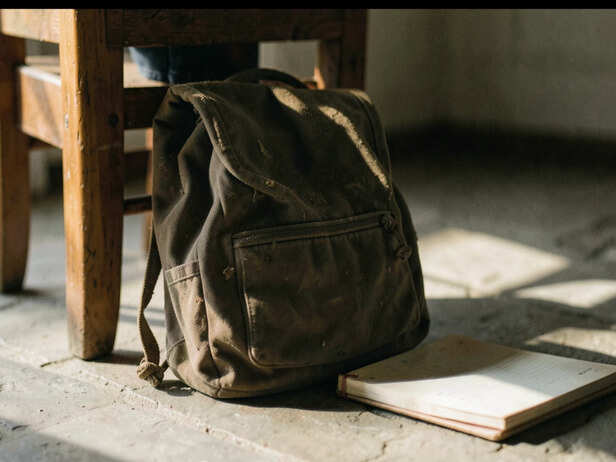
The complaint arrives at dinner, sharp and certain. She cannot stand this girl. The girl is annoying, she copies everyone, she thinks she is so great. Then, three weeks later, you notice your daughter using the same phrase. Wearing her hair the same way. Carrying the same kind of bag. You say nothing. But you wonder.
This is not a character flaw. It is not even inconsistency. It is early adolescence doing exactly what early adolescence is designed to do, and the person being copied does not need to be admired for the copying to make complete sense.
The Social Map She Is Drawing
Between roughly eleven and fourteen, a child's social world reorganises itself around one urgent question: where do I stand? Not in terms of grades or family or the things adults measure. In terms of the group. The peer group becomes the primary reference point for almost everything, what is worth wanting, what is embarrassing, what kind of person to be.
To answer the question of where she stands, she needs to read the room constantly. And the most efficient way to read a social room is to watch the people who seem to be navigating it successfully. This does not require liking them. It requires only that they appear to have cracked something she has not yet cracked.
The girl she dislikes may be loud in a way that draws attention. She may be confident in a way that reads as ease. She may have a particular way of dismissing things that makes her look unbothered. These are social technologies. Your daughter is studying them the way you might study a colleague who handles a difficult client well, even if you find that colleague exhausting.
Dislike and Imitation Are Not Opposites
Adults tend to assume that copying someone means admiring them. In early adolescence, the two are genuinely separate operations.
Your daughter may dislike this classmate for entirely real reasons. The girl may be unkind, or boastful, or the source of social friction your daughter has described accurately. None of that stops the classmate from being socially legible in a way your daughter is still working out how to be.
There is also something else at play. The person she dislikes is often the person who triggers the sharpest awareness of her own uncertainty. The dislike is partly a response to the reminder. Copying is how she tries to close that gap, not to become the girl, but to borrow the specific quality that seems to be working.
Developmental psychology describes this period as one of intense social comparison. The comparison is not always conscious. Much of it runs below the level of decision. She is not thinking: I will adopt this girl's mannerisms to improve my standing. She is just absorbing, the way anyone absorbs the speech patterns of the people they spend most of their time around.
What She Is Actually Practising
Copying at this age is identity work. She is trying on versions of herself the way she might try on clothes, not to settle on any one permanently, but to feel what each one does to how she moves through a room.
The classmate she copies is one data point in a much larger experiment. She is also, almost certainly, absorbing things from a cousin, a teacher, a character in something she is watching, a friend she does like. The person she dislikes simply happens to be highly visible in the specific environment where the pressure is highest: school, the classroom, the lunch table.
This is also why the copying tends to be partial. She takes the phrase, not the personality. The bag, not the whole aesthetic. She is not trying to become the other girl. She is extracting one tool at a time and testing whether it fits her own emerging sense of who she is.
The Conversation Worth Having
The instinct, when you notice this, is to point it out. To say: do you realise you sound just like her now? Resist that instinct. It will land as mockery and close the conversation before it opens.
What is more useful is curiosity about the original dislike. Not interrogation, genuine interest. What is it about this girl that gets to her? The answer, if she gives one, is usually a window into something she is working through about herself. The quality she names as annoying is often the quality she most wants and least knows how to get.
You do not need to name that connection out loud. Sitting with it yourself is enough. It tells you what she is practising, and it tells you where she feels most uncertain. That is useful information for a parent, even if it never becomes a conversation.
When It Is Worth Watching More Closely
Most of the time, this kind of copying is entirely ordinary and resolves on its own as she becomes more settled in who she is. The identity experiment winds down, the borrowed phrases fall away, and she arrives at something that is genuinely hers.
It is worth paying closer attention if the copying extends to behaviour that puts her at risk, if she is following this classmate into situations that feel unsafe, or if the social pressure attached to the copying seems to be causing her real distress. In those cases, a conversation with a school counsellor or a child psychologist is a reasonable next step, not because something is wrong with her development, but because she may need support navigating a specific dynamic that has become harder than she can manage alone.
The ordinary version, the phrase, the bag, the haircut, is not a problem to solve. It is adolescence doing its work.
Identity in early adolescence is not built from scratch. It is assembled from pieces borrowed from the people around her, including the ones she would never admit to borrowing from. The girl she dislikes is not her role model. She is raw material. The person your daughter is becoming will not look much like either of them.
Unlock insightful tips and inspiration on personal growth, productivity, and well-being. Stay motivated and updated with the latest at My Life XP.