
What Mahabharata Teaches About Love Nobody Talks About
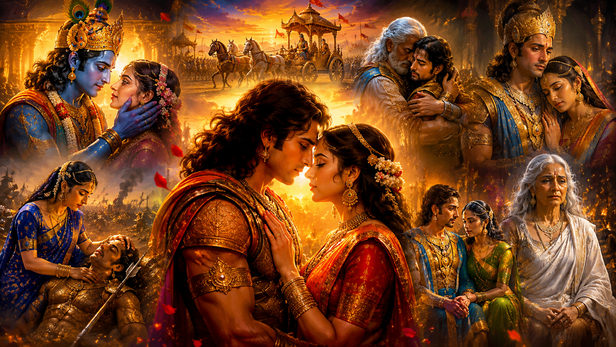
Can two people stay together for a lifetime and still never truly experience love? The story of Gandhari and Dhritarashtra from the Mahabharata raises this uncomfortable question. Their marriage had loyalty, sacrifice, duty, and companionship, yet something essential was missing. What began as an act of devotion slowly transformed into silence, misunderstanding, and emotional distance. Their story is not just about two royal figures it reflects the struggles many relationships face even today. Sometimes, love does not end because people stop caring. It ends because they stop seeing each other's hearts.
A Sacrifice That Changed Everything
Gandhari chose to cover her eyes so she could share her husband Dhritarashtra's darkness. It was an extraordinary act of devotion that has inspired generations. Yet sacrifice alone could not guarantee happiness. While Gandhari believed she was expressing love, Dhritarashtra saw the act differently. Instead of feeling understood, he reportedly viewed it as a reminder of his own blindness. The same gesture carried two completely different meanings, proving that love depends not only on intention but also on how it is received.
When Love Turns Into Silent Distance
As misunderstandings quietly grew, conversations became fewer and emotional distance increased. Rather than healing each other's pain, Gandhari and Dhritarashtra began carrying it alone. They remained together as husband and wife, but the warmth that strengthens relationships slowly faded. Their story reminds us that silence can become the biggest wall between two people. Relationships rarely break overnight they weaken little by little when feelings remain unspoken and understanding disappears.
The Children Became Their Emotional Refuge
Unable to find peace within their marriage, both parents poured their emotions into their children. Gandhari's sacrifice transformed into intense maternal attachment, while Dhritarashtra's unfulfilled emotions fueled his blind affection for Duryodhana. Their love as parents became stronger than their responsibility to guide their children wisely. The result was emotional imbalance, where affection overshadowed truth. This shift changed not only their family but also the fate of an entire kingdom.
When Attachment Begins to Replace Love
True love encourages growth, honesty, and accountability. Attachment, however, often seeks comfort at any cost. Dhritarashtra repeatedly ignored his son's mistakes because losing him felt more painful than accepting the truth. Gandhari also struggled between a mother's love and her moral responsibility. Their emotional attachment slowly replaced balanced judgment. The Mahabharata shows that love without wisdom can unintentionally lead people toward destruction, despite the best intentions.
The Loneliness That Arrived Too Late
After the Kurukshetra war, the throne, power, and their children were gone. What remained were Gandhari and Dhritarashtra, standing beside each other in silence. Ironically, the companionship they needed throughout life became most visible after everything else had disappeared. Their final journey together reminds us that relationships should never wait for loss to rediscover closeness. Love is meant to be lived in the present, not remembered only after life changes forever.
The Lesson Modern Relationships Cannot Ignore
Many relationships today face challenges similar to Gandhari and Dhritarashtra's not because love is absent, but because understanding slowly fades. Sacrifice without communication creates resentment. Duty without emotional connection creates distance. Lasting love requires listening, appreciation, honesty, and the courage to see each other's struggles. Relationships become stronger when both partners choose compassion over ego and understanding over assumptions.
Love Should Lighten the Burden, Not Become One
The story of Gandhari and Dhritarashtra is not simply a tale of sorrow it is a timeless reminder of what love truly means. Love is not measured by how much we sacrifice, but by how deeply we understand each other. It should never become a burden that people carry in silence. Instead, true love gives strength during difficult times, brings hope during darkness, and makes every challenge feel lighter because no one has to face it alone.
Unlock insightful tips and inspiration on personal growth, productivity, and well-being. Stay motivated and updated with the latest at My Life XP.
Frequently Asked Questions (FAQs)
1. Why did Gandhari blindfold herself?
According to the Mahabharata, Gandhari chose to wear a blindfold after marrying Dhritarashtra, who was born blind. She did so as an act of devotion and solidarity, deciding to share her husband's limitations.
2. Why is Gandhari and Dhritarashtra's relationship considered tragic?
Although they remained together throughout their lives, their relationship was marked by misunderstanding, emotional distance, and grief. Their story shows that sacrifice alone cannot replace communication and mutual understanding.
3. What is the biggest relationship lesson from Gandhari and Dhritarashtra?
The greatest lesson is that love must be supported by empathy, trust, honest communication, and emotional connection. Without these, even the greatest sacrifices may fail to create a happy relationship.
4. How did their attachment to their children affect the Mahabharata?
Their deep attachment, especially toward Duryodhana, often prevented them from correcting his mistakes. This blind affection contributed to the growing conflict that ultimately led to the Kurukshetra War.
5. What does Gandhari's story teach modern couples?
Gandhari's journey reminds couples that love should never become a silent burden. Healthy relationships thrive on understanding, appreciation, open conversations, and the willingness to support each other through every stage of life.