
Why 'I Love You' Isn't the Phrase That Saves Marriages
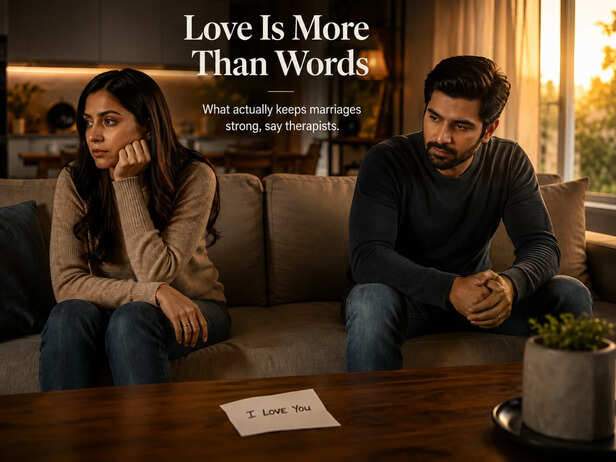
You can say “I love you” every night before going to sleep and still feel completely alone in your marriage. That sounds harsh, but think about it. Your partner tells you they love you, then spends the entire dinner scrolling through their phone. They say they care, but every disagreement turns into a competition over who is right. They apologise, but repeat the same thing two weeks later. The words are there. The feeling might even be there. So what is missing? According to relationship research, one of the biggest things that helps couples stay connected is not simply saying loving words. It is knowing how to repair the relationship when something goes wrong. And that is where many couples may be overlooking the real secret to a lasting marriage.
The Most Important Words May Come After “We Had a Fight”
Every couple argues. Even deeply loving couples can disagree about money, family, household responsibilities, parenting, intimacy or something as ridiculously small as who forgot to buy milk. The difference is not necessarily whether couples fight. It is what they do after the fight. Relationship researchers use the term “repair attempt” for words or actions that help stop conflict from spiralling. It could be an apology, a joke that genuinely breaks the tension, a hug, or simply saying, “Okay, I don't want us to keep hurting each other like this.” The important part is that the couple is trying to reconnect instead of continuing to score points. A marriage does not need two people who never hurt each other. It needs two people who know how to find their way back to each other.
“I Love You” Means Less When Your Partner Doesn't Feel Heard
Imagine telling your spouse, “I had a terrible day,” and getting a distracted “Oh, okay.” Technically, they haven't done anything terrible. Emotionally, though, you might walk away feeling invisible. This is why therapists often emphasise emotional responsiveness. A partner may make tiny attempts to connect throughout the day by asking a question, sharing a funny story, seeking an opinion or simply saying, “Look at this.” These moments can seem insignificant, but relationship researcher John Gottman describes them as bids for connection. Responding to these small bids can help build emotional closeness, while repeatedly ignoring them can create distance and loneliness. Sometimes love looks less like a dramatic declaration and more like putting your phone down and saying, “Wait, tell me what happened.”
The Real Marriage-Saving Phrase?
“Help Me Understand”
Here is where things get interesting. During an argument, most people naturally start preparing their defence. Your partner is speaking, but inside your head you're already thinking, “That isn't what happened,” or “You do the exact same thing.” And suddenly, you aren't listening anymore. You're waiting for your turn. Instead, try asking: “Help me understand what upset you.” It doesn't mean admitting that your partner is right. It means temporarily putting down the need to win. Healthy conflict resolution involves identifying the problem and the feelings involved, considering possible solutions and learning from how the disagreement was handled. That shift can turn an argument from “me versus you” into “both of us versus the problem.” And honestly, that is a much healthier team to be on.
“I'm Sorry” Works Best When It Comes With Something Else
An apology can be powerful. But “Sorry” followed by the exact same behaviour over and over can eventually start sounding like background noise. A meaningful repair usually involves recognising what happened, acknowledging its impact and making some effort to behave differently next time. For example, instead of: “Sorry you felt that way.” Try: “I understand why that hurt you. I shouldn't have spoken to you like that. I'll try to handle it differently next time.” The distinction matters because an apology is not supposed to simply end the uncomfortable conversation. It should help rebuild safety. Research and clinical approaches to couples therapy commonly focus on changing negative interaction patterns and developing healthier communication and conflict-management skills. In other words, the goal isn't to become a couple that never messes up. It is to become a couple that knows what to do after messing up.
Sometimes Love Looks Extremely Unromantic
We tend to imagine marriage-saving moments as grand gestures. Flowers. Vacations. Anniversary dinners. Long messages at midnight. But long-term relationships are often held together by much smaller things. Asking how your partner's meeting went. Remembering that they hate coriander. Making tea without being asked. Noticing when they are unusually quiet. Sitting beside them after an argument instead of walking away forever. The Gottman Institute's relationship research particularly emphasises everyday connection, responding to bids for attention and affection, and making repair attempts when conflict happens. These gestures aren't exactly movie material. But they are the stuff real marriages are made of.
Love Isn't Enough Without the Way You Treat It
“I love you” still matters. Of course it does. But a marriage cannot live on three words alone. It needs curiosity when your partner is upset. Patience when you're irritated. Attention when they are reaching out. Accountability when you've caused hurt. And, perhaps most importantly, the willingness to repair instead of letting resentment quietly pile up. The healthiest couples aren't necessarily the ones who never argue or disappoint each other. They are often the ones who learn how to come back after the difficult moments. Because sometimes the most powerful way to say “I love you” isn't saying it at all. It is looking at the person beside you after a difficult day and showing them, through your actions, “We're still on the same side.”
Unlock insightful tips and inspiration on personal growth, productivity, and well-being. Stay motivated and updated with the latest at My Life XP.