
3 Divine Astras That Could Change The Fate Of The World
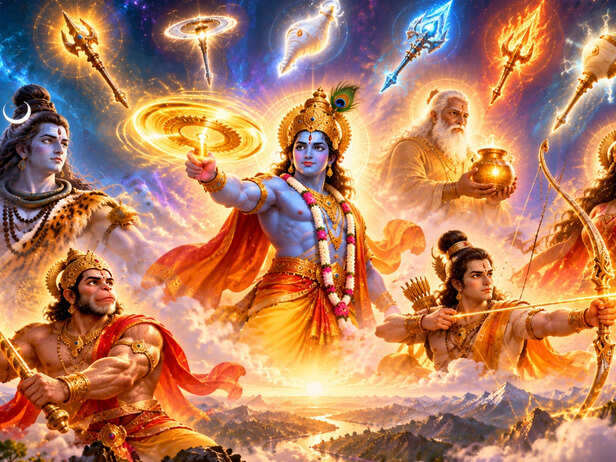
The Mahabharata is filled with legendary warriors and divine weapons, but some celestial astras were described as so devastating that using them could change the fate of entire generations. The Brahmastra is perhaps the most famous among them. Yet Hindu epic traditions also describe weapons such as the Narayanastra, Brahmashira Astra and Pashupatastra as extraordinarily powerful. One of them was associated with Lord Shiva himself and was considered far too destructive to be used casually.
Narayanastra Had A Terrifying Condition
The Narayanastra is traditionally associated with Lord Vishnu and appears in the Mahabharata during the conflict involving Ashwatthama. Its most unusual feature was not simply its destructive force but the way it responded to resistance. According to the epic tradition, the more warriors tried to fight it, the more fiercely it attacked. The way to survive was to stop resisting and lay down weapons. This makes the Narayanastra different from an ordinary battlefield weapon. Its story turns surrender into a survival strategy, creating one of the Mahabharata's most memorable moments involving a divine astra.
Brahmashira Was Beyond Ordinary Destruction
The Brahmashira Astra is described as an extremely powerful weapon connected with Brahma. Its most dramatic episode comes near the end of the Mahabharata, when Ashwatthama and Arjuna invoke powerful astras against each other. The situation becomes so dangerous that the sages intervene. Ashwatthama ultimately directs his weapon toward Uttara's unborn child, who is later saved through Krishna's intervention. The episode shows why divine weapons in Mahabharata were treated with caution. Their power was not merely about defeating an enemy. Misusing them could threaten innocent lives and the future of an entire lineage.
Pashupatastra Was Shiva's Supreme Weapon
Among the most famous Mahabharata astras is the Pashupatastra, associated with Lord Shiva. Arjuna is said to have performed severe penance to obtain it. Lord Shiva, pleased with his devotion, granted him the weapon along with knowledge of its use. The Pashupatastra was described as capable of destroying powerful beings and was not meant for careless use. Its story is therefore about more than supernatural power. Arjuna's ability to receive such a weapon also reflects the importance of discipline, devotion and responsibility in the epic tradition.
Why Arjuna Did Not Use It In War
The most intriguing part of the Pashupatastra story is that Arjuna did not unleash it during the Kurukshetra war. This raises an important question: if the weapon was so powerful, why keep it unused? The answer lies in the tradition surrounding divine astras. Extraordinary power came with extraordinary responsibility. The weapon was not simply another tool for defeating an opponent. Its destructive potential made careless use dangerous. In this sense, the Mahabharata presents a powerful lesson: having the ability to destroy something does not mean that destruction is always the right choice.
Ashwatthama Shows The Danger Of Anger
Ashwatthama's story gives the Mahabharata divine weapons a darker dimension. After the death of his father Drona, anger and revenge drive him toward increasingly destructive actions. His use of powerful astras ultimately creates a threat beyond the battlefield. The contrast with Arjuna is striking. Both warriors possess extraordinary knowledge, but their choices lead them down very different paths. The epic therefore connects divine weapons and responsibility with a deeper human question: what happens when immense power is placed in the hands of someone driven by grief and revenge?
Power Came With Strict Responsibility
The stories of the Narayanastra, Brahmashira Astra and Pashupatastra share one important idea. These weapons were not presented as ordinary objects that anyone could use whenever they wished. Their invocation was connected with knowledge, spiritual discipline and specific conditions. The Mahabharata repeatedly shows that uncontrolled power creates consequences beyond the person who uses it. That is why the stories remain fascinating even today. Their real tension does not come only from asking which weapon was stronger. It comes from asking whether the warrior was wise enough to know when not to use it.
The Greatest Weapon Was Restraint
The Mahabharata's powerful astras may sound like stories of supernatural warfare, but their deeper lesson lies in restraint. Narayanastra demanded surrender rather than resistance. Brahmashira created a crisis that required intervention. Pashupatastra was entrusted to Arjuna but remained unused in the great war. Together, these stories suggest that true strength is not simply the ability to destroy. It is the wisdom to understand consequences before acting. That is what makes these legendary weapons memorable. Their greatest mystery is not how much destruction they could cause, but why the wisest warriors knew when to hold back.
Unlock insightful tips and inspiration on personal growth, productivity, and well-being. Stay motivated and updated with the latest at My Life XP.