Everyone remembers Lord Rama's exile, Lakshman's loyalty and Bharata's sacrifice. But what about the woman whose husband also lived away from her during those difficult years? Her name was Shrutakirti, the youngest sister of Mandavi and the wife of Shatrughna. While the royal family faced separation and responsibility, her own pain could easily be overlooked. Her story raises a powerful question: can a sacrifice be any less meaningful simply because nobody sings about it?
Who Was Shrutakirti?
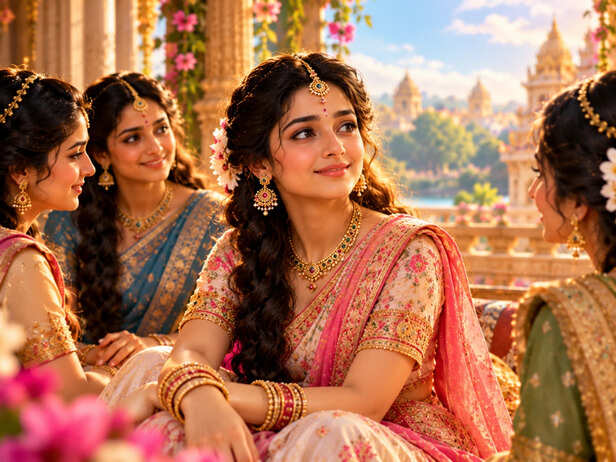
![Shrutakirti, the Youngest Princess of Mithila]()
Shrutakirti, the Youngest Princess of Mithila
Image credit : chatgpt(ai)
Shrutakirti was connected to the royal families of Mithila and Ayodhya through her marriage to Shatrughna, the youngest brother of Lord Rama. Her elder sister Mandavi married Bharata, while Sita married Rama and Urmila married Lakshmana. These marriages connected the sisters to the four brothers of Ayodhya. Yet while the lives of Sita and Urmila receive considerable attention in popular retellings, Shrutakirti's role is less widely discussed. Her story encourages readers to look beyond familiar names and consider the women whose experiences receive less attention.
Four Sisters, One Wedding
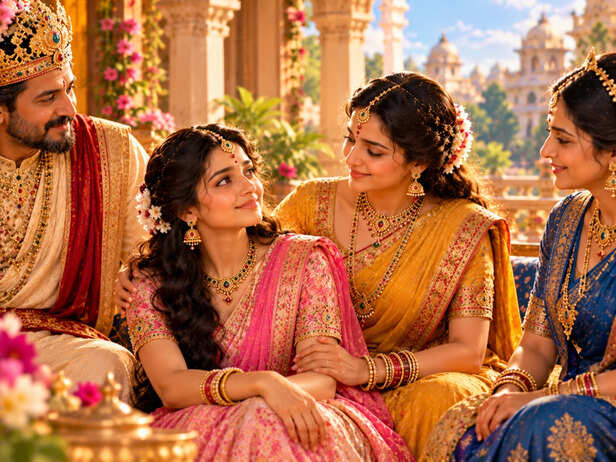
![The Four Royal Sisters at Their Wedding]()
The Four Royal Sisters at Their Wedding
The marriages of Sita, Urmila, Mandavi and Shrutakirti are remembered together in the Ramayana tradition. Each sister entered a different relationship with one of Ayodhya's four princes, but their lives soon followed very different paths. Rama's exile changed the future of the entire royal family, and its consequences reached far beyond the people who travelled to the forest. The sisters had to face uncertainty, separation and changing responsibilities in their own ways. Their shared beginning makes their different experiences especially moving, reminding us that the same family crisis can affect every person differently.
When Rama Left Ayodhya
Rama's fourteen-year exile became a defining period for Ayodhya. Lakshmana chose to accompany his elder brother, while Bharata refused to take the throne as his own and governed in Rama's name. Shatrughna, meanwhile, supported Bharata and helped manage the responsibilities that fell upon them. These choices are often remembered as acts of devotion and duty. Yet every decision also affected the people waiting at home. For Shrutakirti, her husband's responsibilities meant that royal life could not simply continue as before, even though she remained within Ayodhya.
Shatrughna Had Duties Beyond His Marriage
Shatrughna is often remembered for his close bond with Bharata and his commitment to the royal family's responsibilities. While Rama and Lakshmana were in the forest, Bharata lived at Nandigram and maintained his devotion to Rama's return. Shatrughna supported him through this difficult period. In the story shared in some popular retellings, Shatrughna's duties kept him away from his own wife, even though they belonged to the same royal household. This detail offers a glimpse into how duty could shape private lives, leaving little room for ordinary companionship.
Shrutakirti's Quiet Separation
A moving popular retelling describes Queen Kaushalya discovering that Shrutakirti had not seen Shatrughna for days. When Kaushalya went looking for him, she found him resting outside the palace after carrying out his duties. The scene highlights the distance between a husband and wife whose lives were shaped by responsibility. However, this particular encounter should be understood as a popular retelling rather than a universally established episode in every version of the Ramayana. Its emotional message remains clear: people can experience loneliness even when they are surrounded by family and living within the same household.
Why Her Sacrifice Is Often Overlooked
Stories often focus on visible acts of sacrifice: leaving a kingdom, entering a forest or giving up a throne. The emotional cost borne by those who remain behind can be harder to see. Shrutakirti's story, as remembered in some retellings, represents this quieter side of duty. She was not leading an army or making a public declaration, but her experience raises an important question about the people who carry on while loved ones serve a larger responsibility. Not every sacrifice is recorded in detail, and the absence of a famous story does not make someone's feelings unimportant.
Urmila, Mandavi or Shrutakirti?
Urmila is remembered in popular traditions for remaining in Ayodhya while Lakshmana accompanied Rama. Mandavi's story is connected to Bharata's decision to live away from royal comforts and rule in Rama's name. Shrutakirti's story, meanwhile, draws attention to Shatrughna's responsibilities and the distance that may have affected their married life. Asking which woman sacrificed the most can inspire discussion, but there is no single definitive ranking across Ramayana traditions. Each story highlights a different form of commitment, and comparing their suffering may overlook the unique challenges each woman faced.
The Sacrifices We Forget
Shrutakirti's story reminds us that the Ramayana is not only a story of kings, warriors and great vows. It also invites us to reflect on the people whose struggles remain in the background. While the details of her quiet separation come from popular retellings, the broader question is deeply human: how often do we notice the people who patiently support others while carrying their own burdens?
Perhaps the most meaningful lesson is not to decide whether Urmila, Mandavi or Shrutakirti sacrificed the most. It is to recognise that love, loyalty and duty can take many forms, and that a sacrifice does not become smaller simply because fewer people remember it.
Unlock insightful tips and inspiration on personal growth, productivity, and well-being. Stay motivated and updated with the latest at My Life XP