7 Mysteries Behind Kashi Vishwanath You Should Know
Noopur Kumari | Aug 18, 2026, 12:00 IST
The traditional story of Kashi carries a fascinating connection between Shiva, Vishnu and Brahma. According to this sacred narrative, a five-kos region existed beyond the darkness of the cosmos, where Purusha and Prakriti performed intense penance. Shiva's presence eventually became associated with this region as Avimukteshwar, meaning the one who never abandons it. As creation unfolded, the divine light of Shiva was requested to take a physical form, leading to the manifestation of the Jyotirlinga known as Vishwanath. The story gives Kashi a unique spiritual identity: a place believed to carry Shiva's presence in every particle.

Kashi Called the City Where Shiva Never Leaves
Image credit : ChatGPT (AI)
What if there were a place where time itself could not separate Shiva from his devotees? Hindu tradition describes Kashi as far more than an ancient city. It is regarded as the sacred Avimukta Kshetra, a place where Shiva is believed to remain eternally present. The story of Kashi Vishwanath begins not with an ordinary temple, but with cosmic creation, Narayana's penance, Shiva's divine presence and a mysterious five-kos region beyond ordinary worldly existence. From that sacred connection emerged the Jyotirlinga worshipped today as Kashi Vishwanath, the Lord of the Universe.
![Kashi Called the City Where Shiva Never Leaves]()
The traditional account begins before the familiar universe existed. There was no world as we know it, only stillness and darkness. From this primordial state emerged two aspects of divine energy, described as Shiva and Shakti, representing complementary principles of consciousness and energy. From their cosmic union came Purusha and Prakriti. A sacred five-kos region was then established beyond the ordinary darkness of the universe, where Purusha and Prakriti could perform penance. This mystical region would later become closely connected with Kashi, giving the sacred city a place in a much larger cosmic story.
![Divine Five-Kos Region of Kashi]()
As Purusha and Prakriti continued their penance, the divine story took an unexpected turn. Narayana, identified with Purusha, eventually opened his eyes and witnessed Shiva. According to the traditional account, the intensity of the moment caused sweat to flow from Narayana. The water began spreading across the region, while Shiva stopped its flow with the point of his trident. Narayana's earring, or mani, is said to have fallen at this sacred place, giving rise to the name Manikarnika. This story connects one of Kashi's most sacred locations with the earliest stages of its divine mythology.
After creation began, Brahma and Vishnu are described as turning toward Shiva through meditation. When Shiva appeared before them, he declared that he was present throughout the sacred region and would never abandon it. This gave rise to the name Avimukta, meaning a place that is never abandoned. Shiva's presence here became known as Avimukteshwar. The idea is central to Kashi's spiritual identity. The city is not merely considered a place where Shiva is worshipped. In this tradition, it is a place where Shiva's presence itself is believed to remain constant, beyond ordinary ideas of time and separation.
As Brahma and Vishnu worshipped the divine presence, they prayed for Shiva's immense radiance to become visible in a physical form. Shiva, known in Hindu tradition as Ashutosh, the one easily pleased by devotion, responded to their prayer. His divine light manifested as a Linga, giving the sacred presence a tangible form for worship. Because Shiva was revered as the Lord of the Universe, he became known as Vishwanath, meaning Lord of the Universe. This is the spiritual foundation of the Kashi Vishwanath Jyotirlinga, one of the most revered Shiva shrines in Hinduism.
The name Vishwanath carries the heart of the story. “Vishwa” refers to the universe, while “Nath” means lord or master. Kashi Vishwanath therefore represents Shiva as the Lord of the entire universe. The traditional story also explains why Kashi is often described as an Avimukta Kshetra, where Shiva never abandons his presence. For devotees, this makes the sacred city more than a geographical location. It becomes a spiritual reminder that the divine can remain present even when everything around us changes. That belief has helped Kashi remain one of India's most important pilgrimage destinations.
The history of the Kashi Vishwanath temple has seen periods of destruction, rebuilding and restoration. Yet the devotion surrounding Vishwanath continued through generations. This becomes one of the most powerful human lessons connected with the temple. Buildings can be damaged, circumstances can change and life can take unexpected turns, but faith can inspire people to rebuild. Kashi's story therefore carries meaning beyond mythology. It reflects resilience. The repeated effort to preserve and restore sacred traditions shows how deeply the city is connected with the spiritual lives of its devotees.
Perhaps the most beautiful message of Kashi is not simply that Shiva is believed to live there. It is the reassurance hidden inside that belief. Life will always bring uncertainty, loss, change and difficult moments. No person's journey remains perfect forever. Yet the tradition of Avimukteshwar offers a powerful spiritual thought: even when everything seems to change, divine presence does not have to disappear. Kashi Vishwanath therefore becomes more than a sacred shrine. It becomes a symbol of hope. What falls can rise again, what breaks can be rebuilt, and what feels lost may still find its way back. जय विश्वेश्वर.
Unlock insightful tips and inspiration on personal growth, productivity, and well-being. Stay motivated and updated with the latest at My Life XP.
Before Creation, There Was Only Silence
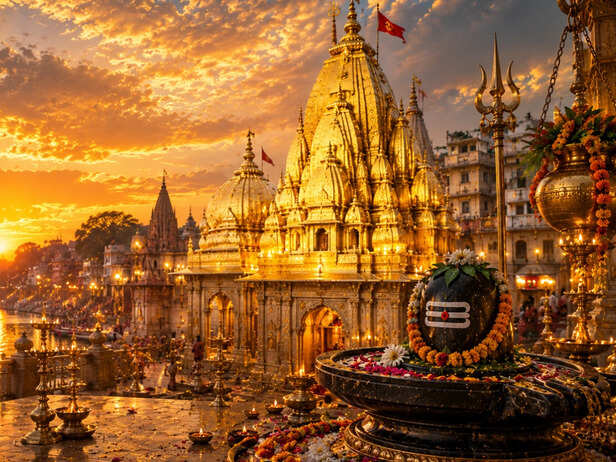
Kashi Called the City Where Shiva Never Leaves
Image credit : ChatGPT (AI)
The traditional account begins before the familiar universe existed. There was no world as we know it, only stillness and darkness. From this primordial state emerged two aspects of divine energy, described as Shiva and Shakti, representing complementary principles of consciousness and energy. From their cosmic union came Purusha and Prakriti. A sacred five-kos region was then established beyond the ordinary darkness of the universe, where Purusha and Prakriti could perform penance. This mystical region would later become closely connected with Kashi, giving the sacred city a place in a much larger cosmic story.
The Sacred Land of Five Kos
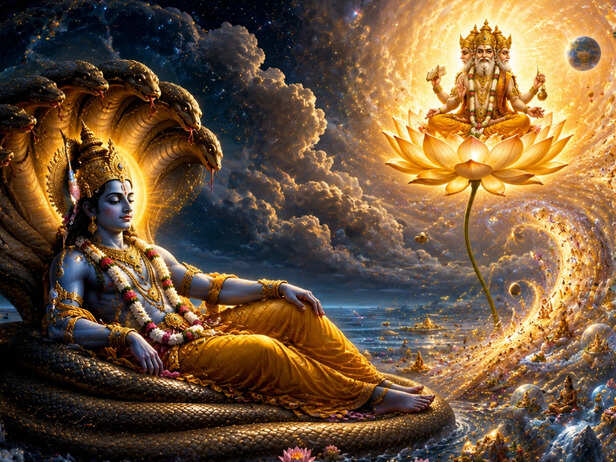
Divine Five-Kos Region of Kashi
Image credit : ChatGPT(AI)
As Purusha and Prakriti continued their penance, the divine story took an unexpected turn. Narayana, identified with Purusha, eventually opened his eyes and witnessed Shiva. According to the traditional account, the intensity of the moment caused sweat to flow from Narayana. The water began spreading across the region, while Shiva stopped its flow with the point of his trident. Narayana's earring, or mani, is said to have fallen at this sacred place, giving rise to the name Manikarnika. This story connects one of Kashi's most sacred locations with the earliest stages of its divine mythology.
How Avimukteshwar Appeared
From Divine Light to Jyotirlinga
Why Shiva Is Called Vishwanath
A Temple That Rose Again
The Deeper Message of Kashi
Unlock insightful tips and inspiration on personal growth, productivity, and well-being. Stay motivated and updated with the latest at My Life XP.