
7 Powerful Shiva Symbols Every Devotee Should Know
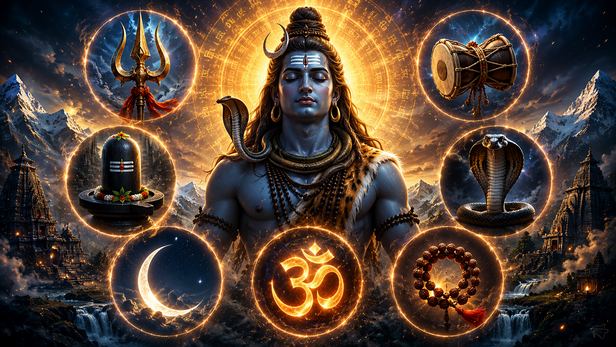
Lord Shiva's appearance is unlike that of any other deity in Hinduism. Every symbol He carries, from the crescent moon to the sacred ash, holds a timeless spiritual message rather than being just an ornament. Many devotees worship Mahadev every day, but few truly understand why He wears these powerful symbols. Each one represents a lesson about life, the mind, the universe, and the path to liberation. Once you discover their hidden meanings, you may never look at Lord Shiva's divine form the same way again.
The Crown of Cosmic Wisdom
Lord Shiva's Jata (matted hair) represents the infinite universe and His ability to control the powerful flow of cosmic energy. Resting within His locks is Mother Ganga, symbolizing divine grace flowing with discipline. The crescent moon on His forehead represents the human mind, emotional balance, and the cycle of time. Together, these two symbols teach that wisdom is achieved not by controlling the world but by mastering one's own thoughts and emotions.
The Eye That Sees Beyond
Mahadev's third eye (Trinetra) is not merely a weapon of destruction. It represents supreme awareness that sees beyond illusion. The three eyes symbolize the past, present, and future, while also representing the three Gunas: Sattva, Rajas, and Tamas. When Shiva opens His third eye, ignorance is destroyed, allowing truth to emerge. The lesson is simple yet profound: true vision comes not from the eyes but from awakened consciousness.
Power That Remains Calm
A venomous serpent rests peacefully around Lord Shiva's neck. This is Vasuki, the king of snakes. Despite representing danger, fear, and destructive energy, the serpent remains calm in Shiva's presence. It teaches that true power is never uncontrolled. Likewise, Mahadev's Trishul symbolizes victory over the three kinds of suffering: physical, mental, and spiritual. Together, these symbols remind devotees that inner discipline is greater than physical strength.
The Sound That Created the Universe
The Damaru is one of Shiva's most sacred symbols. According to tradition, its cosmic sound gave birth to creation, language, and universal vibrations. Every beat represents the endless cycle of birth, life, death, and rebirth. During the Tandava, Shiva's dance of transformation, the Damaru reminds devotees that change is natural and necessary. What appears to end is often preparing for a powerful new beginning.
Lessons Hidden in Ash and Tiger Skin
Lord Shiva covers His body with Bhasma (sacred ash) to remind humanity that everything material eventually turns to ash. Wealth, beauty, and status are temporary, but the soul is eternal. Beneath Him lies the tiger skin, representing victory over ego, anger, violence, and uncontrolled desires. Together, these symbols encourage people to rise above pride and focus on spiritual growth instead of temporary worldly achievements.
Beyond Death and Fear
The Mundmala (garland of skulls) symbolizes Shiva's transcendence over death and the endless cycle of existence. Rather than representing fear, it teaches that the soul continues beyond physical life. Every skull reminds devotees that the body is temporary while consciousness is eternal. Mahadev wears this garland fearlessly because He exists beyond birth and death, inspiring devotees to overcome attachment to the physical world.
Nandi Shows the Final Path
Lord Shiva's divine vehicle, Nandi, is much more than a sacred bull. Nandi symbolizes righteousness, loyalty, patience, and unwavering devotion. The four legs of the bull represent Dharma, Artha, Kama, and Moksha, the four goals of human life in Hindu philosophy. Sitting quietly before Shiva, Nandi teaches devotees that true spiritual progress begins with patience, discipline, and complete faith in the Divine.
Disclaimer This article is based on traditional beliefs and is intended for informational purposes only.
Unlock insightful tips and inspiration on personal growth, productivity, and well-being. Stay motivated and updated with the latest at My Life XP.