
9 Forms of Shakti Hidden in Navratri Kanya Pujan
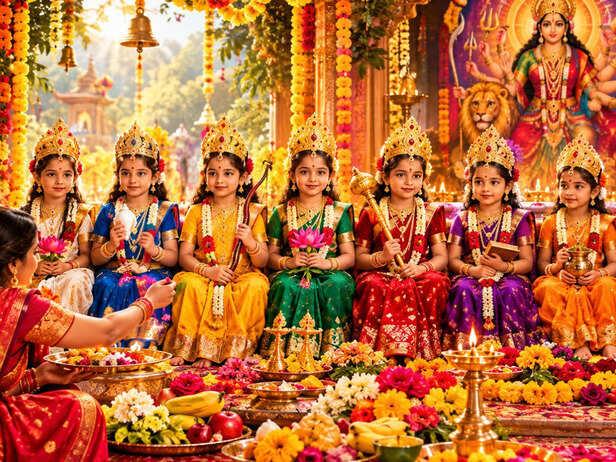
During Navratri, Kanya Pujan can sometimes become a quick ritual. We see a group of young girls passing by, invite them home, offer food and gifts, and complete the ceremony. But traditional Hindu texts describe Kumari Puja with a much deeper idea. According to the Devi Bhagavata Purana, girls from two to ten years of age are associated with nine distinct forms and names of Shakti. Each age represents a different quality, from innocence and potential to courage, peace and strength. That makes Kanya Pujan more than simply feeding young girls during Ashtami or Navami.
Why Kanya Pujan Is More Than a Ritual
During Navratri, many families perform Kanya Pujan on Ashtami or Navami by inviting young girls home, washing their feet, offering food and giving them gifts. The ritual may look simple, but the idea behind Kumari Puja goes much deeper. The Devi Bhagavata Purana describes different forms of Shakti associated with girls between two and ten years of age. Each age has a specific name and symbolic meaning. So, according to this tradition, the child is not treated merely as a guest receiving prasad. She is honoured as a representation of the divine feminine.
The Two-Year-Old Kumarika
A two-year-old girl is traditionally called Kumarika in the description of Kumari Puja. She represents innocence and the pure potential of Shakti before life becomes shaped by experience. This is one reason the youngest age has a special place in Kanya Pujan. The tradition associates Kumarika with the removal of hardship and poverty from the household. More broadly, the symbolism points toward a simple idea: divine energy can be seen in its purest form before the child begins to understand the complexities of the world around her.
Three Ages, Three Divine Powers
At three years, the girl is called Trimurti, a name connected with the three fundamental divine functions of creation, preservation and dissolution. In the traditional understanding of Kanya Puja, this form is associated with blessings related to dharma, artha and kama, the three recognised aims of human life. The symbolism makes this stage especially interesting because a small child is connected with some of life’s biggest forces. At four, the girl becomes Kalyani, a name associated with auspiciousness, wellbeing and prosperity. Her joyful presence represents the happiness and positive energy that people hope to cultivate in the home.
Rohini and Kalika Bring Two Different Powers
A five-year-old girl is called Rohini, and this form is traditionally associated with health, nourishment and wellbeing. The symbolism shifts at six, when the girl is known as Kalika. Kalika represents a stronger and more intense expression of Shakti, with the power to destroy ignorance and darkness. Together, these two stages show how the tradition connects different ages with different qualities. One focuses on growth and nourishment, while the other represents inner strength and the ability to confront what stands in the way. This makes Kanya Pujan a symbolic journey through different expressions of feminine power.
Chandika Teaches Courage
At seven, the girl is traditionally called Chandika, a form associated with courage and fierce strength. The symbolism here is different from the gentleness associated with the younger forms. Chandika represents the ability to stand firm when faced with fear, negativity or obstacles. It also offers a meaningful lesson for modern life. Strength does not always mean aggression. Sometimes it means knowing where to draw a line, protecting what matters and refusing to be controlled by fear. In the context of Kanya Pujan, honouring Chandika can therefore be understood as honouring the courage and confidence associated with Shakti.
Shambhavi and Durga Mark Inner Strength
At eight, the girl is known as Shambhavi, a form associated with calmness, inner balance and a peaceful nature. At nine, she is called Durga, representing strength and the ability to overcome difficult obstacles. These two stages create a striking contrast. Shambhavi points toward stillness, while Durga represents action and courage. Together, they suggest that strength is not always loud. Sometimes it is the ability to remain calm, and sometimes it is the courage to fight through difficulty. This is one of the most powerful ideas within the traditional framework of Kumari Puja.
Subhadra Completes the Nine Forms
At ten, the girl is traditionally called Subhadra, completing the nine forms associated with girls from two through ten years of age. This form is connected with auspiciousness and the fulfilment of wishes. The sequence then reaches an important transition. From around eleven, a girl enters adolescence, but that does not mean she stops representing Shakti. The traditional age-based classification simply ends at ten for this particular form of Kumari Puja. That distinction matters. The ritual is not saying that divine feminine power disappears after childhood. It is describing nine specific symbolic stages within a particular worship tradition.
The Real Meaning Behind Kanya Pujan
The deeper message of Kanya Pujan is easy to miss when the ritual becomes a routine activity. The nine ages, from Kumarika to Subhadra, present different qualities of Shakti: innocence, creation, auspiciousness, nourishment, courage, calmness and strength. So when families perform Navratri Kanya Pujan, the focus can be more than completing a ceremony. Treating every girl with dignity, feeding her respectfully and valuing her voice carries the spirit of the ritual beyond Ashtami or Navami. The tradition ultimately turns attention toward something simple but powerful: the feminine deserves respect not only when worshipped, but throughout everyday life.
Unlock insightful tips and inspiration on personal growth, productivity, and well-being. Stay motivated and updated with the latest at My Life