What You Do After a Death in Sawan Matters More Than You Think?
Kashish Pandey | Aug 08, 2026, 18:00 IST
We all know the pain of losing someone we love and almost everybody is familiar with that pain? When death happens during the Sawan families get confused and have hundreds of questions about what they should do next? Should they continue the fasting, and visit temples? What should they not do? Here is a guide for Hindu families on what they should do in that tough time.

Death in Sawan
Image credit : Chatgpt[AI]
Sawan is the month of devotion, prayer. It is a month to worship Lord Shiva. During this month, many people keep fast, visit temples and spend their time praying. But sometimes it brings unexpected moments. A family may lose a person they love during this holy month. When that happens, people often feel confused. They want to know if the ritual gets changed this month.
The family starts preparing for the final rites after someone passes away in the family. In Hindu families, the person’s body is respectfully kept on the floor. A ghee lamp is lit near the head. Tulsi leaves and a few drops of Ganga jal are placed in the person's mouth.
These customs are followed even if the death happens during Sawan or any other month.
![Sutak period]()
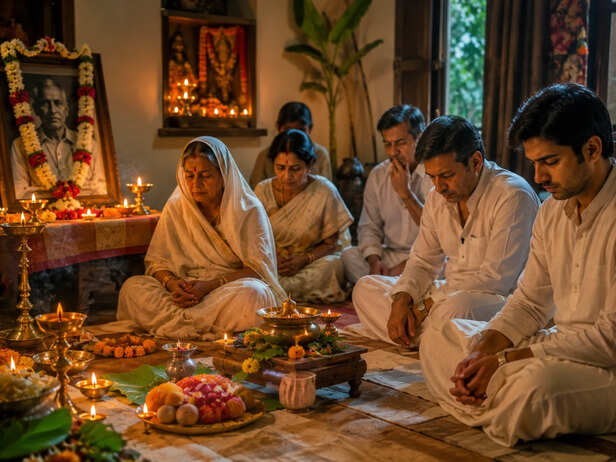
After a death in the family, Hindu families observe a mourning period known as Sutak. This period usually lasts between 10 and 13 days. During the Sutak period the family is not allowed to do any grand celebration, any personal religious ritual, fasting etc. until the mourning period ends.
The family member who performs the last rites by lighting the funeral pyre is known as mukhagni Karta. In most of the families the oldest son performs the ritual. During the mourning period, the mukhagni karta often follows some rules until the 13th day.
The first tradition is that the person sleeps on the floor instead of a bed. This is done as a mark of respect while mourning the loss of a loved one. It is believed that leaving comfort during this period made them do their duties toward the soul.
All the family members eat only one simple vegetarian meal. Rich foods and festive meals are usually avoided as a sign of devotion.
![Pind daan of departed soul]()
If these mourning rituals happen during sawan, many people believe that performing rituals properly brings punya. This belief does not mean that a death during sawan is considered fortunate. Hindu traditions teach that carrying out one’s duty towards parents is itself a noble act.
These beliefs are based on family tradition and may vary across different communities.
Many people worry because Sawan is one of the holiest months in the Hindu calendar. They wonder if they should continue fasting, visiting Shiva temples. In most hindu families, the mourning period takes priority. In sawan the close family members usually stop fasting, temple visits and any religious ritual during the Sutak. After the mourning period, the family can again start worshipping, and continue Sawan rituals.
Losing someone you love in sawan is emotionally tough, and getting confused about the ritual is very normal. The important thing to remember is that Hindu funeral customs remain the same, even during this sacred month.
Customs may vary across different regions and communities, it is always best to follow your family’s traditions or seek guidance from an elder or family priest if you are unsure about any ritual.
This article is based on spiritual beliefs and is intended for informational purposes only. It does not constitute financial, medical, or professional advice.
Facing repeated career and financial challenges? Your name energy may be influencing it. Check here.
Unlock insightful tips and inspiration on personal growth, productivity, and well-being. Stay motivated and updated with the latest at My Life XP.
Frequently Asked Questions[FAQs]
What Should You Do After Someone Passes Away?
The family starts preparing for the final rites after someone passes away in the family. In Hindu families, the person’s body is respectfully kept on the floor. A ghee lamp is lit near the head. Tulsi leaves and a few drops of Ganga jal are placed in the person's mouth.
These customs are followed even if the death happens during Sawan or any other month.
Sutak Period
Sutak period
Image credit : Chatgpt[AI]
After a death in the family, Hindu families observe a mourning period known as Sutak. This period usually lasts between 10 and 13 days. During the Sutak period the family is not allowed to do any grand celebration, any personal religious ritual, fasting etc. until the mourning period ends.
Why Does the Person Who Gives Mukhagni Follow Special Rules?
The family member who performs the last rites by lighting the funeral pyre is known as mukhagni Karta. In most of the families the oldest son performs the ritual. During the mourning period, the mukhagni karta often follows some rules until the 13th day.
The first tradition is that the person sleeps on the floor instead of a bed. This is done as a mark of respect while mourning the loss of a loved one. It is believed that leaving comfort during this period made them do their duties toward the soul.
All the family members eat only one simple vegetarian meal. Rich foods and festive meals are usually avoided as a sign of devotion.
Why is this Considered Spiritually Significant During Sawan?
Pind daan of departed soul
Image credit : Chatgpt[AI]
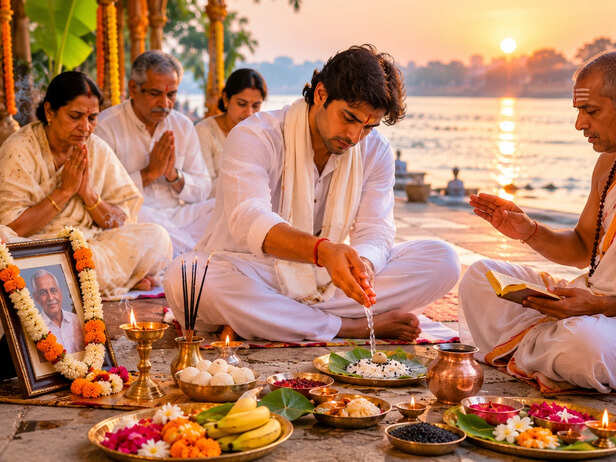
If these mourning rituals happen during sawan, many people believe that performing rituals properly brings punya. This belief does not mean that a death during sawan is considered fortunate. Hindu traditions teach that carrying out one’s duty towards parents is itself a noble act.
These beliefs are based on family tradition and may vary across different communities.
What Happens If Someone Dies During Sawan?
Many people worry because Sawan is one of the holiest months in the Hindu calendar. They wonder if they should continue fasting, visiting Shiva temples. In most hindu families, the mourning period takes priority. In sawan the close family members usually stop fasting, temple visits and any religious ritual during the Sutak. After the mourning period, the family can again start worshipping, and continue Sawan rituals.
Losing someone you love in sawan is emotionally tough, and getting confused about the ritual is very normal. The important thing to remember is that Hindu funeral customs remain the same, even during this sacred month.
Customs may vary across different regions and communities, it is always best to follow your family’s traditions or seek guidance from an elder or family priest if you are unsure about any ritual.
This article is based on spiritual beliefs and is intended for informational purposes only. It does not constitute financial, medical, or professional advice.
Facing repeated career and financial challenges? Your name energy may be influencing it. Check here.
Unlock insightful tips and inspiration on personal growth, productivity, and well-being. Stay motivated and updated with the latest at My Life XP.
Frequently Asked Questions[FAQs]
- Can Sawan Somvar fast be observed by other family members if one person passed away?
Generally, close family members observing Sutak are advised to pause personal fasting and religious rituals, though extended relatives outside the immediate mourning household can usually continue their own observances as normal. - Is it inauspicious for someone to die during Sawan?
No, death during Sawan is not considered inauspicious. In fact, many believe dying during this sacred month, especially one dedicated to Shiva, can be spiritually significant for the soul's journey. - Can Kanwar Yatra participants continue their pilgrimage if a death occurs in the family?
Traditionally, those in mourning are advised to pause pilgrimage related activities like Kanwar Yatra until the mourning period is complete, though practices can vary based on family and regional customs. - What is the difference between Sutak and Patak in Hindu tradition?
Sutak refers to the period of impurity observed after a birth or death within the immediate family, while Patak generally refers to a similar period observed by extended relatives or community members, often for a shorter duration.