
Did Brahma Perform Radha Krishna’s Secret Wedding?
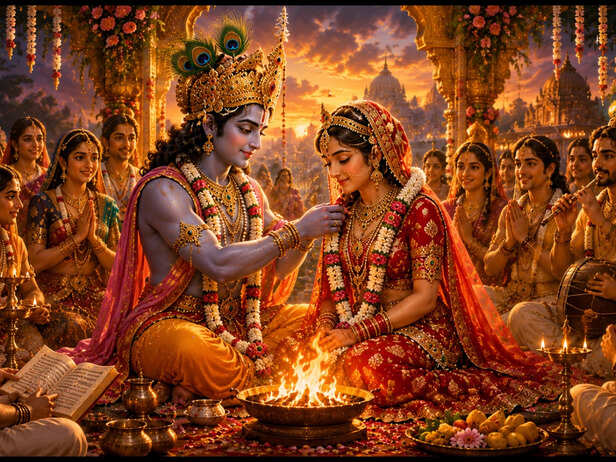
Deep in the sacred Braj region lies a place that carries one of the most intriguing stories associated with Radha and Krishna. It is Bhandirvan, near the Yamuna in Mathura district, traditionally revered as the place where their divine wedding took place. According to traditions associated with the Garga Samhita and Brahma Vaivarta Purana, Lord Brahma is said to have officiated the wedding of Radha and Krishna in Bhandirvan. The place is still visited by devotees, and a temple there depicts Radha and Krishna as bride and groom.
The Forest Where the Story Begins
Bhandirvan is one of the sacred forests of the Braj region and is located in the Mathura district near the Yamuna. The forest is closely associated with several Krishna traditions, but its most famous association is the Radha-Krishna Vivah Leela. According to the tradition preserved in the Garga Samhita, the wedding took place beneath the sacred Bhandir Vat, a large banyan tree. Today, the area continues to attract devotees who come not only for darshan but also to experience a place deeply connected with the devotional traditions of Braj.
The Wedding Before Brahma
The story becomes extraordinary when Lord Brahma appears as the officiating priest. According to the traditional account in the Garga Samhita, Radha and Krishna’s wedding ceremony was performed in Bhandirvan, with Brahma reciting Vedic mantras. The couple is described as circumambulating the sacred fire as part of the ceremony. This is why Bhandirvan is revered as Radha Krishna Vivah Sthali. For devotees, the scene represents far more than a historical wedding. It symbolises the divine union of Radha and Krishna, a relationship understood within Vaishnava traditions as deeply spiritual and eternal.
Why the Wedding Was Hidden
One fascinating part of the tradition is that the wedding is described as a secret or divine ceremony rather than an ordinary social marriage. Different Vaishnava traditions interpret Radha and Krishna’s relationship in different ways, and not all traditions place the same emphasis on their marriage. In the Bhandirvan tradition, however, the hidden wedding carries deep devotional meaning. It presents Radha and Krishna’s bond as something beyond social definitions. Their union is remembered not simply as a ceremony, but as an expression of divine love that devotees believe transcends worldly expectations.
The Temple Shows a Different Krishna
What makes the Bhandirvan temple particularly fascinating is its depiction of Radha and Krishna in their wedding form. Instead of seeing Krishna only with his familiar flute, devotees can see the divine couple represented as bride and groom. The temple tradition also features the sacred wedding imagery associated with Brahma’s presence. Bhandirvan is therefore not simply another Krishna temple. Its identity is closely connected with the Vivah Leela remembered here. For visitors, the unusual form of the deities immediately draws attention and invites them to discover the story behind this sacred place.
The Sindoor Ritual Draws Devotees
The wedding tradition continues to influence devotional practices at Bhandirvan. Reports from the region describe devotees coming to the sacred site to perform Radha-Krishna wedding rituals, especially while praying for fulfilment of their wishes. The temple’s depiction of Krishna applying sindoor to Radha is particularly striking because it connects the divine story with a familiar Hindu wedding symbol. For married couples and devotees, repeating elements of the ceremony can become an act of faith and remembrance. The ritual is meaningful because it connects personal hopes with the devotional atmosphere surrounding Radha and Krishna.
The Sacred Bhandir Vat
At the heart of the Bhandirvan tradition stands Bhandir Vat, the sacred banyan tree associated with the divine wedding. Devotional accounts identify the area beneath this tree as the place where Brahma performed the ceremony. Banyan trees already hold a special place in Indian spiritual culture because of their longevity and expansive roots. In Bhandirvan, the tree becomes even more meaningful because it is linked with one of Braj’s most cherished divine stories. Standing in this sacred landscape, devotees are reminded of the ancient traditions that have kept the story alive through generations.
Why Bhandirvan Still Matters
The importance of Bhandirvan goes beyond the question of whether everyone interprets Radha and Krishna’s marriage in exactly the same way. Different Hindu traditions understand their relationship differently, so it is more accurate to describe the Bhandirvan wedding as a cherished scriptural and devotional tradition rather than a universally interpreted historical event. For those who revere this tradition, Bhandirvan represents something profound: a love that is understood as divine, eternal, and beyond ordinary worldly definitions. That belief is what continues to draw devotees to this quiet corner of Braj.
A Sacred Place With a Powerful Story
Bhandirvan is not famous only because of an ancient wedding story. It is cherished because the story gives the landscape a deeper spiritual identity. According to the tradition found in the Garga Samhita and associated with the Brahma Vaivarta Purana, Brahma performed the divine wedding of Radha and Krishna beneath the sacred Bhandir Vat.
Today, the temple and surrounding sacred forest keep that memory alive through worship and devotional rituals.
And perhaps that is what makes Bhandirvan so fascinating: a place where, according to a cherished Braj tradition, the love of Radha and Krishna was transformed into a sacred wedding witnessed by Brahma himself.
Unlock insightful tips and inspiration on personal growth, productivity, and well-being. Stay motivated and updated with the latest at My Life XP