
Did Draupadi Call Krishna Her Brother? Here’s the Truth
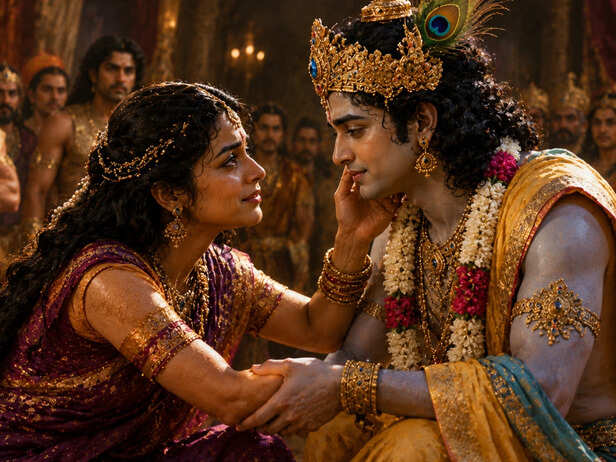
Every Raksha Bandhan, one beautiful story returns: Draupadi tied a piece of cloth around Krishna’s injured wrist, and Krishna promised to protect her forever. It is an emotional story of affection, trust and divine protection, and generations have connected it with the spirit of Raksha Bandhan. But there is a fascinating question hidden behind this popular tale. Does the Mahabharata actually say that Draupadi tied Rakhi to Krishna? The answer is more nuanced than the story we usually hear. The Mahabharata gives us powerful evidence of Krishna and Draupadi’s extraordinary bond, but the familiar Rakhi episode belongs more clearly to later tradition and popular retellings.
The Story Everyone Knows
According to a widely circulated traditional account, Krishna once injured his finger. Seeing the wound, Draupadi immediately tore a piece of cloth from her garment and tied it around his finger. Krishna was deeply moved by her spontaneous act of affection. The story says that he promised to stand by her whenever she needed him. This emotional exchange is often described as the symbolic beginning of their Rakhi-like bond. It beautifully captures the idea that even a small act of love can create a powerful promise of care and protection.
But Does the Mahabharata Say This?
Here is where the story becomes more interesting. The Sanskrit Mahabharata does describe a deep and extraordinary relationship between Krishna and Draupadi, but the familiar scene of Draupadi tying a Rakhi to Krishna is not clearly presented as a Raksha Bandhan ritual in the main epic narrative. This distinction matters when discussing mythology. A story can be deeply respected within tradition without being a direct episode of the oldest textual source. The Draupadi-Krishna Rakhi story is best understood as a traditional association that developed around their powerful relationship.
Their Bond Was Already Extraordinary
Even without the Rakhi episode, Krishna and Draupadi shared a remarkable connection. Draupadi addressed Krishna with deep trust, and Krishna remained an important source of support during some of the most difficult moments of her life. Their relationship was not simply about a ritual or a thread. It represented faith, respect and emotional security. This is why the Rakhi association became so natural over generations. The festival celebrates protection and affection, while their story reflects many of those same values. The symbolism therefore became stronger than the literal ritual itself.
The Dice Game Changed Everything
One of the most powerful moments connecting Draupadi and Krishna comes from the dice-game episode. After being dragged into the Kuru court and humiliated, Draupadi found herself in an unbearable situation. Her faith in Krishna became an important part of the larger tradition surrounding the episode. Krishna's role as her divine protector has remained deeply rooted in Indian storytelling and devotion. This is one reason their relationship carries such emotional force. The popular Rakhi story may not be directly described in the Mahabharata, but the larger theme of Draupadi trusting Krishna and Krishna protecting her is central to their remembered bond.
Why Rakhi Became Part of Their Story
Raksha Bandhan represents much more than tying a thread. It is about affection, trust, responsibility and the promise to stand beside someone. These themes naturally fit the traditional understanding of Krishna and Draupadi’s relationship. Over generations, storytellers and devotees connected their bond with the emotional meaning of Rakhi. This does not necessarily mean that Draupadi performed the modern Raksha Bandhan ritual with Krishna. Instead, their story became a powerful symbolic expression of the festival’s deeper values. Sometimes tradition preserves an emotion even when the details of the original story evolve.
Mythology Has Layers of Storytelling
Stories from Indian tradition have travelled through many forms of storytelling. Sanskrit epics, regional literature, oral traditions, devotional narratives and popular culture have all contributed to how familiar stories are remembered today. That is why it is important to separate what a primary text explicitly records from what later tradition lovingly preserves. Saying that the Rakhi story is a popular traditional account does not make its emotional meaning less valuable. It simply gives readers a clearer understanding of where the story comes from and prevents a later tradition from being presented as a direct quotation from the Mahabharata.
The Thread Was Never the Whole Story
Perhaps the most beautiful part of this story is that Krishna and Draupadi did not need a Rakhi to make their relationship meaningful. Their bond already carried trust, affection and protection. The famous Rakhi story simply gives those emotions a form that people can easily understand. So, when Raksha Bandhan arrives and devotees remember Draupadi and Krishna, the deeper message is not only about whether a thread was tied. It is about being there for someone when they need you most. That is the emotion that has allowed this story to survive across generations.
Unlock insightful tips and inspiration on personal growth, productivity, and well-being. Stay motivated and updated with the latest at My Life XP.