
Did Mata Sita Perform Chhath Puja First? The Forgotten Story Behind the Festival
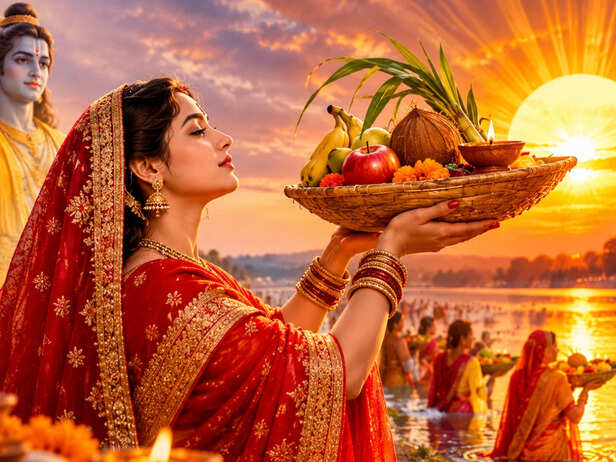
According to a popular regional belief, Mata Sita was among the earliest figures associated with the observance of Chhath Puja. Her story is particularly connected with Munger in Bihar, where local traditions preserve a fascinating account of her devotion to Surya Dev.
Although this story is deeply cherished, it is important to understand that there is no universally accepted scriptural evidence proving that Mata Sita was the first person to perform Chhath Puja. Let's explore the legend, its mythological connections and the significance behind this beautiful festival.
The Forgotten Story of Mata Sita and Chhath Puja
According to a popular tradition associated with Munger, Bihar, Mata Sita performed a ritual dedicated to Surya Dev after returning to Ayodhya with Lord Rama.The story is connected with the period following their fourteen-year exile and the victory over Ravana.According to this traditional account, Lord Rama and Mata Sita were advised to perform religious rituals as an act of atonement following the battle with Ravana.
During this period, Mata Sita is believed to have visited Munger, where Sage Mudgal guided her towards the worship of Surya Dev.Following his guidance, she observed a sacred fast and offered prayers to the Sun God on the banks of the Ganga.Local traditions associate this observance with Kartik Shukla Shashthi, the sixth day of the bright fortnight in the Hindu month of Kartik.Even today, Munger holds a special place in the cultural memory of Chhath Puja. The Sita Charan Mandir, associated with Mata Sita's footprints, is an important religious landmark connected with this tradition.This regional account is one of the reasons Mata Sita is remembered in discussions about the origins of Chhath Puja.
Why Is Munger Considered the Birthplace of Chhath Puja?
Munger, a historic city in Bihar, is closely associated with the story of Mata Sita's Chhath observance.The place known as Sita Charan Mandir is situated on a rocky formation in the Ganga. Devotees believe that the footprints preserved on the stone belong to Mata Sita.According to local accounts, these footprints are connected with the rituals she performed while offering Arghya to the setting and rising Sun.
The temple is also associated with Sage Mudgal's ashram. Local religious traditions identify this as the place where Mata Sita performed the sacred observance.Some accounts attribute this narrative to the Ananda Ramayana, although the story should be presented as a religious tradition rather than an independently verified historical event.
Were Karna and Draupadi Also Connected to Chhath Puja?
Interestingly, Mata Sita is not the only mythological figure associated with Sun worship.Two other important figures are frequently mentioned in popular explanations of Chhath Puja:
Karna: According to the Mahabharata, Karna was the son of Surya Dev and Kunti. He was known for his devotion to his divine father and his generosity. His daily worship of the Sun is often associated with the tradition of offering Arghya.
Draupadi: Popular religious narratives also connect Draupadi's prayers to Surya Dev with the Pandavas' difficult period of exile. Her devotion is remembered as an example of faith and perseverance.These accounts illustrate the longstanding importance of solar worship in Hindu religious traditions. However, they should not be treated as conclusive proof of the historical origin of the present-day Chhath festival.
Why Do Devotees Worship Both the Setting and Rising Sun?
One of the most fascinating aspects of Chhath Puja is that devotees offer prayers to both the setting and rising Sun.On the third day, devotees gather near rivers, ponds and other water bodies to perform Sandhya Arghya, offering prayers to the setting Sun.The following morning, they return before sunrise to perform Usha Arghya.
But why does this festival give importance to both?The setting Sun represents the completion of a day, while the rising Sun symbolises hope, renewal and new beginnings.The ritual is also understood as an expression of gratitude towards nature. The Sun provides energy, supports agriculture and sustains life on Earth.Through these offerings, devotees express respect for the natural forces that make life possible.
The Importance of Chhathi Maiya in Chhath Puja
Chhath Puja is not dedicated to Surya Dev alone. Chhathi Maiya also holds a special place in the festival.She is traditionally associated with Goddess Shashthi, who is worshipped as the protector of children and the giver of blessings for family well-being.
A popular mythological account connects her with King Priyavrat and Queen Malini.According to the story, the royal couple was unable to have a child. After a long period of prayers and religious observances, they were blessed with a child, but the baby was born lifeless.The grieving king and queen received divine guidance from Goddess Shashthi, who blessed them and restored their happiness.This story explains why Chhathi Maiya is worshipped for the well-being, health and long life of children.
How Is Chhath Puja Celebrated? The Four Sacred Days
Day 1 – Nahay Khay
Devotees take a holy bath, clean their homes and prepare a simple, pure meal.
Day 2 – Kharna
Devotees observe a fast throughout the day and break it after evening prayers with traditional prasad, usually including jaggery kheer and roti.
Day 3 – Sandhya Arghya
Devotees gather at water bodies and offer fruits, thekua and other traditional offerings to the setting Sun.
Day 4 – Usha Arghya
Devotees offer prayers to the rising Sun before sunrise and conclude their fast after the final rituals.
The Deeper Message Behind Mata Sita's Chhath Story
Whether Mata Sita was truly the first person to perform Chhath Puja or not, her association with the festival represents something beautiful.Her story reminds devotees of the importance of faith, patience, gratitude and devotion.Chhath Puja also teaches us to respect nature and recognise the importance of the Sun and water in sustaining life.Perhaps that is why this festival has continued across generations, bringing families and communities together in an extraordinary expression of devotion.
So, did Mata Sita perform Chhath Puja first?According to the popular tradition of Munger, Bihar, she did. While this account is deeply rooted in regional religious belief, it is not a universally established historical fact.And perhaps the most beautiful part of Chhath Puja is not simply discovering who performed it first, but understanding the devotion and faith that have kept this sacred tradition alive for generations.
Unlock insightful tips and inspiration on personal growth, productivity, and well-being. Stay motivated and updated with the latest at My Life XP.