
Did Parvati Inspire Karwa Chauth? The Untold Story
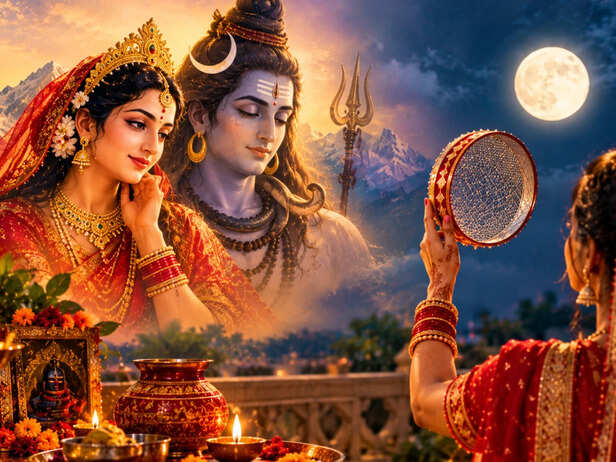
In Hindu traditions, Parvati represents devotion, strength, and the bond between husband and wife. Her relationship with Lord Shiva is often remembered as an example of determination and commitment. This is one reason her blessings are sought by many devotees during Karwa Chauth.But the connection is more nuanced than a single story. Several legends and regional traditions shape the way people understand the festival today.
Why Is Goddess Parvati Linked to Karwa Chauth?
Goddess Parvati is widely worshipped as the consort of Lord Shiva and is associated with marital harmony, family well-being, and feminine strength. In many Hindu traditions, married women pray to her for happiness and stability in their relationships.Her connection with Karwa Chauth is rooted largely in these beliefs. The festival is traditionally observed by many married Hindu women who pray for their husbands' well-being and longevity. Parvati is often invoked because devotees see her as a divine example of devotion and an ideal marital companion.
However, it is important to distinguish between a religious association and a documented historical origin. There is no single universally accepted account establishing that Parvati created Karwa Chauth or instructed women to observe it. Instead, her role in the festival is understood through broader Hindu beliefs, devotional practices, and stories passed down through generations.
The Story of Parvati's Devotion to Lord Shiva
One of the best-known narratives about Parvati concerns her determination to marry Lord Shiva.According to Hindu mythology, Parvati was the daughter of Himavan, the mountain king, and Maina. She wished to marry Shiva, who was absorbed in meditation and was not interested in worldly life.Parvati remained devoted to her goal and undertook intense penance. Through discipline, patience, and unwavering faith, she continued her efforts to win Shiva's acceptance. Her devotion eventually led to their divine marriage.
Different scriptures and regional tellings describe aspects of this story in different ways. Yet the central theme remains familiar: Parvati's determination and spiritual discipline played a significant role in her union with Shiva.This story helps explain why Parvati is associated with marital devotion in many Hindu traditions. Her example inspires devotees who pray for love, understanding, and harmony in married life.Still, the story of Parvati's penance should not automatically be treated as the direct origin of Karwa Chauth. It offers a broader religious context for understanding why devotees associate her with the festival.
Did Parvati Observe a Fast for Shiva?
Stories about Parvati's penance are sometimes discussed alongside fasting traditions. However, the familiar account of her seeking Shiva through intense spiritual discipline is not the same as a definitive historical record of her observing the modern Karwa Chauth fast.Karwa Chauth is associated with several folk narratives, including the story of Veeravati. In one widely told version, Veeravati is tricked into believing the moon has risen before the proper time, and her actions lead to distress before divine intervention restores her husband's life.
Other stories and regional traditions also explain the festival's meaning. Their details vary, and not every version places Parvati at the centre of the narrative.The safest way to understand the connection is this: Parvati is revered during Karwa Chauth in many traditions because of her association with Shiva, marital well-being, and devotion. That does not mean every Karwa Chauth custom can be traced directly to a single story about her.
Why Do Women Pray to Goddess Parvati on Karwa Chauth?
For many devotees, prayer is an important part of Karwa Chauth. Women may worship Parvati, Shiva, or other deities according to their family's customs and regional practices.Parvati's presence in these rituals reflects the qualities devotees associate with her:
- Devotion: Her dedication to Shiva represents commitment and faith.
- Strength: Her stories portray her as determined and powerful, not simply passive.
- Marital harmony: Many devotees seek her blessings for understanding, affection, and peace within marriage.
- Family well-being: Her maternal and protective aspects are also important in Hindu worship.
The exact puja procedure differs between communities. Some families follow a particular Karwa Chauth katha, while others emphasise prayers, offerings, and the moon-viewing ritual. It is therefore better to understand the festival as a living tradition with regional variations rather than one fixed set of practices.
What Does the Parvati Connection Mean Today?
Karwa Chauth has changed in how many families observe it. Some women fast according to long-standing family customs, while some couples choose to fast together. Others focus on prayer, spending time with family, or marking the occasion in a way that reflects their beliefs.For devotees, Parvati's story can offer a reminder that relationships require patience, care, and strength. Her mythology also presents her as a powerful goddess in her own right, with an identity that extends beyond her marriage to Shiva.
That distinction matters. The connection between Parvati and Karwa Chauth is not only about a wife praying for her husband. It can also be understood through devotion, personal determination, and the pursuit of harmony.The festival's meaning will naturally differ from one household to another. Some may see it primarily as a religious observance, others as a family tradition, and others as an opportunity for couples to celebrate their relationship.
The Belief Behind the Fast Is More Than One Story
So, did Goddess Parvati inspire the Karwa Chauth fast? In popular Hindu devotion, she is strongly associated with the festival because she represents marital devotion, strength, and harmony. Her story with Lord Shiva helps explain why many women seek her blessings on this day.However, there is no single, universally established account proving that she originated the fast itself. Karwa Chauth's traditions are shaped by multiple stories, regional customs, and generations of devotional practice.Perhaps that is what makes the festival so meaningful to those who observe it. Beyond the fast and the moment the moon appears, it carries stories that connect faith, family, and relationships across generations.
Unlock insightful tips and inspiration on personal growth, productivity, and well-being. Stay motivated and updated with the latest at My Life XP