
How Did One War With His Own Guru Plant the Seed of Bhishma's Downfall?
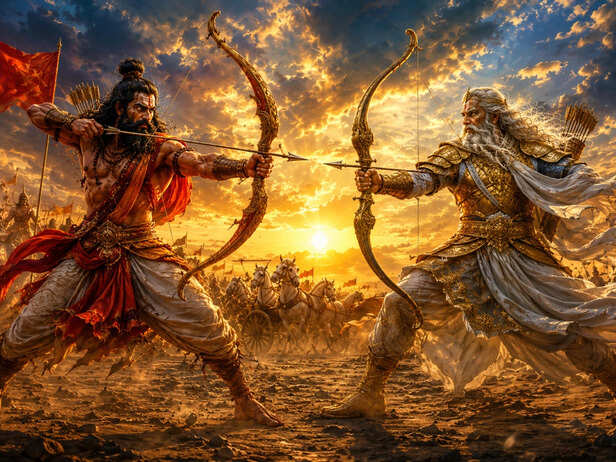
To understand why Bhishma eventually fell at Kurukshetra, we have to go back to the vow that made him Bhishma in the first place. It was a promise made for his father’s happiness. At the time, Bhishma could not have known that this vow would shape almost every major event of his life, including his confrontation with Parshuram and, eventually, his own downfall. The irony is striking. The vow that made Bhishma one of the most respected men in the Mahabharata also became one of the reasons he could never resolve the tragedy of Princess Amba. And that unresolved conflict eventually came back to him on the battlefield of Kurukshetra.
What Was Bhishma’s Vow?
Bhishma was originally known as Devavrata, the son of King Shantanu and the river goddess Ganga. His father later fell in love with Satyavati, but her father was unwilling to allow the marriage unless Satyavati’s future children could inherit the throne of Hastinapura. Devavrata wanted his father to be happy. So he made a tremendous sacrifice. He gave up his claim to the throne. But there was still a problem. If Devavrata had children of his own, they could one day claim the kingdom. To remove even that possibility, Devavrata made an even more severe promise. He vowed to remain celibate for life and never marry or have children. That vow was so difficult and terrible that the gods are said to have called him Bhishma, meaning one who undertook a terrible or formidable vow. From that moment, Devavrata became Bhishma. And he never broke that promise.
Why Did This Vow Matter Later?
Years later, Bhishma’s vow became central to the story of Princess Amba. Bhishma had taken Amba and her sisters from the swayamvar of Kashi for his younger brother Vichitravirya. But Amba was already in love with King Shalva. When Bhishma learned this, he allowed her to leave. She went to Shalva expecting to marry him. Instead, Shalva rejected her. Amba was left devastated and eventually came to blame Bhishma for the situation. She wanted him to take responsibility. But there was one obvious solution that Bhishma could not accept. Marriage. Bhishma could not marry Amba because of the vow he had made decades earlier. His promise was absolute. And this is where the conflict became much bigger than Amba and Bhishma.
Why Did Parshuram Step In?
Amba eventually went to Parshuram, one of the greatest warrior sages in Hindu tradition. There was another reason her choice was significant. Parshuram was Bhishma’s guru. Amba asked him to help her. Parshuram listened and decided that Bhishma needed to correct the situation. But Parshuram did not immediately take up his weapons. He first approached Bhishma and tried to settle the matter. He asked Bhishma to marry Amba. Bhishma refused. He respected his guru, but he would not break the vow that had defined his entire life. Parshuram tried to persuade him. Bhishma remained firm. At that point, the disagreement had reached a dead end. Parshuram believed Amba deserved justice. Bhishma believed his vow could not be broken. The only thing left was battle.
When Bhishma Fought His Own Guru
Parshuram challenged Bhishma to fight. Bhishma accepted. This was not an ordinary teacher-student disagreement. These were two legendary warriors who knew exactly what the other was capable of. The battle continued for twenty-three days, according to the Mahabharata tradition. They fought with bows, arrows and powerful celestial weapons. Both were injured, and both came close to gaining the upper hand at different points. Still, neither could defeat the other. For Bhishma, this was a remarkable achievement. He was standing against the warrior who had taught him. But the battle also revealed something more important. Parshuram could not solve Amba’s problem. And neither could Bhishma.
The Dangerous Weapon That Could Have Ended The Fight
After days of fighting, Bhishma learned about a powerful weapon known as the Praswapa astra. According to the traditional account, divine beings revealed the weapon to him. Bhishma prepared to use it against Parshuram. The weapon was extremely powerful and could put an opponent into a deep sleep. But before Bhishma could release it, divine intervention stopped him. Narada and other divine beings reminded Bhishma of the respect owed to his guru. Bhishma listened. He did not use the weapon against Parshuram. Parshuram was also urged by his ancestors to end the battle. The fight finally came to an end without either warrior being decisively defeated.
How Shikhandi Became The Key To Bhishma’s Downfall
During the Kurukshetra war, Bhishma remained one of the most powerful warriors on the battlefield. Arjuna faced enormous difficulty fighting him directly. But Shikhandi created a unique situation. Bhishma would not fight Shikhandi in the ordinary manner because of Shikhandi’s connection with Amba. Arjuna took advantage of this. With Shikhandi positioned before Bhishma, Arjuna attacked. Bhishma did not resist Shikhandi as he would have resisted another warrior. That gave Arjuna the opening he needed. Eventually, Bhishma was struck by numerous arrows and fell from his chariot.
Bhishma’s downfall did not begin when Arjuna lifted his bow at Kurukshetra. It began much earlier. It can be traced back to the vow Bhishma made as Devavrata a vow of lifelong celibacy and renunciation of the throne. That vow later meant he could not marry Amba. Amba’s suffering led her to Parshuram. Parshuram first tried to resolve the matter peacefully, but when Bhishma refused to break his vow, guru and disciple fought for twenty-three days. Neither won. But the conflict left one thing unresolved: Amba’s determination to bring Bhishma down. Years later, that unresolved story returned through Shikhandi. And on the battlefield of Kurukshetra, the man who had survived kings, armies and even his own guru finally fell. Bhishma’s greatest strength was his unbreakable vow. Ironically, the consequences surrounding that vow became one of the paths leading to his downfall.
This article is based on spiritual beliefs and is intended for informational purposes only. It does not constitute financial, medical, or professional advice.
Facing repeated career and financial challenges? Your name energy may be influencing it. Check here.
Unlock insightful tips and inspiration on personal growth, productivity, and well-being. Stay motivated and updated with the latest at My Life XP.