
How Ganesh Utsav Became a Symbol of Unity and Freedom
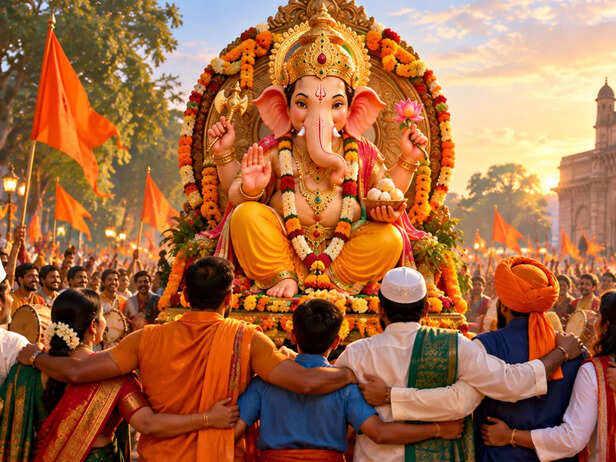
Every year, Ganesh Utsav fills streets with idols, music, decorations and huge public gatherings. But behind this colourful celebration lies a fascinating chapter of Indian history. Ganesh worship existed in homes and communities long before public celebrations became widespread. The major change came in the late 19th century, when Bal Gangadhar Tilak helped transform Ganesh Chaturthi into a large public festival. What began as a religious celebration gradually became a powerful space for community participation, cultural expression and nationalist discussion.
Ganesh Puja Was Once Mostly Private
Before public Ganesh Utsav became a major cultural event, Ganesh Chaturthi was largely observed through household and community worship. Families brought Ganesh idols home, performed prayers and celebrated the festival with devotion. While public worship existed in some places, it did not yet have the huge organised scale associated with modern Ganesh Utsav. The festival was deeply rooted in faith and tradition, but its role in public life was about to change. The turning point came in the 1890s, when Bal Gangadhar Tilak saw an opportunity to bring people together through a celebration that already held deep cultural importance.
1893 Changed the Festival Forever
In 1893, Bal Gangadhar Tilak encouraged the organisation of public Ganesh celebrations in Maharashtra. The timing was significant. British colonial rule placed restrictions on political gatherings, making open public mobilisation difficult. Tilak recognised that a religious and cultural festival could provide a legitimate space for people to gather. Public Ganesh celebrations brought worship outside individual homes and into shared spaces. Communities could organise events, meet one another and participate in cultural activities. This helped give Ganesh Chaturthi a wider social role while keeping devotion at the heart of the celebration.
Tilak Saw Unity in Ganesh Worship
For Tilak, the importance of public Ganesh Utsav went beyond decoration and religious rituals. He saw the festival as a way to encourage unity and collective participation at a time when society faced political and social divisions. Local committees began organising processions, devotional music, cultural performances and public programmes. Young people became particularly active in these celebrations. The festival created a shared public space where ordinary people could participate rather than simply observe. Slowly, Ganesh Utsav developed into a community movement, connecting religious devotion with social interaction and a growing sense of collective identity.
The Festival Became a Public Platform
The new form of Ganesh Utsav created something unusual for its time: a public platform where large groups could come together regularly. Along with prayers and processions, celebrations included music, performances, speeches and discussions. These gatherings helped people exchange ideas and become more aware of social and political issues. Because the events were organised around a religious festival, they offered a way for public participation under colonial rule. This was one reason the festival grew beyond a household tradition. It became an important part of public culture and helped strengthen connections between local communities.
Ganesh Utsav Entered the Freedom Struggle
Tilak was a strong critic of British rule and believed that Indians needed greater political awareness and self-rule. Public Ganesh celebrations gave nationalist ideas a wider audience. Speeches and community gatherings could encourage people to think about India's political future while remaining connected to cultural traditions. At a time when colonial authorities closely watched political meetings, the festival offered an important public setting for mobilisation. Ganesh Utsav therefore became linked with the broader nationalist movement. Its significance was no longer limited to worship; it also reflected the growing desire for unity, participation and self-rule.
Young People Helped Build the Movement
The growth of public Ganesh Utsav depended heavily on local participation. Committees were formed in different areas, with young volunteers helping organise decorations, processions, music and cultural programmes. These activities gave people a practical role in the celebration and made the festival feel like a shared community effort. Instead of being limited to individual households, Ganesh Utsav became something people could build together. This participatory nature helped the tradition spread across Maharashtra. Over time, the public festival developed its own identity, combining devotion, community involvement, cultural expression and a strong historical connection with India's nationalist period.
Why Tilak’s Idea Still Matters
Today, Ganesh Utsav is celebrated on a scale that extends far beyond its early public form. Huge idols, artistic decorations, processions and cultural programmes have become familiar sights. Yet the historical story behind the celebration remains important. Tilak's contribution was not simply about making Ganesh Chaturthi larger; it was about creating a shared public space where people could participate, connect and express a collective identity. The festival's journey from largely private worship to a major public celebration shows how religious traditions can also become part of social and cultural history. That is what makes Ganesh Utsav more than just a festival.
Unlock insightful tips and inspiration on personal growth, productivity, and well-being. Stay motivated and updated with the latest at My Life XP.