
How Indra Divided His Sin Among Four Parts of Creation
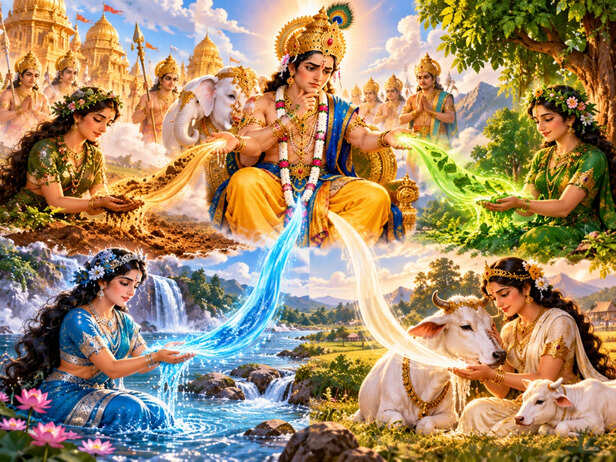
What if the cracks in the earth, the bubbles in water and certain features of trees were connected to a crime committed by the king of the gods? A fascinating story from Hindu mythology links these natural features to Indra, who killed his own priest, Vishvarupa, after discovering that he was secretly offering a share of sacrificial offerings to the asuras. The act brought a terrible consequence: the sin of killing a Brahmin, known as Brahmahatya. According to the traditional account, Indra eventually divided this sin among four recipients. The story offers a striking explanation of how one decision can carry consequences far beyond the person who makes it.
The Priest With Three Heads
Vishvarupa was a priest appointed by Indra to perform sacred rituals for the gods. According to the mythological account, he had three heads and a family connection to both the devas and the asuras. His father was associated with the divine side, while his mother belonged to a family of asuras. This unusual background placed him between two groups that were often in conflict. During sacrificial rituals, Vishvarupa openly offered oblations to the devas but secretly directed a share towards the asuras as well. When Indra discovered this, he began to suspect that his priest was strengthening his enemies.
Why Indra Killed Vishvarupa
Indra feared that Vishvarupa's secret offerings would make the asuras more powerful and threaten the authority of the devas. Angered by what he considered betrayal, Indra killed the priest by cutting off all three of his heads. The decision solved the immediate problem from Indra's perspective, but it created a far greater spiritual consequence. Vishvarupa was a Brahmin priest, and killing him brought the grave sin known as Brahmahatya upon Indra. The story takes an unexpected turn here: even the king of the gods could not simply escape the consequences of his own actions.
The Sin That Followed Indra
In Hindu religious tradition, Brahmahatya refers to the grave sin of killing a Brahmin. After Vishvarupa's death, this sin became a burden that Indra could not ignore. His position as king of the devas did not place him above the moral and spiritual consequences of his actions. According to the traditional account, Indra endured the burden for a year before seeking a way to distribute it. This part of the story shifts the focus from his anger towards the asuras to the consequences of his decision. It suggests that power may help someone act, but it does not automatically free them from responsibility.
Why Indra Divided His Sin Into Four Parts
Unable to bear the burden, Indra divided his sin into four portions and distributed them among the earth, water, trees and women, according to a well-known Puranic account. Each recipient was associated with a particular natural feature or condition that the story uses to explain the continuing presence of the sin. This was not simply a story about punishment falling on one individual. It became a mythological explanation for features people observed in the world around them. The details differ across traditional tellings, so the exact descriptions should be understood within the context of the particular scripture or version being discussed.
The Earth's Cracks and Uneven Surface
In one traditional explanation, the earth received a portion of Indra's sin, which is associated with cracks and fissures in the ground. These features become part of the story's symbolic language, connecting a spiritual burden with the physical world. Such descriptions belong to Hindu mythology and are not scientific explanations for geological formations. Cracks in the earth can form through processes such as drought, soil shrinkage, erosion and tectonic activity. The myth serves a different purpose: it places familiar features of nature within a larger story about wrongdoing, consequences and the relationship between divine actions and the world.
What Water and Trees Represent
The story also associates portions of Indra's sin with water and trees. In some traditional tellings, water's bubbles or foam and certain features of trees are described as visible signs of the burden they received. These details vary across accounts, making it useful to check the specific Puranic source before presenting any one version as universal. The imagery gives ordinary elements of nature a place in the mythological narrative. Water sustains life, trees provide shelter and nourishment, and the earth supports living beings. Through these familiar elements, the story connects a divine conflict with the world people depend on every day.
The Meaning Behind the Ancient Story
The final part of the story connects the fourth share with women and a traditional explanation of menstruation. This account reflects an ancient religious interpretation and should not be treated as a medical explanation. Menstruation is a normal biological process, not a sin or punishment. Read as mythology, the larger story raises a question about responsibility: can a powerful person's wrongdoing be transferred to others? Indra's attempt to distribute his burden offers a complicated picture of justice, especially because the consequences extend beyond the person who committed the act. The tale remains memorable because it connects divine power, moral responsibility and the natural world in a
single narrative.
Unlock insightful tips and inspiration on personal growth, productivity, and well-being. Stay motivated and updated with the latest at My Life XP.