
How Urmila Helped Lakshman Defeat Meghnad
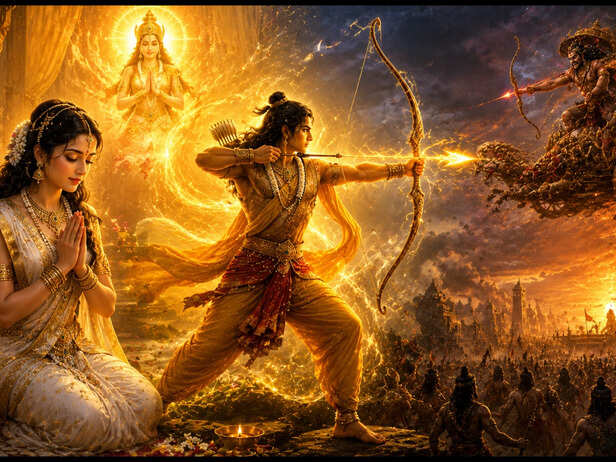
The Ramayana is filled with stories of courage, devotion and sacrifice. But some of its most powerful stories belong to people who remained in the background.
One such story is that of Urmila, Lakshman’s wife.
While Lakshman followed Lord Ram and Sita into the forest, Urmila remained in Ayodhya. At first glance, it may appear that she simply stayed behind. But in one deeply moving folk tradition of the Ramayana, her sacrifice was far greater than anyone could see.
The story says that Lakshman gave up sleep for 14 years so he could remain awake and protect Ram and Sita. Urmila, in turn, took on his share of sleep.
And that hidden sacrifice would later become connected with one of the most important battles of the Ramayana.
Urmila Was Asked to Stay Behind
When Lakshman decided to accompany Ram into exile, Urmila wanted to go with her husband. It was understandable. Sita was going with Ram, so why should Urmila remain behind? But Lakshman reportedly explained that his entire attention would be devoted to serving and protecting Ram and Sita. He feared that worrying about Urmila's safety would become another burden. Urmila reluctantly accepted his request. This is where her sacrifice begins. She did not receive the adventure, recognition or battlefield glory that Lakshman received. She simply stayed behind and carried the emotional weight of separation.
Her Sacrifice Was Almost Invisible
There is something deeply human about Urmila's position. Lakshman had a visible role. He walked beside Ram, protected Sita and faced danger in the forest. Urmila had none of those visible moments. Her struggle happened quietly. She had to live with uncertainty while her husband faced dangers far away. This is why her story resonates so strongly today. Not every sacrifice looks dramatic. Some people support others by waiting, managing responsibilities and accepting loneliness without applause. Urmila represents those silent sacrifices that can easily disappear when history focuses only on the people standing at the centre of events.
Then Came the Goddess of Sleep
According to this folk tradition, Lakshman remained awake on the first night of exile while Ram and Sita slept. Then Nidra, the goddess of sleep, appeared before him. Lakshman requested that he be allowed to remain awake for the entire 14 years so he could protect Ram and Sita. But there was a problem. The natural need for sleep could not simply disappear. Someone had to carry the sleep Lakshman was giving up. Lakshman therefore asked Nidra to approach Urmila. What happened next transformed Urmila from a woman waiting at home into an essential part of Lakshman's sacrifice.
Urmila Took His Sleep
When Nidra explained the situation, Urmila did something extraordinary. Instead of asking Lakshman to return or demanding that he reconsider, she accepted his share of sleep for herself. According to the tradition, she slept for 14 years while Lakshman remained awake in the forest. Think about the emotional depth of that decision. Lakshman sacrificed sleep to serve Ram, but Urmila sacrificed her waking life in Ayodhya to make Lakshman's service possible. Her contribution was not secondary. In the logic of this story, Lakshman's sacrifice could not have happened without Urmila's sacrifice.
Her Role Reached the Battlefield
The story takes an unexpected turn during the war with Ravana. Meghnad, also known as Indrajit, was considered one of Lanka's most formidable warriors. In this particular folk tradition, only someone who had remained awake for 14 years could defeat him. That condition gave Lakshman's extraordinary discipline a new meaning. He had not simply stayed awake out of devotion. His years of vigilance became part of the reason he could face Meghnad. And behind that feat stood Urmila. Her sacrifice had quietly supported the very discipline that the battlefield would later require.
The Coronation Revealed Her Story
After Ram defeated Ravana, rescued Sita and returned to Ayodhya, the long-awaited coronation finally arrived. According to the folk story, as Ram was about to be crowned, Lakshman suddenly laughed. Everyone was confused. Why would Lakshman laugh at such a sacred moment? He then remembered his agreement with Nidra. His 14 years were over, and now Urmila's sleep had to end. The irony amused him. As Lakshman finally surrendered to sleep, Urmila awakened. After 14 years, she could finally witness the moment that marked the return of her husband and the coronation of Ram.
Urmila Deserves to Be Remembered
Urmila's importance goes beyond the story of sleep. She represents a kind of strength that is often overlooked because it does not look heroic from the outside. She waited. She endured separation. She accepted a difficult responsibility. And according to this tradition, she made Lakshman's extraordinary service possible. We should also remember that this episode belongs to regional and folk Ramayana traditions, not the narratives of Valmiki or Tulsidas. Yet that does not make the story meaningless. It shows how India's Ramayana traditions have continued to explore the lives, emotions and sacrifices of characters beyond the central narrative.
The Woman Behind Lakshman’s Devotion
For 14 years, Lakshman was remembered as the brother who never left Ram's side.
But behind that devotion, this tradition places another person.
Urmila.
She did not fight Ravana.
She did not cross the forest beside Ram.
She did not stand beside Lakshman on the battlefield.
Her contribution was quieter.
She gave him the freedom to serve.
And perhaps that is why her story feels so emotional. Because in real life too, some of the most important people are not standing in the spotlight. They are the ones waiting at home, carrying responsibilities, accepting uncertainty and quietly making someone else's journey possible.
The Deeper Lesson of Urmila’s Story
The most powerful part of Urmila's story is not simply that she slept for 14 years.
It is why she did it.
She understood that Lakshman's devotion required sacrifice from both of them.
That makes her more than a forgotten wife in the background of the Ramayana. In this folk tradition, she becomes a symbol of partnership, patience and invisible strength.
The Ramayana has always been more than one story. Across India, countless Ram-kathas have preserved different interpretations, characters and emotional worlds.
And Urmila's story asks us to look beyond the heroes we already know.
Because sometimes, the person who never appears on the battlefield is the one who made the victory possible.
Unlock insightful tips and inspiration on personal growth, productivity, and well-being. Stay motivated and updated with the latest at My Life XP.