
How Was Balarama’s Birth Possible? Mythology Meets Science
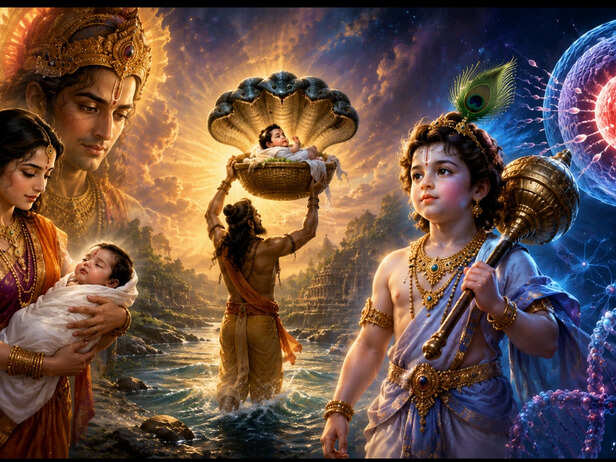
What if a story written thousands of years ago described an event that sounds surprisingly familiar to modern science? The birth of Lord Balarama contains one of the most intriguing episodes in Krishna mythology. According to the Bhagavata Purana, Balarama was first present in Devaki’s womb before being transferred to Rohini’s womb through the divine power of Yogamaya. The people of Mathura believed Devaki had lost her pregnancy, while the real story remained hidden. This is where the mystery begins. Is there a scientific concept that resembles this ancient description? The answer is fascinating, but it requires an important distinction between religious belief and modern medical science.
Kamsa Feared the Eighth Child
The story begins in Mathura, where King Kamsa was terrified by a prophecy that Devaki’s eighth son would become his destroyer. Driven by fear, he imprisoned Devaki and Vasudeva. Their children were born under constant danger. But when Devaki became pregnant with her seventh child, something extraordinary happened according to Hindu scriptures. The child was not lost as people believed. Instead, a divine plan was unfolding. This child would become Balarama, the elder brother and eternal companion of Shri Krishna. The mystery surrounding his birth begins with an event hidden from almost everyone in Mathura.
The Child Was Moved
According to the Bhagavata Purana, the seventh child in Devaki’s womb was an incarnation of Ananta Shesha. Lord Vishnu instructed Yogamaya to transfer the child from Devaki’s womb to Rohini’s womb, where he could safely take birth. The people of Mathura consequently believed that Devaki had suffered a miscarriage. After the transfer, Rohini eventually gave birth to the child who became known as Balarama. This is the mythological explanation for his unusual birth. The name Sankarshan is traditionally connected with the idea of being drawn or transferred, giving this episode an additional layer of symbolic meaning.
Why He Was Called Sankarshan
Balarama has several names, including Baladeva, Balabhadra and Sankarshan. Among them, Sankarshan is especially significant in this birth story. In Vaishnava tradition, the name is connected with the idea of drawing or bringing together. The story says that Yogamaya moved the child from Devaki’s womb to Rohini’s womb, allowing his birth to take place safely. For devotees, this is not merely a mysterious pregnancy story. It represents divine planning at work. Balarama’s role was also special because he became Krishna’s elder brother, protector and companion throughout many important events in Krishna’s life.
The Science Sounds Familiar
Here comes the fascinating scientific comparison. Modern reproductive medicine uses a procedure called embryo transfer, particularly in IVF treatment. In this process, an embryo created through assisted reproductive technology is placed into a woman's uterus, where doctors hope it will implant and develop. This is not the same as the miraculous transfer described in Balarama’s story. Modern medicine requires controlled laboratory procedures, medical equipment and carefully monitored reproductive conditions. Still, the broad idea of moving an early-stage developing embryo from one reproductive environment to another creates an interesting parallel that often attracts attention when discussing this ancient story.
Mythology Is Not Medical Evidence
It is important not to turn an intriguing similarity into a scientific claim. There is currently no scientific evidence proving that Balarama’s mythological birth involved an ancient form of IVF or embryo transfer. The scripture presents the event as a divine act performed through Yogamaya, not as a medical procedure. Modern embryo transfer depends on biological knowledge and technology that developed through modern reproductive science. The comparison is therefore best understood as an interesting point of reflection rather than proof that ancient people performed IVF. Keeping this distinction clear allows the story to remain both respectful and scientifically responsible.
The Birth Changed Everything
When Rohini gave birth to Balarama, the child who had been hidden from Mathura finally entered the world. He would later become one of the most important figures in Krishna tradition. Balarama is celebrated for his immense strength, wisdom and loyalty toward Krishna. His association with the plough also connects him symbolically with agriculture and the earth. The mysterious circumstances of his birth therefore lead into a much larger story. The child secretly moved from Devaki to Rohini was destined to become Krishna’s elder brother, trusted companion and protector during the divine events that followed.
The Deeper Meaning of His Birth
Balarama’s birth story carries a powerful message beyond its mystery. In mythology, danger does not always mean the end of a divine plan. Devaki’s seventh child appeared to disappear, but according to the tradition, he was actually being protected for a greater purpose. The scientific comparison makes the story even more fascinating, but its spiritual meaning remains rooted in faith. Balarama’s journey from Devaki to Rohini ultimately prepared the way for his role beside Krishna. His story reminds devotees that what looks like an ending may sometimes be the beginning of something far greater.
Unlock insightful tips and inspiration on personal growth, productivity, and well-being. Stay motivated and updated with the latest at My Life XP.