
If Lord Ram Returned to Ayodhya, Why Worship Lakshmi?
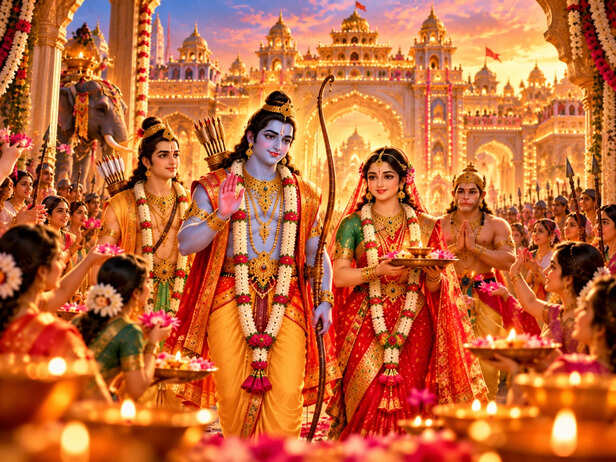
Every Diwali, millions of people light diyas to celebrate Lord Ram’s return to Ayodhya. Yet, when the evening puja begins, families also worship Goddess Lakshmi and Lord Ganesha. Why do these deities share the spotlight on a festival associated with Ram’s homecoming? The answer reveals a deeper message about prosperity, wisdom and righteous living. Behind the familiar rituals lies a beautiful idea: wealth becomes truly meaningful when it is guided by wisdom and supported by good values.
Why Diwali Celebrates Lord Ram’s Return
In the popular Ramayana tradition, Diwali commemorates Lord Ram’s return to Ayodhya after fourteen years of exile and his victory over Ravana. The people welcomed him by lighting lamps, turning the city into a celebration of hope and the triumph of dharma over adharma. This is one of the most widely known explanations for Diwali. However, the festival also has other religious associations, including the worship of Goddess Lakshmi. These traditions come together to give Diwali a broader meaning that extends beyond one event in the Ramayana.
How Goddess Lakshmi Emerged From the Ocean
According to Hindu mythology, Goddess Lakshmi emerged during the Samudra Manthan, the churning of the cosmic ocean by the devas and asuras. Her appearance is associated with prosperity, beauty, auspiciousness and abundance. In popular Diwali traditions, her emergence from the ocean is connected with the celebration of Lakshmi Puja. The story reminds devotees that prosperity is a sacred blessing rather than something to take for granted. It also explains why Lakshmi holds such an important place in Diwali worship, alongside the celebrations associated with Lord Ram.
What Happens When Prosperity Is Taken for Granted?
The story of Lakshmi offers a useful lesson about how people treat prosperity. When wealth becomes the only goal, values such as generosity, honesty and responsibility can be forgotten. Hindu traditions present Lakshmi as more than a symbol of money. She is also associated with good fortune, abundance and auspiciousness. Her worship during Diwali invites families to reflect on how they earn, use and share what they have. The deeper message is not simply to seek more wealth, but to recognise its value and use it wisely.
Why Is Lord Ganesha Worshipped With Lakshmi?
Goddess Lakshmi represents prosperity, while Lord Ganesha is widely worshipped as the remover of obstacles and the deity associated with wisdom and auspicious beginnings. Worshipping them together expresses the hope that prosperity will be accompanied by good judgement and the ability to overcome difficulties. Wealth alone cannot guarantee a peaceful life if decisions are careless or responsibilities are ignored. Ganesha’s presence reminds devotees to approach new beginnings thoughtfully, while Lakshmi represents the abundance they hope to welcome. Together, they symbolise a balance between material well-being and wise action.
Why Lakshmi Puja Is Performed at Night
Lakshmi Puja is traditionally performed on Diwali evening, with many families lighting lamps and decorating their homes before offering prayers. In popular belief, Goddess Lakshmi visits homes on this auspicious night, and devotees prepare their surroundings to welcome her. Cleanliness, lighting and devotion are important parts of many household traditions. Practices differ by region and family, but the underlying feeling is similar: Diwali offers an opportunity to welcome prosperity, express gratitude and begin a new phase with hope. The ritual becomes especially meaningful when its spirit continues through everyday actions.
The Connection Between Lord Ram and Goddess Lakshmi
A meaningful way to understand Diwali is through the relationship between dharma, or righteous conduct, and artha, one of the traditional goals of human life associated with material prosperity. Lord Ram is widely remembered as an ideal of duty and righteous conduct, while Goddess Lakshmi represents abundance and good fortune. This is a symbolic interpretation rather than a claim that wealth automatically comes to everyone who follows a particular path. Instead, it encourages people to pursue prosperity without abandoning honesty, fairness or compassion. Wealth becomes more valuable when it supports a life guided by good principles.
The Real Message of Diwali for Every Home
Diwali is an opportunity to look beyond decorations and rituals and consider the kind of life we want to build. Lighting a diya can remind us to replace anger with patience, selfishness with generosity and confusion with thoughtful decisions. Worshipping Lakshmi and Ganesha can also encourage us to value both prosperity and wisdom. Families may pray for financial stability, health and happiness, while taking practical steps towards those goals. The festival's message is simple but powerful: welcome abundance, use it responsibly and never let the pursuit of wealth become more important than the values that give life meaning.
Unlock insightful tips and inspiration on personal growth, productivity, and well-being. Stay motivated and updated with the latest at My Life XP