
Is Ganpati Bappa Actually Krishna? This Purana Says Yes
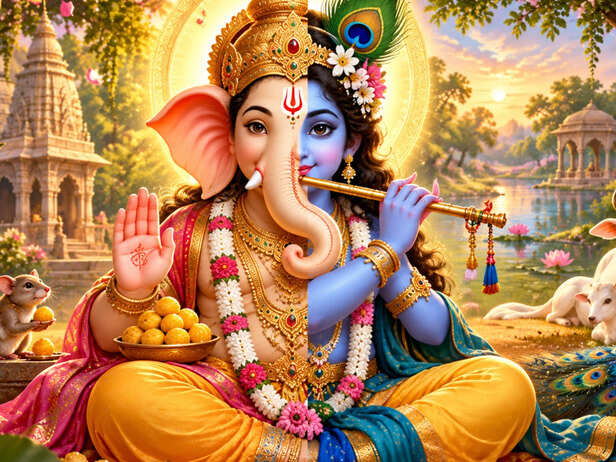
What if the familiar story of Ganpati Bappa has a connection to Lord Krishna that most devotees have never heard before? A fascinating account associated with the Brahmavaivarta Purana presents a remarkable story in which Krishna promises to appear as Goddess Parvati’s son in the form of Ganesha. The story then takes an unexpected turn involving Shani Dev, Lord Vishnu and an elephant’s head. But there is another detail that makes this account even more intriguing: the same tradition describes Lord Vishnu offering prayers to Ganesha. Here is the story behind this lesser-known connection.
Krishna’s Promise
According to the tradition cited from the Brahmavaivarta Purana, Goddess Parvati wished for a son who would possess the nature of Param Brahman. She performed a sacred vow with this desire in her heart. The story says that Krishna then appeared before her and made a remarkable promise: he would become her son in the form of Ganesha. The account presents Ganesha not simply as a deity born through an ordinary event, but as a divine manifestation connected with Krishna. Krishna then takes the form of a child and appears as Parvati’s son, setting the stage for one of Ganesha’s most dramatic origin stories.
Shani Dev’s Difficult Gaze
When the divine child was born, gods and celestial beings came to see him. Among them was Shani Dev, who reportedly avoided looking directly at the baby because of a curse associated with his gaze. According to the story, Shani had been warned that whoever came under his direct gaze could face destruction. Parvati, unaware of the danger, requested him to look at her child. Reluctantly, Shani did so, and the story takes a sudden and tragic turn. The child's head became separated from his body. What happens next transforms this heartbreaking moment into the familiar story of Ganesha’s elephant head.
Vishnu Brings the Elephant Head
After the child lost his head, the gods were faced with an extraordinary crisis. According to the Purana-based account, Lord Vishnu went to the banks of the Pushpabhadra River and brought back the head of an elephant. The elephant’s head was then placed on the child, restoring his life and giving him the form by which devotees recognise Ganesha today. This moment explains the familiar elephant-headed form through a different Purana tradition. It also adds another layer to Ganesha’s story, showing how several divine figures become part of the transformation that ultimately establishes him as one of Hinduism’s most beloved deities.
The Vishnu-Ganesha Connection
One of the most interesting details in this account comes after Ganesha receives his new form. The Brahmavaivarta Purana tradition includes a stuti, or devotional hymn, in praise of Ganesha, associated with Lord Vishnu. This makes the story particularly intriguing because it places Ganesha within a broader divine framework rather than treating his story as an isolated legend. Devotional traditions often use such narratives to express the greatness of a deity through praise and prayer. For devotees, the stuti becomes another way of remembering Ganesha as the remover of obstacles and a divine presence worthy of reverence.
Why the Stuti Matters
The tradition gives the Ganesha stuti a special devotional importance. It is associated with blessings such as the removal of obstacles, prosperity and well-being. Some traditional descriptions also connect its recitation with protection and successful journeys. These are religious beliefs associated with the text, rather than guarantees of a particular result. The deeper message is easier to understand: prayer creates a moment of focus before an important task or journey. For a devotee, reciting Ganesha’s name can bring calm, confidence and a sense of spiritual support when facing uncertainty.
What This Story Reveals
The most fascinating part of this story is not simply whether Ganesha and Krishna are described as the same deity in every Hindu tradition. They are not. Hindu scriptures and traditions contain different accounts and theological interpretations of divine forms. The Brahmavaivarta Purana presents one particular theological connection, while other texts tell Ganesha’s origin differently. That is what makes the story worth exploring. It reminds us that Hindu mythology is filled with layers, regional traditions and different scriptural perspectives. Behind the familiar image of Ganpati Bappa lies a much larger world of stories that continues to inspire devotion and curiosity.
The Hidden Message
The story ultimately brings the focus back to Ganesha. Whether devotees approach him as Parvati’s beloved son, the remover of obstacles or, within this particular Purana tradition, a manifestation connected with Krishna, the emotional centre remains devotion. The dramatic episode of Shani’s gaze and Vishnu restoring the child makes the story memorable, but its deeper lesson is about divine protection, faith and the many ways Hindu traditions describe the relationship between different forms of the Divine. Sometimes the most familiar deity has the most unexpected stories hidden behind the image we see every day.