
Krishna vs Chanakya: Who Was the Better Strategist?
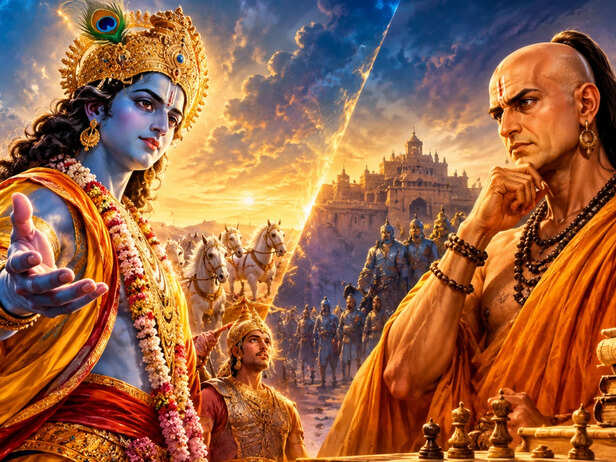
Winning a battle is not always about having the strongest army. Sometimes, it is about understanding your opponent, choosing the right moment and making a decision that changes everything.
This is something Lord Krishna and Chanakya understood exceptionally well.
Two Minds That Changed Indian History
Krishna is remembered for his guidance to Arjuna in the Mahabharata, his diplomatic efforts to prevent war and his ability to turn difficult situations in favour of the Pandavas. Chanakya, on the other hand, is remembered as the brilliant political thinker who helped Chandragupta Maurya challenge the Nanda dynasty and establish the Mauryan Empire.
Both were master planners, but their approaches were not identical. Krishna's strategies were closely connected with dharma, duty and the larger balance of justice, while Chanakya focused on political intelligence, governance, diplomacy and the survival of the state.
So, if these two extraordinary minds were compared, who would have the upper hand?
Krishna's Strategy: Winning Without Always Picking Up a Weapon
Krishna's greatest strength was not simply his knowledge of warfare. It was his ability to understand people, recognise their weaknesses and make decisions at the right moment.
Three incidents from the Mahabharata reveal his strategic brilliance.
1. The Jarasandha Mission: Knowing Who Should Fight
One of Krishna's most interesting strategies involved Jarasandha, the powerful king of Magadha. Jarasandha was a major obstacle to Yudhishthira's Rajasuya Yagna and had imprisoned several kings.Instead of challenging him with a large army, Krishna travelled to Magadha with Bhima and Arjuna. The three entered the kingdom disguised as Brahmins and challenged Jarasandha to a duel.
Krishna understood that Bhima had the physical strength to defeat Jarasandha. He therefore allowed Bhima to take the lead while guiding him strategically.The episode demonstrates an important lesson: a good strategist does not have to do everything himself. He identifies the right person for the right responsibility.
2. The Peace Mission: Giving Diplomacy a Chance
Before the Kurukshetra War, Krishna travelled to Hastinapur as a peace messenger.He tried to convince Duryodhana to avoid war and return the Pandavas' rightful share of the kingdom. Even when the Pandavas were willing to accept just five villages, Duryodhana refused.
Krishna's attempt shows that he did not consider war the first solution. He understood that diplomacy could prevent unnecessary destruction, but he also recognised when an opponent was unwilling to compromise.His strategy teaches us that knowing when to negotiate is just as important as knowing when to stand firm.
3. Shishupala's Story: The Power of Patience
At Yudhishthira's Rajasuya Yagna, Krishna was chosen to receive the first honour. This angered Shishupala, who began insulting him publicly.However, Krishna did not react immediately. He had promised Shishupala's mother that he would forgive 100 offences committed by her son.
Krishna patiently tolerated the insults until Shishupala crossed that limit. He then used his Sudarshan Chakra to kill him.This incident reveals another side of Krishna's strategic thinking: emotional control. He did not allow anger to make decisions for him.
Chanakya's Strategy: Winning Through Intelligence and Planning
If Krishna demonstrated the power of diplomacy and understanding human nature, Chanakya showed how intelligence, political planning and patience could change the destiny of an empire.Known as Kautilya or Vishnugupta, Chanakya is traditionally associated with the Arthashastra, an important ancient Indian work on politics, administration, economics and statecraft.His contribution to the rise of Chandragupta Maurya remains one of the most fascinating examples of political strategy in Indian history.
1. Turning Chandragupta Into an Emperor
Chanakya's most celebrated achievement was guiding Chandragupta Maurya towards the establishment of the Mauryan Empire.The Nanda dynasty was powerful, and defeating it was not an easy task. Chanakya recognised Chandragupta's potential and helped prepare him for leadership.
Their early attempts to challenge Magadha were unsuccessful. Instead of repeating the same mistake, Chanakya changed his approach.According to traditional accounts, he advised building strength by targeting the outer territories of the Nanda Empire before moving towards its centre.This shows his ability to learn from failure rather than allowing it to end his ambitions.
2. The Power of Spies and Information
Chanakya understood that a ruler could not make good decisions without knowing what was happening inside and outside his kingdom.
The Arthashastra discusses the use of spies and intelligence networks to gather information about enemies, officials and potential threats.For Chanakya, information was a powerful tool of governance. He believed that understanding an opponent's intentions could be more valuable than simply having a large army.This principle remains relevant even today. Whether in leadership, business or personal decisions, information can help people avoid mistakes and prepare for challenges.
3. Choosing Diplomacy Before Conflict
Chanakya's Arthashastra also explains different methods of dealing with rivals and other kingdoms.These include Sama (conciliation), Dana (offering incentives), Bheda (creating divisions) and Danda (the use of force).Rather than treating every opponent in the same way, Chanakya believed that a ruler should choose an approach according to the situation.His strategic thinking was not limited to defeating enemies. It was also about protecting the kingdom, building alliances and maintaining political stability.
Krishna vs Chanakya: Who Was the Smarter Strategist?
Both had extraordinary intelligence, but their priorities and methods were different.
| Strategic quality | Lord Krishna | Chanakya |
|---|---|---|
| Greatest strength | Diplomacy and understanding people | Political intelligence and planning |
| Main focus | Dharma and justice | Statecraft and stability |
| Approach to enemies | Understand their intentions and weaknesses | Gather information and assess vulnerabilities |
| Leadership | Guided the Pandavas | Mentored Chandragupta Maurya |
| Major example | Mahabharata War | Rise of the Mauryan Empire |
Krishna's strategies were shaped by the larger question of dharma and the restoration of justice. Chanakya's approach focused on political power, effective administration and protecting the state.
Interestingly, both understood one important truth: strength alone cannot guarantee victory. Intelligence, timing and the ability to read people can change the outcome of even the most difficult situations.
What Can We Learn From Their Strategies Today?
Their wisdom offers some valuable lessons for modern life:
- Think before reacting: Krishna's patience with Shishupala teaches the importance of emotional control.
- Learn from failure: Chanakya's changing approach against the Nanda dynasty shows why adapting your plans matters.
- Choose the right people: Krishna recognised Bhima's strength and gave him the responsibility of defeating Jarasandha.
- Value information: Chanakya's emphasis on intelligence teaches us to understand situations before making important decisions.
- Try peaceful solutions first: Krishna's peace mission reminds us that every disagreement does not need to become a battle.
Two Masterminds, Two Different Ways of Winning
So, who was the better strategist, Krishna or Chanakya?
There is no single answer because they operated in different circumstances and pursued different objectives. Krishna demonstrated how diplomacy, wisdom and an understanding of human nature could influence the course of a great war. Chanakya showed how political intelligence, long-term planning and the ability to adapt could help establish an empire.
If the question is about guiding people through moral dilemmas and difficult conflicts, Krishna's approach stands out. If it is about building political power and designing a system of governance, Chanakya's strategies deserve the spotlight.Perhaps the greatest lesson is that Krishna taught the art of choosing the right move, while Chanakya demonstrated the power of planning every move. Both remain remarkable examples of strategic thinking in India's intellectual and spiritual heritage.
Unlock insightful tips and inspiration on personal growth, productivity, and well-being. Stay motivated and updated with the latest at My Life XP.