
Lalbaugcha Raja: How Did Mumbai's Most Famous Ganesh Idol Become So Popular?
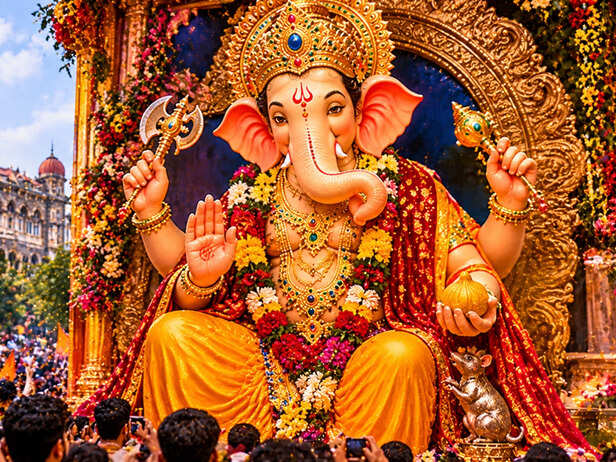
But what makes Lalbaugcha Raja so special? Is it the belief that he fulfils devotees' wishes, his grand appearance or the fascinating story behind his beginnings?Interestingly, Lalbaugcha Raja did not become famous because of its grandeur. Its story began with a struggling community of fishermen and local traders who prayed to Lord Ganesha during a difficult time. What started as an expression of gratitude eventually became one of Mumbai's biggest religious and cultural celebrations.
How Did Lalbaugcha Raja Begin in 1934?
The history of Lalbaugcha Raja goes back to the 1930s, when the Lalbaug area of Mumbai was home to textile mill workers, fishermen, traders and small business owners.In 1932, a local marketplace near Peru Chawl was shut down, affecting the livelihoods of fishermen and vendors who depended on it. They needed a permanent place to sell their goods and approached local leaders and the landlord for help.According to the popular account, the community also prayed to Lord Ganesha and made a vow that they would establish a Ganesh idol if their wish for a permanent marketplace was fulfilled.Their efforts eventually succeeded, and land was made available for a new market, which became the present-day Lalbaug Market.
As an expression of gratitude, the local fishermen and traders installed a Ganesh idol on September 12, 1934. This marked the beginning of the Lalbaugcha Raja tradition.
Why Is Lalbaugcha Raja Also Called Navsacha Ganpati?
One of the biggest reasons behind Lalbaugcha Raja's popularity is its identity as Navsacha Ganpati, which means a Ganesha believed to fulfil devotees' wishes.The name is connected with the original vow made by the fishermen and traders. They prayed for a permanent marketplace and promised to establish a Ganesh idol if their wish came true.Over the years, this story became closely associated with the deity. Devotees began visiting Lalbaugcha Raja to pray for different wishes, including good health, family happiness, career success and financial stability.
Many people also return to offer their gratitude after believing that their prayers have been answered. This continuing faith has helped make Lalbaugcha Raja an important part of Mumbai's Ganesh Chaturthi celebrations.The belief is rooted in devotion and personal experiences rather than a guarantee that every wish will come true.
How Did a Local Ganesh Idol Become Mumbai's Biggest Attraction?
Lalbaugcha Raja's popularity grew gradually over several decades. What began as a neighbourhood celebration developed into a major public religious event.The idol's growing reputation attracted devotees from across Mumbai and beyond. Its association with the city's working-class communities also gave it a strong emotional connection with local residents.
Its popularity received another boost during the 1990s, when celebrity visits and media attention helped bring the celebrations into the public spotlight. Actors, politicians and other well-known personalities began visiting the pandal, attracting even more attention to the festival. Today, photographs and videos of Lalbaugcha Raja's first darshan, elaborate decorations and immersion procession reach audiences across India through television and social media.However, its popularity is not limited to celebrity appearances. For many devotees, visiting the pandal is a long-standing family tradition and an emotional expression of faith.
What Makes Lalbaugcha Raja's Idol So Special?
Another reason Lalbaugcha Raja stands out is its distinctive appearance. The idol is traditionally presented in a grand seated posture, with elaborate clothing, jewellery and a decorated throne-like setting.
The Kambli family has played an important role in shaping the idol's identity. The sculpting tradition has continued across generations, helping preserve its recognisable appearance.
The idol's design and decorations may change from year to year, but its familiar form remains an important part of the celebration.The mandal also announces the annual installation and darshan arrangements through its official website and social media channels. This allows devotees to follow the festival and plan their visits.
Why Do Devotees Wait for Hours for Lalbaugcha Raja's Darshan?
One of the most remarkable things about Lalbaugcha Raja is the number of people who visit the pandal during Ganesh Chaturthi.
Devotees often stand in long queues to seek the deity's blessings. The mandal traditionally provides two types of darshan:
- Mukh Darshan: Devotees get an opportunity to see the face and full form of Lord Ganesha from a distance.
- Charan Sparsh Darshan: Devotees can proceed closer to the idol and seek blessings near the deity's feet, subject to the arrangements and crowd-management rules.
The waiting time can vary depending on the day, time and number of visitors. Weekends and important festival days generally attract particularly large crowds.
For many devotees, the long wait is considered part of their religious journey. They believe that patience and devotion are meaningful ways to express their faith in Lord Ganesha.
How Does Lalbaugcha Raja Celebrate Ganesh Chaturthi?
The celebrations begin with the ceremonial installation of the idol and continue through the Ganesh festival until Anant Chaturdashi, when the idol is taken for immersion.During this period, the pandal becomes a centre of prayer, offerings and community gatherings. Devotees offer flowers, coconuts, sweets and other traditional items while seeking Ganesha's blessings.
The final immersion procession is another major part of the celebration. Large crowds gather along the streets to accompany the idol as it makes its way towards immersion.The mandal also provides online darshan facilities, allowing devotees who cannot travel to Mumbai to participate in the celebrations from home.
The Story That Made Lalbaugcha Raja a Symbol of Faith
Lalbaugcha Raja's journey from a neighbourhood Ganesh idol to one of India's most recognised Ganesh Chaturthi attractions is closely connected with the history of Mumbai's local communities.
Its beginnings remind people of a time when fishermen and traders came together during a difficult period and placed their hopes in Lord Ganesha. Their gratitude gave birth to a tradition that continues to attract devotees even after several decades.Today, Lalbaugcha Raja represents much more than a grand festival. For millions of devotees, it is a symbol of hope, togetherness and faith. And perhaps that is the real reason why people continue to travel long distances and wait patiently for a glimpse of Mumbai's beloved Bappa.
Unlock insightful tips and inspiration on personal growth, productivity, and well-being. Stay motivated and updated with the latest at My Life XP.