
Maa Mahagauri’s Untold Tale: The Penance That United Her with Lord Shiva
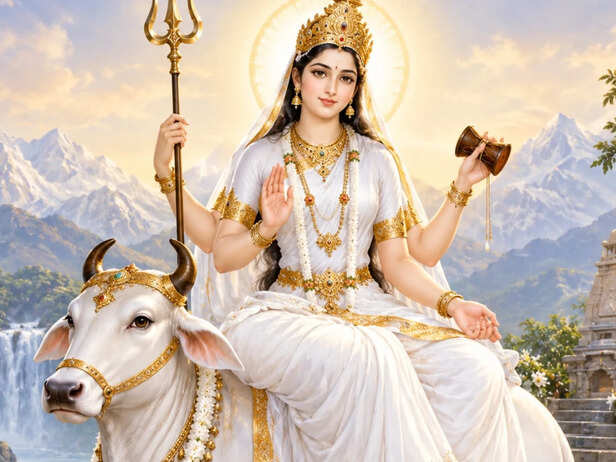
Her divine form is closely associated with the rigorous Tapasya performed by Goddess Parvati to win Lord Shiva as her consort. Yet, this story is about much more than divine marriage. It reflects the spiritual relationship between dedication and transformation, the harmony of Shiva and Shakti, and the strength required to remain committed to one's purpose.
Understanding the connection between Maa Mahagauri’s penance and her union with Lord Shiva reveals timeless wisdom that continues to inspire devotees.
Who Is Maa Mahagauri?
Maa Mahagauri is the eighth manifestation of Goddess Durga, worshipped on the eighth day of Navratri. Her name is commonly interpreted as meaning the exceedingly fair or radiant one. She is traditionally depicted in white garments, riding a bull and carrying a trident and a damaru.
Her radiant appearance represents purity, tranquillity, forgiveness, and spiritual awakening. Devotees worship her for peace, prosperity, and freedom from negativity.
However, the deeper significance of Maa Mahagauri lies in the story behind her transformation. Her divine radiance is associated with the penance of Goddess Parvati, whose unwavering devotion ultimately led to her union with Lord Shiva.
Why Did Goddess Parvati Perform Intense Penance?
According to Hindu tradition, Goddess Parvati was born as the daughter of Himavan, the king of the mountains, and Queen Maina. She was regarded as a manifestation of Adi Shakti, the primordial feminine energy of the universe.
Lord Shiva, who had withdrawn into deep meditation following the death of Goddess Sati, remained detached from worldly affairs. Parvati recognised her divine connection with Shiva and resolved to win him as her consort.
She devoted herself to serving him and eventually began an intense period of Tapasya. Her spiritual discipline involved renouncing worldly comforts and enduring severe hardships. Some traditional accounts describe her gradually giving up food and other necessities as her penance deepened.
Despite the difficulties, Parvati remained steadfast in her devotion.
Her determination was not merely an expression of love. It represented spiritual discipline, unwavering faith, and the pursuit of a higher purpose. Through her penance, Parvati demonstrated the strength of Shakti, the divine energy that sustains creation.
The Secret Behind Parvati’s Transformation Into Maa Mahagauri
One of the most fascinating aspects of Maa Mahagauri’s story is her transformation following years of penance.
Popular devotional traditions describe Parvati’s complexion becoming darkened due to prolonged austerities and exposure to the elements. Pleased with her devotion, Lord Shiva blessed her, and her complexion became radiant and luminous. This transformation is associated with her manifestation as Maa Mahagauri.
Some retellings also describe Lord Shiva bathing Parvati with the sacred waters of the Ganga, restoring her divine radiance.
Beyond the literal description, this transformation carries profound spiritual meaning. The transition from darkness to radiance symbolises the movement from hardship towards peace and from intense discipline towards spiritual fulfilment.
Maa Mahagauri’s radiant form represents the purity that emerges when the mind becomes free from negativity and the heart remains anchored in faith.
Her story reminds devotees that difficult experiences can become opportunities for growth, renewal, and self-discovery.
How Did Maa Mahagauri’s Penance Lead to Her Union With Lord Shiva?
Parvati’s unwavering devotion eventually led to her divine marriage with Lord Shiva, symbolising the harmony between consciousness and energy.
In Hindu philosophy, Shiva represents pure consciousness and stillness, while Shakti represents energy and the creative force of the universe. Their union reflects the balance that sustains existence.
Their relationship goes beyond a traditional marriage, symbolising the inseparable connection between consciousness and cosmic energy. Through Parvati’s journey, Maa Mahagauri’s story reminds us that true devotion can lead to spiritual wisdom, inner balance, and a deeper understanding of the divine.
What Does Maa Mahagauri’s Story Teach Us Today?
The story of Maa Mahagauri offers several valuable lessons for modern life. Her journey continues to inspire people seeking strength, clarity, and balance amid personal and professional challenges.
1. The Power of Patience and Perseverance
Parvati’s penance teaches that meaningful goals often require time, discipline, and consistent effort. Whether pursuing education, building a career, or developing a spiritual practice, patience helps us remain focused despite uncertainty.
2. Devotion Begins With Inner Strength
Maa Mahagauri’s story highlights the importance of sincerity and determination. Her example encourages us to approach our commitments with honesty and conviction rather than relying on temporary motivation.
3. Transformation Begins Within
Her transformation into a radiant goddess symbolises renewal and spiritual growth. It reminds us that setbacks do not have to define our future. With reflection, courage, and perseverance, we can emerge from difficult experiences with greater wisdom.
4. Love Must Be Balanced With Self-Respect
Parvati’s devotion can inspire commitment, but her story should not be interpreted as an instruction to endure mistreatment or abandon one's identity for another person.
In modern relationships, love is healthiest when it is supported by mutual respect, emotional safety, and shared responsibility. Genuine devotion should strengthen dignity rather than diminish it.
5. Balance Is the Foundation of Harmony
The union of Shiva and Shakti represents the balance between consciousness and energy. In everyday life, this symbolism encourages us to balance ambition with reflection, action with patience, and personal responsibilities with inner peace.
The Significance of Maa Mahagauri Worship During Navratri
Maa Mahagauri is worshipped on the eighth day of Navratri, commonly known as Maha Ashtami or Durga Ashtami in many traditions.
Devotees offer prayers seeking peace, prosperity, purity, and the strength to overcome obstacles. White is traditionally associated with her worship because it symbolises serenity, clarity, and spiritual purity.
Depending on family and regional traditions, devotees may offer white flowers, sweets, and other customary offerings.
Her worship also provides an opportunity for personal reflection. Devotees may use this sacred occasion to cultivate forgiveness, release resentment, and strengthen their commitment to a more peaceful and purposeful life.
The spiritual message of Maa Mahagauri is not that life will always be free from hardship. Rather, it is that faith, discipline, and inner clarity can help us face challenges with greater courage.
Maa Mahagauri's penance
The connection between Maa Mahagauri’s penance and her union with Lord Shiva is a story of devotion, transformation, and divine harmony. Parvati’s intense Tapasya represents unwavering determination, while her radiant manifestation as Maa Mahagauri symbolises purity, renewal, and spiritual awakening.
Her union with Lord Shiva expresses the eternal relationship between consciousness and energy, illustrating the importance of balance in both the universe and human life.
For modern devotees, her journey offers an enduring message: remain committed to your values, embrace personal growth, and cultivate inner strength without compromising your dignity.
Maa Mahagauri’s story reminds us that true radiance comes not merely from outward beauty, but from the purity of intention, the strength of faith, and the peace cultivated within.
Unlock insightful tips and inspiration on personal growth, productivity, and well-being. Stay motivated and updated with the latest at My Life XP.