
Sarva Pitru Amavasya: 7 Things Nobody Tells You About Shraddha
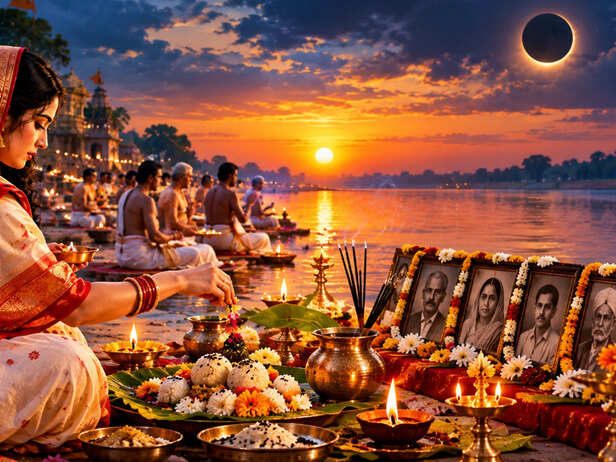
There is one day in Pitru Paksha that carries a special place for families who cannot remember every ancestor’s exact death Tithi. Sarva Pitru Amavasya, also called Pitru Amavasya and Mahalaya Amavasya, is traditionally associated with Shraddha for ancestors whose death date or lunar Tithi is unknown, forgotten or could not be observed separately.
This is why the day is often described as an opportunity to remember all ancestors together. It is not simply another date on the Pitru Paksha calendar. For many Hindu families, it becomes a final opportunity to offer Shraddha, Tarpan and other traditional acts of remembrance before Pitru Paksha ends.
Why This Amavasya Is Different
Sarva Pitru Amavasya is the final Tithi of Pitru Paksha. Traditionally, it is considered suitable for performing Shraddha for ancestors whose specific death Tithi is not known or whose annual Shraddha could not be performed on the appropriate day. It is also associated with ancestors who died on Amavasya, Purnima or Chaturdashi Tithi in certain traditions.
This gives families a practical way to honour ancestors without being unable to perform the ritual simply because an exact date is missing. The emphasis remains on Shraddha, remembrance and respect, rather than fear or superstition.
What If the Death Tithi Is Forgotten?
Imagine a family that knows an ancestor passed away years ago but no longer has the correct lunar date. Instead of leaving the ancestor unremembered, traditional practice allows Sarva Pitru Amavasya Shraddha to serve as an occasion for remembrance.
The same principle is useful for families who cannot perform Shraddha separately for every ancestor. Rather than worrying about missing a particular Tithi, they can observe this final day of Pitru Paksha according to their family tradition and local customs.
The day therefore carries an emotional message: forgetting a date does not have to mean forgetting the person.
The Connection With Purnima Shraddha
A common source of confusion is Bhadrapada Purnima Shraddha. Although it occurs immediately before the main Pitru Paksha period, it is generally treated separately from Pitru Paksha. Traditionally, ancestors who died on Purnima Tithi are remembered through the appropriate Shraddha observance during the Amavasya phase.
This is one reason Mahalaya Amavasya is particularly significant. People sometimes assume that every Shraddha connected with Purnima must be performed on Bhadrapada Purnima itself, but traditional calendars distinguish the Purnima Shraddha from the Pitru Paksha period that follows.
What Rituals Are Traditionally Performed?
Sarva Pitru Amavasya is traditionally observed with Shraddha, Tarpan and Pinda Daan, depending on family tradition. Parvan Shraddha is generally performed during the prescribed daytime period, with specific Muhurats such as Kutup and Rohina traditionally considered suitable.
Tarpan is performed as part of the ritual sequence, while offerings involving sesame, water and food are common in many traditions. Families may also feed Brahmins, donate food or clothing, offer water and perform acts of charity.
Because customs vary across regions and communities, families should follow their traditional method or seek guidance from a knowledgeable priest rather than mixing unrelated practices.
Simple Acts That Carry Meaning
Not every act of remembrance has to feel complicated. Traditional observances on Sarva Pitru Amavasya may include feeding Brahmins, donating clothes or food, offering sesame, feeding cows green fodder and lighting diyas.
Some families also recite sacred texts such as the Bhagavad Gita, Vishnu Sahasranama or Rudra Path as part of their prayers.
The deeper idea is remembrance with sincerity. Whether someone performs an elaborate Shraddha ritual or follows a simpler family tradition, the day gives them a chance to pause, remember those who came before them and express gratitude for the family line they inherited.
Mahalaya Amavasya and Its Wider Meaning
The name Mahalaya Amavasya is especially familiar in eastern India, including West Bengal, where Mahalaya has a strong cultural and devotional connection with the arrival of Goddess Durga. At the same time, the day remains closely associated with the conclusion of Pitru Paksha and remembrance of ancestors.
Traditionally, Pitru Paksha is understood as a period dedicated to honouring departed family members. Sarva Pitru Amavasya marks its final Tithi and is therefore treated as a final collective opportunity for ancestor remembrance.
Its meaning goes beyond a ritual checklist. It asks families to remember their roots, acknowledge those who came before them and carry that memory forward.