
Shiva & Parvati: The Strange Truth About Their Marriage
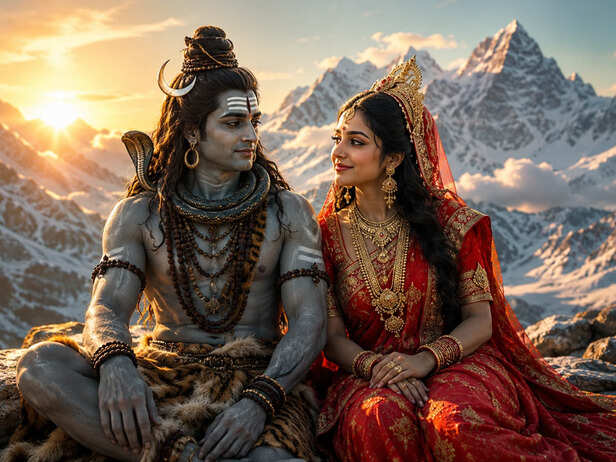
Some couples are alike in everything. Shiva and Parvati? Not exactly. One is famously associated with meditation, mountains, ashes, serpents and a life far removed from ordinary comforts. The other is often portrayed as graceful, powerful, deeply connected to family and capable of taking fierce forms such as Durga. Yet somehow, these two opposites are repeatedly shown sitting beside each other. And that is precisely what makes their relationship so fascinating. The story of Shiva and Parvati is not simply about a divine husband and wife. It explores a much bigger idea: Can two completely different people belong together without either one losing who they are?
Shiva Was the Ultimate Outsider
Shiva was hardly the conventional image of an ideal husband. He is depicted as a great ascetic, absorbed in meditation and often living away from worldly comforts. His imagery is deliberately unconventional, with matted hair, a crescent moon, a serpent and a body covered in ash. He can appear both terrifying and deeply compassionate. Parvati, meanwhile, enters his story with a very different energy. As the daughter of the Himalayas, she represents beauty, determination and Shakti, the dynamic divine energy associated with the feminine principle. She is not simply presented as someone who completes Shiva because she is his wife. She is a powerful deity in her own right. Their differences are not an accident. They are part of the symbolism.
Their Marriage Is About Balance
Here is where their relationship gets surprisingly modern. Shiva does not become Parvati, and Parvati does not become Shiva. Their identities remain distinct. Instead, their union is understood through the relationship between Shiva and Shakti, consciousness and energy. In several Hindu philosophical traditions, Shakti is understood as the active power that makes divine potential capable of expression. Their union therefore represents more than romance. It suggests that stillness and action, masculine and feminine, solitude and relationship can exist together. In other words, the lesson is not "find someone exactly like you." It is closer to "find someone with whom your differences can create balance."
Ardhanarishvara Takes the Idea Even Further
This is perhaps the most fascinating visual expression of their relationship. In the form known as Ardhanarishvara, Shiva and Parvati appear as one divine figure, with one half represented as Shiva and the other as Parvati. The image literally places masculine and feminine principles within a single body. The Metropolitan Museum of Art describes it as a visual expression of the relationship between Shiva and Shakti. But there is an important detail here. The image does not erase their differences. The two sides retain their distinct physical characteristics, suggesting that unity does not necessarily require uniformity. Their differences remain visible even when they become one figure. That makes Ardhanarishvara less a picture of two people becoming the same and more a picture of two complementary forces existing together.
Parvati Does Not Simply "Complete" Shiva
It is easy to read their story as the familiar idea of a wife completing her husband. But Parvati's role is much more powerful than that. She is herself a major goddess, and traditions connect her with other formidable manifestations of the Goddess, including Durga and Kali. Her relationship with Shiva therefore does not reduce her power. If anything, their stories repeatedly place her strength beside his. This also explains why depictions of Shiva and Parvati can feel surprisingly domestic. They are sometimes shown seated together with affection, surrounded by their children or simply sharing a quiet moment. The divine couple becomes relatable, turning an immensely powerful deity into someone who can also be understood through family and companionship.
Maybe Their Biggest Lesson Is About Difference
Shiva and Parvati's relationship carries an idea that feels surprisingly relevant even today. Love does not always mean having the same personality, interests or way of seeing the world. Shiva represents withdrawal and contemplation, while Parvati represents active energy and engagement with life. Together, they suggest that a relationship can hold both. Their marriage is therefore not fascinating because Shiva and Parvati are perfect opposites who magically fit together. It is fascinating because Hindu thought often presents their difference as meaningful. They can stand together without becoming indistinguishable.
The Point Was Never to Be the Same
Shiva and Parvati are shown together because their relationship represents something bigger than romance. It is about the meeting of stillness and energy, independence and companionship, destruction and creation. Perhaps that is why their imagery has survived for centuries. The message is beautifully simple: a strong relationship does not have to erase differences. Sometimes, those differences are exactly what make the union whole.
Unlock insightful tips and inspiration on personal growth, productivity, and well-being. Stay motivated and updated with the latest atMy Life XP.