
The Golden Deer of Ramayana: Lessons in Desire, Deception, and Discernment
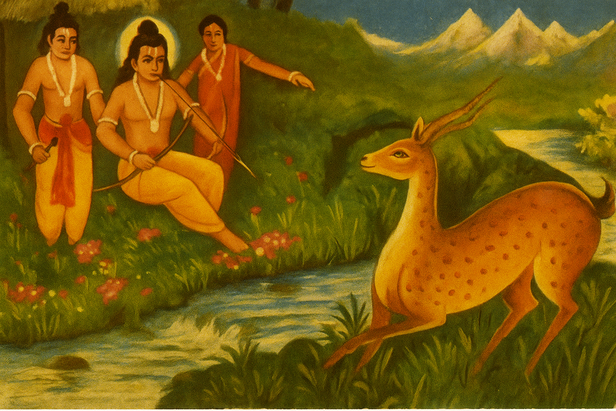
The story of the golden deer in the Ramayana is often remembered for its dramatic events: Sita’s fascination, Rama’s pursuit, and the eventual abduction by Ravana. Yet, beyond the surface narrative, this episode offers deep psychological, ethical, and spiritual lessons. It teaches us about desire, deception, discernment, and the consequences of our choices, a timeless story that remains relevant even today.
1. Desire and Its Consequences
The golden deer represents temptation and desire. Its mesmerizing beauty captivates Sita, leading her to urge Rama to capture it. This moment illustrates how attachment and desire can cloud judgment, making individuals vulnerable to distraction or manipulation.
Lesson: Recognize the difference between fleeting allure and true purpose. Blind desire often leads to unforeseen consequences.
2. Deception and Illusion (Maya)
The golden deer is no ordinary animal, it is Maricha, a demon in disguise. This teaches the principle of Maya (illusion) in Hindu philosophy: appearances can be deceiving. Even the wise and vigilant can be misled if they are influenced by emotions or superficial attraction. Lesson: Not everything that seems beautiful or desirable is genuine. Discernment is essential to navigate life’s illusions.
3. The Role of Discernment and Wisdom
Rama, aware of the danger but bound by his duty, chases the deer. This illustrates that even heroes must act with discernment, balancing personal desire, responsibility, and moral obligation. Sita’s attachment and quick decisions show how lack of discernment can invite adversity, emphasizing the importance of thoughtful judgment. Lesson: Wisdom and discernment are vital in making choices, especially when faced with tempting or deceptive circumstances.
4. Patience and Strategic Thinking
The golden deer episode also teaches patience and strategy. Rama’s pursuit of the deer is deliberate, reflecting the need to understand situations fully before acting, even when emotions are high. Maricha’s deception shows that hasty decisions can be exploited by adversaries. Lesson: Patience and careful planning are crucial in overcoming challenges and avoiding traps laid by others.
5. Understanding Human Nature
This episode reflects universal human tendencies: fascination with beauty, susceptibility to illusion, and the struggle between desire and duty. By studying these patterns, readers gain insight into self-awareness, emotional intelligence, and ethical behavior. Lesson: Recognizing human vulnerabilities can help cultivate mindfulness, ethical conduct, and resilience in the face of temptation.
Timeless Lessons from a Mythical Deer
The golden deer episode is more than a thrilling story in the Ramayana, it is a mirror to human psychology and morality. Desire, illusion, discernment, patience, and strategic thinking are lessons embedded in this ancient narrative. By reflecting on this tale, we learn that true wisdom lies in balancing desire with duty, perception with discernment, and action with careful thought.
Unlock insightful tips and inspiration on personal growth, productivity, and well-being. Stay motivated and updated with the latest at My Life XP