What If Duryodhana Had Listened to Krishna?
Noopur Kumari | Aug 17, 2026, 16:00 IST
The Mahabharata is often remembered for its great warriors, powerful weapons, and massive battle.But before the war came a moment that could have changed everything.Krishna offered a peaceful path.The Pandavas asked for very little.Yet Duryodhana could not accept even that.His refusal teaches us something important about communication, ego, listening, and conflict resolution.The deeper lesson is simple:A conversation cannot guarantee peace, but refusing to have one can make conflict much worse.

Krishna Gave Duryodhana One Last Chance
Image credit : ChatGPT (AI)
What if the Mahabharata war could have been stopped by one conversation? Before the great battle of Kurukshetra began, Lord Krishna did not arrive in Hastinapura with a weapon. He came with a message of peace. Krishna tried to convince Duryodhana to avoid war and restore justice. The Pandavas were even willing to accept only five villages instead of demanding their entire kingdom.
But Duryodhana refused. The tragedy was not only that he rejected peace. He also failed to listen. That is where this ancient story becomes surprisingly relevant today. Because sometimes, the biggest problem is not that people disagree. It is that they stop talking before understanding each other.
![Krishna Arriving in Hastinapura]()
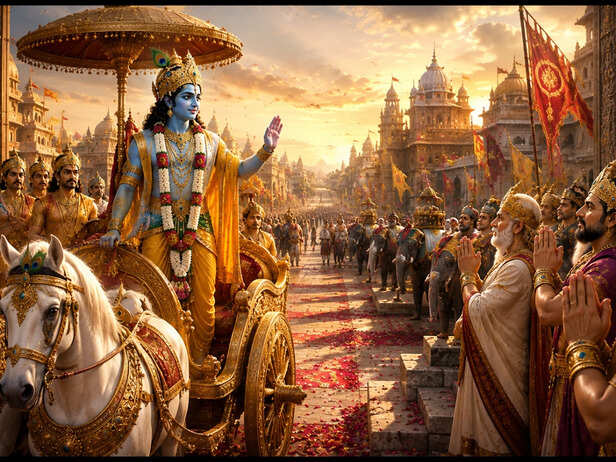
Before Kurukshetra became a battlefield, Krishna went to Hastinapura as a peace messenger. His purpose was to prevent a devastating conflict between the Kauravas and Pandavas. He tried to reason with Duryodhana and asked him to find a peaceful solution. The Pandavas were prepared to accept only five villages, rather than demanding their entire kingdom. It was a small request compared with the enormous cost of war. Yet Duryodhana refused. This moment shows the power of dialogue. Sometimes peace begins when someone is willing to sit down, listen, and search for a solution before anger turns into something much bigger.
![Krishna Offering a Path to Peace]()
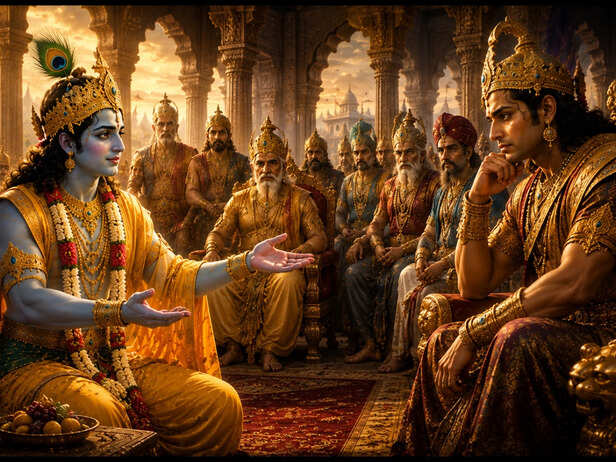
The request for five villages is one of the most memorable parts of the peace effort. The Pandavas did not ask for everything. They wanted a small space where they could live and continue their lives without fighting for the entire kingdom. But Duryodhana would not agree. His refusal shows how ego can make even a reasonable solution feel impossible. In our own lives, disagreements can become bigger when both sides want to win completely. Sometimes, finding peace requires asking a simple question: “What can we both accept?” A solution does not always have to give everyone everything. It simply needs to prevent unnecessary damage.
Ego Can Kill Good Advice
Duryodhana had the chance to listen to Krishna, but his pride stood in the way. He was not willing to accept a solution that he felt reduced his power. This is one of the deepest lessons from the Mahabharata story. Advice is useful only when we are willing to hear it. Sometimes we enter a conversation already convinced that we are right. Then we listen only to reply, not to understand. That can turn a small disagreement into a lasting conflict. Krishna's message reminds us that intelligence is not only about knowing the answer. It is also about having enough humility to consider another person's words.
Silence Can Make Conflict Worse
Many conflicts grow because people stop talking. One person assumes the other does not care. The other person assumes they are being ignored. Soon, both sides become angry without knowing what the other actually feels. The Mahabharata gives us a dramatic example of what can happen when disagreements remain unresolved. Communication cannot solve every conflict, but honest conversation can reveal choices that anger hides. In everyday life, speak before resentment becomes too strong. Ask questions instead of making assumptions. Explain your feelings without attacking the other person. A calm conversation today may prevent a much bigger argument tomorrow.
Listening Is More Than Hearing
We often think communication means speaking clearly. But listening is just as important. When someone talks about a problem, we may immediately prepare our own answer. Instead, try to understand what they are actually saying. Ask, “What do you need?” or “What are you trying to tell me?” This can change the entire conversation. Krishna's attempt to bring peace reminds us that wisdom requires listening as well as speaking. You do not have to agree with everything someone says. You can disagree and still listen respectfully. Sometimes, feeling heard is the first step toward finding a solution.
One Conversation Can Change a Life
A conversation may look small from the outside, but it can matter deeply to someone. A friend who feels lonely may need someone to listen. A family member facing a difficult decision may need patience rather than judgment. Someone going through a serious emotional crisis may need compassionate support and connection. A conversation is not a replacement for professional help, especially when someone may be in immediate danger, but reaching out can be an important first step. Ask simple questions. Listen without mocking or dismissing the person. Sometimes saying, “I am here. Tell me what is happening,” can open a door that silence kept closed.
Speak Before It Is Too Late
The lesson from Krishna's peace mission is not that every disagreement will end happily. Some people may still refuse to listen. Some problems may require distance, boundaries, or outside help. But making a sincere attempt to communicate can still be valuable. Before ending an important relationship, ask whether there is something left unsaid. Before judging someone, ask whether you understand their side. Before allowing anger to decide everything, give conversation one honest chance. The goal is not always agreement. The goal is understanding. When people learn to talk with patience instead of pride, many unnecessary conflicts can become smaller.
The Conversation We Should Not Avoid
The Mahabharata gives us many lessons about war, duty, courage, and justice.
But there is another lesson hidden before the war even began.
Talk before you fight.
Listen before you judge.
Ask before you assume.
And when someone reaches out with a peaceful solution, do not let ego stop you from considering it.
Duryodhana had a chance to choose differently.
He refused.
That is why Krishna's peace mission remains so powerful today.
In our families, friendships, workplaces, and relationships, we may not be able to control what another person chooses.
But we can control whether we listen.
We can control whether we speak with kindness.
And sometimes, one honest conversation can be the small opening through which peace enters.
Because a war may begin with weapons, but many conflicts begin much earlier, when people stop talking.
But Duryodhana refused. The tragedy was not only that he rejected peace. He also failed to listen. That is where this ancient story becomes surprisingly relevant today. Because sometimes, the biggest problem is not that people disagree. It is that they stop talking before understanding each other.
Krishna Came With a Peaceful Message
Krishna Arriving in Hastinapura
Image credit : ChatGPT(AI)
Before Kurukshetra became a battlefield, Krishna went to Hastinapura as a peace messenger. His purpose was to prevent a devastating conflict between the Kauravas and Pandavas. He tried to reason with Duryodhana and asked him to find a peaceful solution. The Pandavas were prepared to accept only five villages, rather than demanding their entire kingdom. It was a small request compared with the enormous cost of war. Yet Duryodhana refused. This moment shows the power of dialogue. Sometimes peace begins when someone is willing to sit down, listen, and search for a solution before anger turns into something much bigger.
Five Villages Were Enough
Krishna Offering a Path to Peace
Image credit : ChatGPT(AI)
The request for five villages is one of the most memorable parts of the peace effort. The Pandavas did not ask for everything. They wanted a small space where they could live and continue their lives without fighting for the entire kingdom. But Duryodhana would not agree. His refusal shows how ego can make even a reasonable solution feel impossible. In our own lives, disagreements can become bigger when both sides want to win completely. Sometimes, finding peace requires asking a simple question: “What can we both accept?” A solution does not always have to give everyone everything. It simply needs to prevent unnecessary damage.
Ego Can Kill Good Advice
Duryodhana had the chance to listen to Krishna, but his pride stood in the way. He was not willing to accept a solution that he felt reduced his power. This is one of the deepest lessons from the Mahabharata story. Advice is useful only when we are willing to hear it. Sometimes we enter a conversation already convinced that we are right. Then we listen only to reply, not to understand. That can turn a small disagreement into a lasting conflict. Krishna's message reminds us that intelligence is not only about knowing the answer. It is also about having enough humility to consider another person's words.
Silence Can Make Conflict Worse
Many conflicts grow because people stop talking. One person assumes the other does not care. The other person assumes they are being ignored. Soon, both sides become angry without knowing what the other actually feels. The Mahabharata gives us a dramatic example of what can happen when disagreements remain unresolved. Communication cannot solve every conflict, but honest conversation can reveal choices that anger hides. In everyday life, speak before resentment becomes too strong. Ask questions instead of making assumptions. Explain your feelings without attacking the other person. A calm conversation today may prevent a much bigger argument tomorrow.
Listening Is More Than Hearing
We often think communication means speaking clearly. But listening is just as important. When someone talks about a problem, we may immediately prepare our own answer. Instead, try to understand what they are actually saying. Ask, “What do you need?” or “What are you trying to tell me?” This can change the entire conversation. Krishna's attempt to bring peace reminds us that wisdom requires listening as well as speaking. You do not have to agree with everything someone says. You can disagree and still listen respectfully. Sometimes, feeling heard is the first step toward finding a solution.
One Conversation Can Change a Life
A conversation may look small from the outside, but it can matter deeply to someone. A friend who feels lonely may need someone to listen. A family member facing a difficult decision may need patience rather than judgment. Someone going through a serious emotional crisis may need compassionate support and connection. A conversation is not a replacement for professional help, especially when someone may be in immediate danger, but reaching out can be an important first step. Ask simple questions. Listen without mocking or dismissing the person. Sometimes saying, “I am here. Tell me what is happening,” can open a door that silence kept closed.
Speak Before It Is Too Late
The lesson from Krishna's peace mission is not that every disagreement will end happily. Some people may still refuse to listen. Some problems may require distance, boundaries, or outside help. But making a sincere attempt to communicate can still be valuable. Before ending an important relationship, ask whether there is something left unsaid. Before judging someone, ask whether you understand their side. Before allowing anger to decide everything, give conversation one honest chance. The goal is not always agreement. The goal is understanding. When people learn to talk with patience instead of pride, many unnecessary conflicts can become smaller.
The Conversation We Should Not Avoid
The Mahabharata gives us many lessons about war, duty, courage, and justice.
But there is another lesson hidden before the war even began.
Talk before you fight.
Listen before you judge.
Ask before you assume.
And when someone reaches out with a peaceful solution, do not let ego stop you from considering it.
Duryodhana had a chance to choose differently.
He refused.
That is why Krishna's peace mission remains so powerful today.
In our families, friendships, workplaces, and relationships, we may not be able to control what another person chooses.
But we can control whether we listen.
We can control whether we speak with kindness.
And sometimes, one honest conversation can be the small opening through which peace enters.
Because a war may begin with weapons, but many conflicts begin much earlier, when people stop talking.