The road to Pandharpur does not empty between waris. Solitary varkaris walk it in ordinary months, pausing at the same rest points, singing the same abhangas. But in the weeks before Ashadhi Ekadashi and Kartiki Ekadashi, something shifts. Individual walkers begin to find each other, and the walk stops being a personal act and becomes something collective, a living structure that moves, breathes, and makes decisions as a body.
The Dindi Is the Basic Unit
![Vishnu’s Divine Teachings and Avatars]()
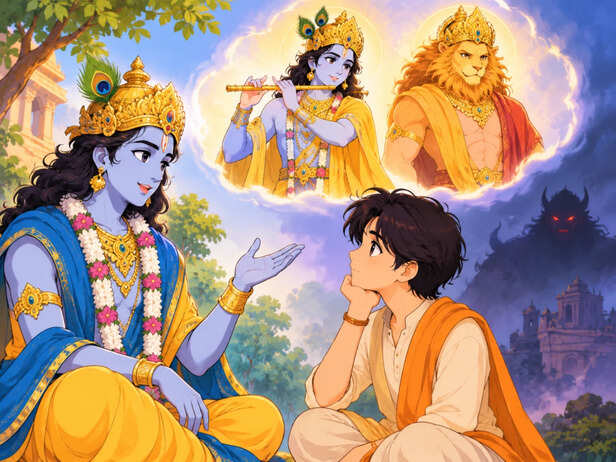
Vishnu’s Divine Teachings and Avatars
The wari organises itself through the dindi, a group of varkaris who walk together under a common banner. A dindi may be thirty people or three hundred. It carries its own palkhi, a palanquin bearing the paduka, the sandals, of a sant, and it moves at its own pace, singing its own cycle of abhangas. The dindi is the unit that absorbs a newcomer. You do not join the wari in the abstract; you join a dindi, and the dindi tells you where to walk, when to eat, and when to stop.
Each dindi has a designated position in the larger procession, a position that is not arbitrary. The palkhis of Dnyaneshwar and Tukaram lead, and the dindis behind them are arranged in an order that has been maintained across generations. A dindi that has walked in a particular position for decades does not move from it. The order is remembered by the dindis themselves, not written in any official register.
The Abhanga Holds the Pace
Varkaris do not walk in silence. The abhanga, the devotional verse form associated with the sants of the Varkari tradition, particularly Tukaram, Dnyaneshwar, and Namdev, is sung continuously, in call and response, as the dindi moves. The singing is not decoration. It sets the pace. A faster abhanga moves the group faster. A slower one brings it down. When a walker tires, the song carries them; the body moves with the group's rhythm rather than against its own fatigue.
The abhangas sung on the wari are not chosen at random. Certain verses belong to certain stretches of road. Varkaris who have walked many times know which abhanga will rise when the procession rounds a particular bend or crosses a particular river. The landscape and the song are mapped onto each other, and the mapping is passed down by walking together, not by instruction.
Rest, Water, and the Logic of the Road
![Puja Celebration]()
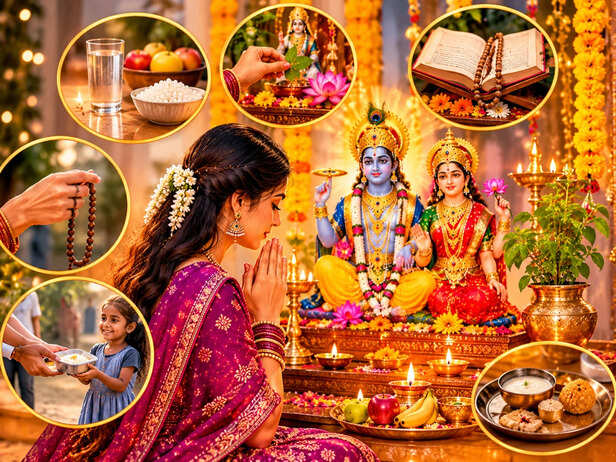
Puja Celebration
Image credit : chatgpt(ai)
The wari has its own infrastructure, built not by any authority but by the communities the procession passes through. Villages along the route set out water, food, and space to sleep. This hospitality, called seva in the varkari understanding, is considered a form of participation in the pilgrimage even for those who cannot walk it. A family that feeds five hundred varkaris for a night is, in the tradition's own account, walking with them.
The procession does not move at a single speed across the whole column. The palkhis at the front set the day's distance. The dindis behind them compress and stretch like an accordion depending on the terrain. On a flat road, the column spreads out. On a narrow bridge or a steep section, it folds into itself, and walkers who were strangers an hour ago find themselves shoulder to shoulder, steadying each other. The physical compression is part of how the wari makes strangers into a single body.
What the Varkari Tradition Says Is Happening
In the Varkari understanding, the walk to Pandharpur is not travel toward a deity. Vitthal, the form of Vishnu worshipped at Pandharpur, is held to come out to meet the varkaris on the road. The pilgrimage is therefore not a journey to a fixed point but a movement toward an encounter that is already in progress. This shapes how varkaris describe the experience: not as an arrival but as a continuous meeting.
The sants whose paduka are carried in the palkhis are understood to be present in the procession, not merely remembered by it. Tukaram's palkhi does not represent Tukaram; in the tradition's own account, it carries him. The varkari walking behind the palkhi is walking with the sant, and the sant is walking toward Vitthal. The three, the walker, the sant, and the deity, are understood to be in motion together.
How the Wari Absorbs a First-Time Walker
A person joining the wari for the first time arrives with their own pace, their own silence, their own reasons. The dindi does not ask about any of these. It asks only that the newcomer walk. Within a day, the individual pace has been replaced by the group's pace. Within two days, the newcomer knows the abhangas well enough to join the response line. By the time the procession reaches Pandharpur, the distinction between a first-time walker and a varkari of thirty years is, in practice, invisible from the outside.
This absorption is not social pressure. Varkaris describe it as something that happens to the body before it happens to the mind. The feet find the rhythm. The voice joins the song. The self that arrived at the start of the road is not the self that enters Pandharpur.
The wari is, in the end, a technology for dissolving the boundary between one person and another, not through doctrine or instruction, but through the shared physical fact of the road, the song, and the distance. The tradition has been running this experiment for centuries. The result, by the account of those who have walked it, is consistently the same.
Unlock insightful tips and inspiration on personal growth, productivity, and well-being. Stay motivated and updated with the latest at
My Life XP.