
Was Duryodhana Always Evil? His Childhood Tells Another Story
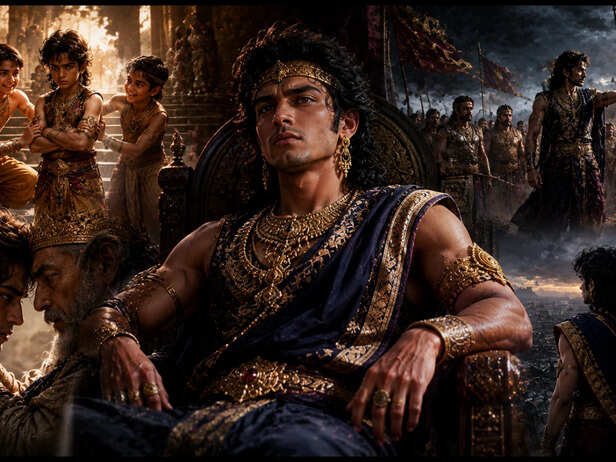
What if Duryodhana's story did not begin with hatred? What if, before the dice game, before Draupadi's humiliation and before the Kurukshetra war, there was simply a young boy who felt that his world was changing without his permission? Duryodhana had once been the eldest among the children around him. He had his father's attention, his mother's affection and a place that felt completely secure. Then Yudhishthira arrived. After that came Bhima, and suddenly Duryodhana felt that everything he once considered his had to be shared. His first emotion was not necessarily hatred. It was jealousy. And that small childhood emotion would eventually become something far more dangerous.
When His World Suddenly Changed
For a child, sharing love can feel surprisingly difficult. Duryodhana had grown accustomed to being important within his family. Then Yudhishthira and the other Pandavas entered his life. The attention he had experienced no longer felt exclusive. His thoughts were simple but painful: If they receive more love, does that mean I receive less? This is where his jealousy becomes understandable without excusing what he later did. A child's insecurity can begin with a small fear of losing affection. The real danger comes when that fear is never addressed and slowly becomes resentment.
Bhima Became His Biggest Trigger
Yudhishthira represented seniority, but Bhima represented something Duryodhana could immediately feel: physical power. Bhima was enormously strong and often dominated the young princes during their childhood activities. Duryodhana could not simply ignore that difference. His own words reveal the emotional conflict: first he had been considered the strongest, and then Bhima arrived. What may have started as ordinary childhood competition gradually became personal. Instead of seeing Bhima's strength as simply another quality within the family, Duryodhana began viewing him as a threat to his own position.
Jealousy Started With Fear
There is an important difference between understanding jealousy and defending it. Duryodhana's feelings may have come from insecurity, but that does not make his later actions right. His childhood perspective was emotional rather than logical. He had not learned how to process the fear of being replaced. Instead of thinking, “There is enough love for everyone,” he began thinking, “Someone else's gain must be my loss.” That mindset can be destructive in any family. When affection becomes a competition, even a sibling can begin to look like an enemy.
The Real Battle Was Inside Him
The most interesting part of Duryodhana's story is that his greatest enemy was not Bhima or Yudhishthira at first. It was his own insecurity. Every achievement of the Pandavas could feel like another reminder of what he feared losing. Instead of building confidence within himself, he increasingly measured his worth against them. This created a dangerous cycle. The more successful the Pandavas became, the more threatened Duryodhana felt. The more threatened he felt, the stronger his resentment became. And the stronger that resentment became, the harder it was for him to see the Pandavas as family.
A Child’s Pain Became an Adult’s Anger
Childhood emotions do not automatically disappear with age. They can mature into something healthier, or they can become deeply rooted. Duryodhana chose the second path. His early jealousy was repeatedly reinforced by competition for status, influence and succession within the Kuru family. Instead of confronting his insecurity, he allowed others and circumstances to strengthen his resentment. This is what makes his story tragic. The boy who once feared losing his family's affection eventually became a man willing to destroy family bonds. His first jealousy was small, but he never learned how to let it go.
When Comparison Takes Over
Duryodhana's story carries a lesson far beyond the Mahabharata. Comparison can quietly change relationships. A sibling's success can begin to feel like your failure. Someone else's praise can feel like your rejection. Someone else's strength can make you question your own worth. The healthier response is not to destroy the person you compare yourself with, but to understand what their presence awakens inside you. Duryodhana never fully made that shift. His insecurity became competition, competition became resentment and resentment eventually influenced choices that changed the destiny of the Kuru dynasty.
The Jealousy That Could Have Ended Differently
Duryodhana's first jealousy does not make him innocent of the terrible choices he later made. But it does show that human darkness can sometimes grow from ordinary emotions left unchecked. Feeling replaced is human. Feeling jealous is human. Feeling afraid of losing someone's love is human. The important question is what we do with those feelings. Duryodhana allowed his insecurity to define him. Had he learned to accept that another person's strength did not diminish his own worth, his story might have taken a very different direction.
Unlock insightful tips and inspiration on personal growth, productivity, and well-being. Stay motivated and updated with the latest at My Life XP