
Was Vibhishana A Traitor? Ramayana’s Shocking Question
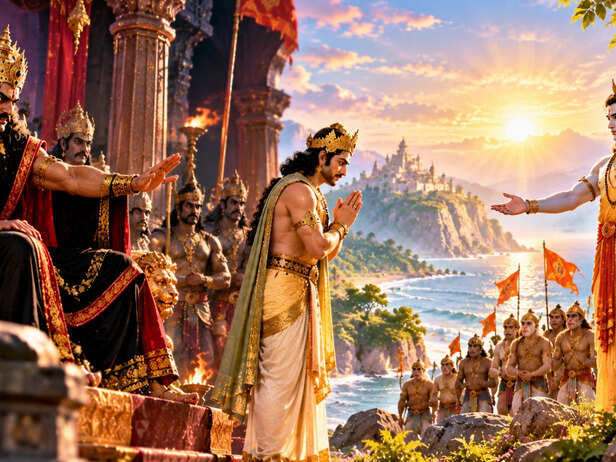
Was Vibhishana really a traitor, or was he simply following what he believed was right?
The Ramayana presents a powerful conflict between family loyalty and dharma. Vibhishana knew that Ravana’s actions had brought destruction upon Lanka. He even tried to make his brother understand the consequences. But when he eventually left Ravana and joined Shri Ram, his decision raised a difficult question: when a loved one chooses the wrong path, should loyalty mean standing beside them until the end?
The answer becomes even more complicated when Kumbhakarna challenges Vibhishana’s choice.
Vibhishana Warned Ravana First
Vibhishana did not immediately abandon Ravana. According to the traditional Ramayana narrative, he repeatedly tried to make his brother understand the consequences of his actions. He knew that Ravana’s conduct had placed the entire kingdom in danger. Vibhishana believed that returning Sita and making peace with Shri Ram could prevent further destruction. His concern was not limited to himself. He feared that Ravana’s actions would bring suffering to the people of Lanka. But Ravana refused to listen. That refusal eventually pushed Vibhishana toward an impossible decision between family loyalty and what he believed was dharma.
Shri Ram Offered Him Lanka
After Vibhishana left Ravana, Shri Ram accepted him and eventually promised him the throne of Lanka. Yet Vibhishana’s response shows that power was not the reason behind his decision. He declared that he did not want the kingdom for himself and was willing to offer it back. His request was focused on stopping the destruction. This detail makes his character more complex. He was not simply walking toward a throne. He was trying to prevent further bloodshed caused by Ravana’s actions. But his choice still carried a painful cost because it meant standing against his own family.
Kumbhakarna Saw Betrayal
Kumbhakarna’s response brings a completely different perspective to the story. He accepted that Ravana’s actions were wrong, but he did not believe that leaving his brother during the crisis was the right answer. His argument was emotional and deeply connected to family loyalty. He reminded Vibhishana that people remember those who stand beside their loved ones during their darkest moments. For Kumbhakarna, brotherhood demanded sacrifice, even when the brother had made serious mistakes. His position creates the central tension of the story: can a person reject someone’s actions while still refusing to abandon the person?
Dharma And Loyalty Collided
This is what makes Vibhishana’s story so relevant even today. Sometimes the person we love can make decisions we strongly disagree with. Supporting them does not necessarily mean supporting their actions, but there can come a point where staying silent itself becomes a moral choice. Vibhishana believed Ravana had crossed that line. Kumbhakarna saw the situation differently. Neither perspective was emotionally simple. One placed greater weight on dharma and the consequences of wrongdoing. The other placed extraordinary importance on family duty. Their disagreement shows why moral decisions are often much harder when love and responsibility pull in opposite directions.
Kumbhakarna Chose His Brother
Kumbhakarna knew Ravana had committed serious wrongs, yet he chose to stand beside his brother in the final battle. His decision was not necessarily an approval of Ravana’s conduct. Instead, it reflected his idea of loyalty. He understood that the battle could cost him his life, but he was prepared to face that fate with his brother. This makes his character tragic rather than simple. He knew the path ahead was dangerous, yet family loyalty mattered deeply to him. His actions raise a difficult question: is standing beside someone in their darkest hour an act of love, even when you disagree with everything they have done?
Vibhishana Chose A Different Duty
Vibhishana made the opposite choice. He believed that loyalty could not require him to support wrongdoing. For him, protecting dharma meant separating himself from Ravana and standing with Shri Ram. This does not make his decision emotionally easy. He was leaving his kingdom, his family and his familiar world behind. Yet the traditional story presents his choice as an important part of his character. The deeper lesson is not simply that one brother was right and the other was wrong. Their choices represent two powerful values: loyalty to family and responsibility toward what one believes to be morally right.
The Real Lesson Is Not Betrayal
Calling Vibhishana simply a traitor misses the deeper conflict within his story. His decision came after he had tried to reason with Ravana and witnessed the consequences of his brother’s actions. Kumbhakarna, meanwhile, represents another form of loyalty, one that refuses to abandon family even when the situation is doomed. The Ramayana gives us a powerful contrast rather than an easy answer. Sometimes love means standing beside someone. Sometimes love means having the courage to tell them they are wrong. And sometimes, when wrongdoing becomes destructive, choosing dharma may require walking away from the people we love most.
unlock insightful tips and inspiration on personal growth, productivity, and well-being. Stay motivated and updated with the latest at My Life XP.