
Was Vibhishana Wrong? The Untold Truth of the Ramayana
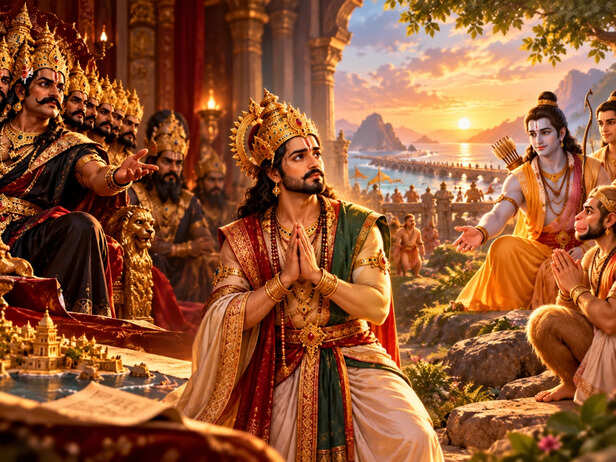
Imagine watching someone you love make a decision that could destroy an entire family. You warn them, explain the consequences and ask them to change their mind. But they refuse to listen. Should you continue supporting them simply because they are family?
This is the difficult question at the heart of Vibhishana’s story. When he left Ravana and sought refuge with Lord Rama, many could have seen him as a traitor. Yet the Valmiki Ramayana describes how Vibhishana repeatedly advised Ravana to return Sita and avoid a disastrous war. His decision raises a deeper question: is loyalty about standing beside someone at any cost, or about having the courage to tell them when they are wrong?
Vibhishana Warned Ravana First
Vibhishana did not immediately abandon Ravana. In the Yuddha Kanda of the Valmiki Ramayana, he advises his brother to return Sita to Rama and prevent further destruction. He explains that abducting another man's wife has brought Lanka into danger. Ravana, however, refuses to accept his counsel. This detail matters because Vibhishana's departure was not presented simply as an impulsive act against his family. He first attempted to persuade Ravana to correct his actions.
Why Did Ravana Reject His Own Brother?
Ravana was a powerful ruler who believed in his own strength, but power can make it difficult to accept criticism. Vibhishana's advice challenged Ravana's pride and forced him to confront the consequences of abducting Sita. Instead of reconsidering his actions, Ravana rejected the warning and treated his brother's disagreement as disloyalty. The episode highlights a familiar human weakness: sometimes people reject honest advice not because it lacks value, but because accepting it would mean admitting a mistake.
Was Leaving Lanka an Act of Betrayal?
When Ravana refused to listen, Vibhishana left Lanka with his companions and approached Rama. His decision created a difficult question for Rama's allies: could Ravana's own brother be trusted? In the Valmiki Ramayana, Vibhishana explains that he had repeatedly advised Ravana to return Sita but was insulted and dismissed. He then seeks refuge with Rama. The episode invites readers to distinguish between abandoning a person out of selfishness and refusing to support actions one believes are wrong.
Why Was Rama Willing to Accept Him?
Rama's allies were suspicious of Vibhishana because he came from Ravana's side during a war. Yet Rama accepted him after the matter was discussed. The episode is remembered as an important example of offering refuge to someone who sincerely seeks it. It also shows that decisions involving trust can be complicated: a person's background does not automatically tell us everything about their intentions. In the story, Vibhishana's choice to oppose Ravana's conduct becomes central to his place beside Rama.
Did Vibhishana Benefit From His Decision?
After Ravana's death, Rama directs that Vibhishana be installed as king of Lanka. This outcome can make some readers question whether Vibhishana left his brother for personal gain. However, the fact that he later became king does not, by itself, prove that ambition was his original motive. The narrative also records his earlier attempts to persuade Ravana to return Sita. A fair reading should consider the sequence of events rather than judge his intentions only by what happened at the end.
What Does Dharma Teach About Family Loyalty?
The story does not suggest that people should abandon their families whenever disagreements arise. Instead, it raises a more difficult question: what happens when loyalty is used to demand support for harmful actions? Vibhishana first tries to reason with Ravana. Only after his advice is rejected does he leave. His story can therefore be understood as a reminder that love and respect do not require blind agreement. Sometimes, the most responsible choice is to speak honestly, even when the truth creates conflict.
Was Vibhishana Wrong? The Final Lesson
Whether Vibhishana was wrong depends on how we understand loyalty, duty and the events of the Ramayana. The narrative gives an important reason for his decision: he tried to persuade Ravana to return Sita before seeking Rama's protection. From that perspective, his departure can be read as a stand against wrongdoing rather than a simple betrayal. The story reminds us that a person's relationship with us does not automatically make every action they take right. True loyalty can include the courage to disagree.
Loyalty Does Not Mean Supporting Every Mistake
Vibhishana's story remains powerful because it asks a question that still matters today: should we support someone simply because they belong to our family, even when we believe they are doing something wrong?
The Ramayana presents Vibhishana as someone who warned Ravana before leaving him. His choice reminds readers that speaking the truth can be painful, especially when family relationships are involved. But silence is not always loyalty, and disagreement is not always betrayal.
Sometimes, standing against a loved one's decision is the only way to remain faithful to your own principles.
Unlock insightful tips and inspiration on personal growth, productivity, and well-being. Stay motivated and updated with the latest at My Life XP.