What Arjuna's Chariot Really Represents
Noopur Kumari | Jul 20, 2026, 18:00 IST
Was Arjuna's chariot just a royal vehicle, or was it a powerful spiritual symbol? Discover the hidden meaning behind every part of the chariot and learn how Lord Krishna, Arjuna, and Hanuman together represent the path toward wisdom, self-control, and inner victory.

Spiritual Secret Hidden in Arjuna's Chariot
Image credit : ChatGPT (AI)
Most people see Arjuna's chariot as a magnificent war vehicle from the Mahabharata. But according to many traditional spiritual interpretations inspired by the Bhagavad Gita and later Hindu philosophy, it represents something far deeper than a battlefield chariot. Every part of it carries a symbolic meaning that reflects the journey of human life. The horses, the reins, the charioteer, the warrior, and even Hanuman on the flag remind us of the constant struggle between desire, duty, wisdom, and devotion. Understanding this symbolism reveals why the Bhagavad Gita remains timeless even today.
![Lord Krishna Driving Arjuna's Chariot]()
The Mahabharata describes Arjuna's chariot as the vehicle that carried him into the Kurukshetra war. Beyond the epic narrative, many spiritual teachers interpret the chariot as a symbol of human life itself. According to this understanding, every person travels through life's challenges while constantly choosing between attachment and righteousness. The chariot reminds us that external battles often reflect the inner conflicts taking place within our own hearts and minds.
The Four Horses Represent the
![Krishna Holding the Reins with Steady Hands]()
In many traditional interpretations, the four horses represent the human senses. Our senses naturally move toward pleasure, fear, attraction, and distraction, often pulling us away from balance. If left uncontrolled, they can lead the mind in different directions. Just as powerful horses require proper guidance, the senses also need discipline. The image reminds devotees that mastering the senses is an important step on the spiritual path described in the Bhagavad Gita.
The reins of the chariot are often understood as the human mind. When the mind becomes restless or confused, even strong abilities and noble intentions lose direction. Hindu philosophy repeatedly teaches that a disciplined mind brings clarity and peace. Just as firm reins keep the horses moving together, a focused mind helps control emotions, desires, and reactions. This symbolic lesson continues to inspire readers of the Bhagavad Gita today.
Lord Krishna's role as Arjuna's charioteer carries profound spiritual meaning. Rather than leading the battle as a warrior, Krishna chooses to guide. Many commentators explain that Krishna symbolizes divine wisdom, discrimination, and dharma. When wisdom takes control of life's journey, decisions become clearer even during moments of uncertainty. His presence reminds devotees that true leadership begins with inner understanding rather than outward power.
Arjuna Reflects Every Human
Arjuna is not only a great warrior but also a symbol of the human soul standing at the crossroads of duty and emotion. Before the war begins, he experiences confusion, fear, and attachment, emotions that every person encounters at different stages of life. Through Krishna's teachings, Arjuna learns to rise above doubt and perform his responsibilities with faith. His journey reflects the spiritual struggles faced by every seeker.
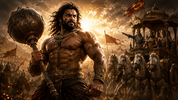
The flag of Arjuna's chariot bears the image of Lord Hanuman, creating a powerful connection between the Ramayana and the Mahabharata. Hanuman symbolizes devotion, strength, humility, and fearless service to righteousness. His presence on the banner reminds devotees that knowledge alone is not enough. True victory comes when wisdom is supported by unwavering faith, courage, and complete devotion to the Divine.
The symbolism of Arjuna's chariot remains deeply relevant because every person continues to fight inner battles between fear and faith, desire and discipline, confusion and clarity. According to traditional interpretations, when our senses are controlled, the mind remains steady, wisdom guides our decisions, and devotion strengthens our hearts, life itself becomes a journey toward self-realization. The greatest victory is not over others but over our own ignorance, and that is the enduring message hidden within Arjuna's chariot.
Unlock insightful tips and inspiration on personal growth, productivity, and well-being. Stay motivated and updated with the latest at My Life XP.
More Than a Battle Chariot
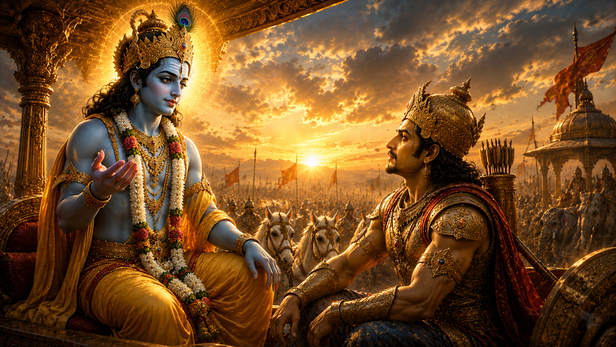
Lord Krishna Driving Arjuna's Chariot
Image credit : ChatGPT(AI)
The Mahabharata describes Arjuna's chariot as the vehicle that carried him into the Kurukshetra war. Beyond the epic narrative, many spiritual teachers interpret the chariot as a symbol of human life itself. According to this understanding, every person travels through life's challenges while constantly choosing between attachment and righteousness. The chariot reminds us that external battles often reflect the inner conflicts taking place within our own hearts and minds.
The Four Horses Represent the Senses
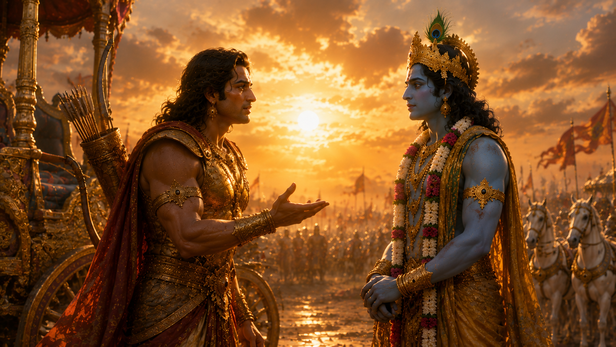
Krishna Holding the Reins with Steady Hands
Image credit : ChatGPT(AI)
In many traditional interpretations, the four horses represent the human senses. Our senses naturally move toward pleasure, fear, attraction, and distraction, often pulling us away from balance. If left uncontrolled, they can lead the mind in different directions. Just as powerful horses require proper guidance, the senses also need discipline. The image reminds devotees that mastering the senses is an important step on the spiritual path described in the Bhagavad Gita.
The Reins Symbolize the Mind
Krishna Is the Guiding Wisdom
Arjuna Reflects Every Human Soul
Hanuman Guards the Path
The Chariot Still Guides Us Today
Unlock insightful tips and inspiration on personal growth, productivity, and well-being. Stay motivated and updated with the latest at My Life XP.